
Playa Santa Teresa Costa Rica – Local Guide, Beaches, Surf & Getting Around

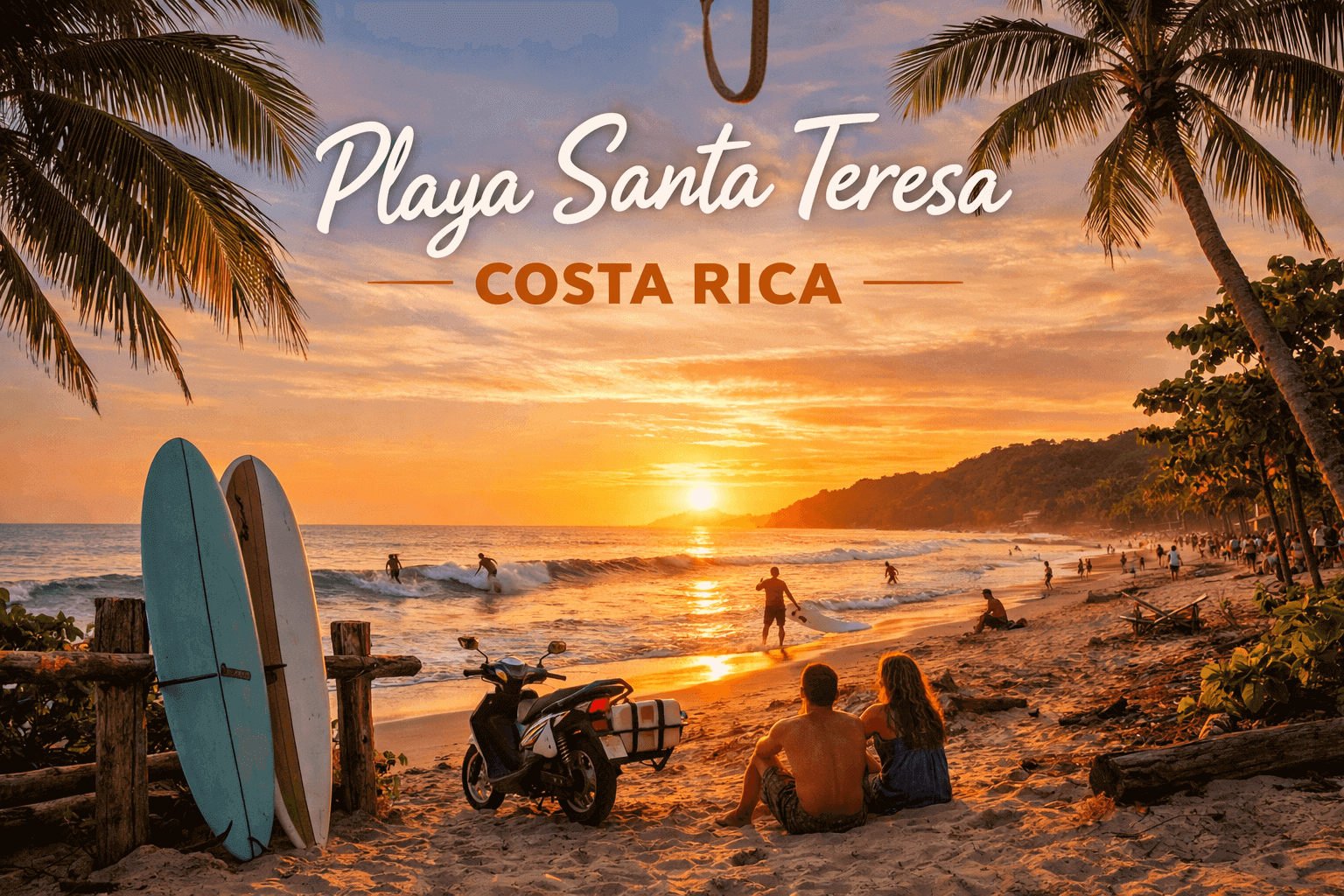
Playa Santa Teresa is more than just a beautiful beach in Costa Rica. It is a way of life. People don’t simply visit Playa Santa Teresa, they settle into it. The pace, the ocean, the daily sunsets, and the freedom to move easily from place to place all shape the experience in subtle but powerful ways.
If you searched for Santa Teresa beach, you are probably looking for more than a postcard description. You want to know what it’s really like, how the town works, what you can do here, and how to enjoy it without frustration. This guide is written with that exact goal in mind. It combines local insight, practical travel information, and real movement patterns so you can experience Playa Santa Teresa fully.
Where Is Santa Teresa and Why Its Layout Matters
Playa Santa Teresa is located on the Pacific coast of Costa Rica’s Nicoya Peninsula, in Puntarenas Province. It is relatively remote compared to destinations like Tamarindo or Jaco, and reaching it takes effort. That effort is part of the reason Santa Teresa attracts a specific kind of traveler: people who are not rushing.
One of the most important things to understand about Santa Teresa Costa Rica is its linear structure. The town stretches along a single main road that runs parallel to the beach for several kilometers. There is no central square or downtown hub. Restaurants, surf spots, hotels, yoga studios, and shops are spread out from north to south.
This layout defines daily life. It influences where you stay, where you eat, how often you change beaches, and how easy or difficult your day feels. Visitors who understand this early enjoy Santa Teresa much more than those who assume everything is walkable.
What Santa Teresa Feels Like Day to Day
Santa Teresa beach feels raw, natural, and human. Jungle vegetation grows close to the road. Monkeys are often heard in the morning. Roads are a mix of dirt and pavement, and dust is part of daily life in the dry season.
At the same time, Santa Teresa is refined in quiet ways. Cafés serve excellent coffee. Restaurants offer food that rivals big cities. Yoga studios and wellness spaces are thoughtfully designed and deeply connected to nature.
The town attracts surfers, digital nomads, creatives, and long-term travelers. The atmosphere is social but respectful. Conversations start easily, and it’s common to see the same faces at the beach, cafés, and sunset spots every day.
Playa Santa Teresa Beach: Long, Open, and Untamed
This town has a long, wide beach facing directly into the Pacific Ocean. It is known for its strong energy and constantly changing conditions. The sand is soft and light-colored, and the beach feels expansive, especially at low tide.
There is no continuous boardwalk or beachfront road. Instead, beach access points are scattered between properties. This gives the area a natural feel but also means that people move between access points rather than staying in one centralized location.
Key characteristics of Playa Santa Teresa beach:
- Strong, consistent waves
- Wide sandy shoreline
- Powerful sunsets
- Minimal commercial development directly on the beach
Because of its length, Playa Santa Teresa never feels overcrowded in the way smaller beaches can. Even during high season, it is usually possible to find space to surf, swim, or sit quietly.
Surfing in Playa Santa Teresa: What You Should Know
Surfing is the heartbeat of
Santa Teresa Costa Rica. Even if you don’t surf, the town revolves around surf conditions, tides, and swell direction.
Playa Santa Teresa is mainly a beach break, which means waves break over sand rather than reef. This creates multiple peaks along the beach, and conditions vary depending on sandbanks and tides. Surfers often move between different sections of the beach to find the best waves.
Surf conditions overview:
- Beginner-friendly: Smaller days, especially near Playa Carmen
- Intermediate: Consistent, powerful waves ideal for progression
- Advanced: Heavy waves during larger swells
Surf seasons are fairly consistent year-round, but conditions change with swell size and wind. Many surfers prefer the dry season for cleaner waves, while others enjoy the bigger swells of the green season.
Many surfers check daily swell and wind conditions using tools like Surfline Santa Teresa before choosing where to paddle out.
Understanding the Different Areas of Santa Teresa
Although Playa Santa Teresa is officially one beach town, it helps to think of it in sections. Each area has a slightly different character.
North Santa Teresa
This area is quieter and more residential. There is more jungle, fewer businesses, and a slower pace. It’s ideal for travelers who value calm mornings and privacy, but it requires more movement to reach restaurants and social areas.
Central Santa Teresa
The central area is the most active part of town. This is where you’ll find:
- Cafés and bakeries
- Yoga studios and gyms
- Surf schools and shops
- Coworking spaces
Many visitors choose to stay here because it balances convenience with beach access.
South Santa Teresa and Playa Carmen
Carmen Beach marks the southern end of Santa Teresa. It is more social, especially in the evenings. The waves here are often gentler, making it popular with beginners. Sunset gatherings are common, and the atmosphere feels lively without being overwhelming.
Things to Do in Santa Teresa (Beyond Surfing)
Santa Teresa is not only about surfing. Many people come here for the broader lifestyle.
Popular activities include:
- Yoga and movement classes
- Beach walks and swimming
- Cafés and slow breakfasts
- Remote work and coworking
- Sunset watching and social evenings
The town supports a healthy, outdoor-oriented lifestyle. Days are often unstructured, and people move based on how they feel rather than strict schedules.
Getting Around Playa Santa Teresa: A Crucial Part of the Experience
One of the most common mistakes first-time visitors make is underestimating distances in Playa Santa Teresa. While the town looks small on a map, the combination of heat, humidity, road conditions, and lack of sidewalks makes walking long distances impractical for most people.
Common transportation options in Playa Santa Teresa:
- Walking: Suitable only for very short distances
- Cars: Often unnecessary and difficult to park
- ATVs and scooters: Common but expensive and noisy
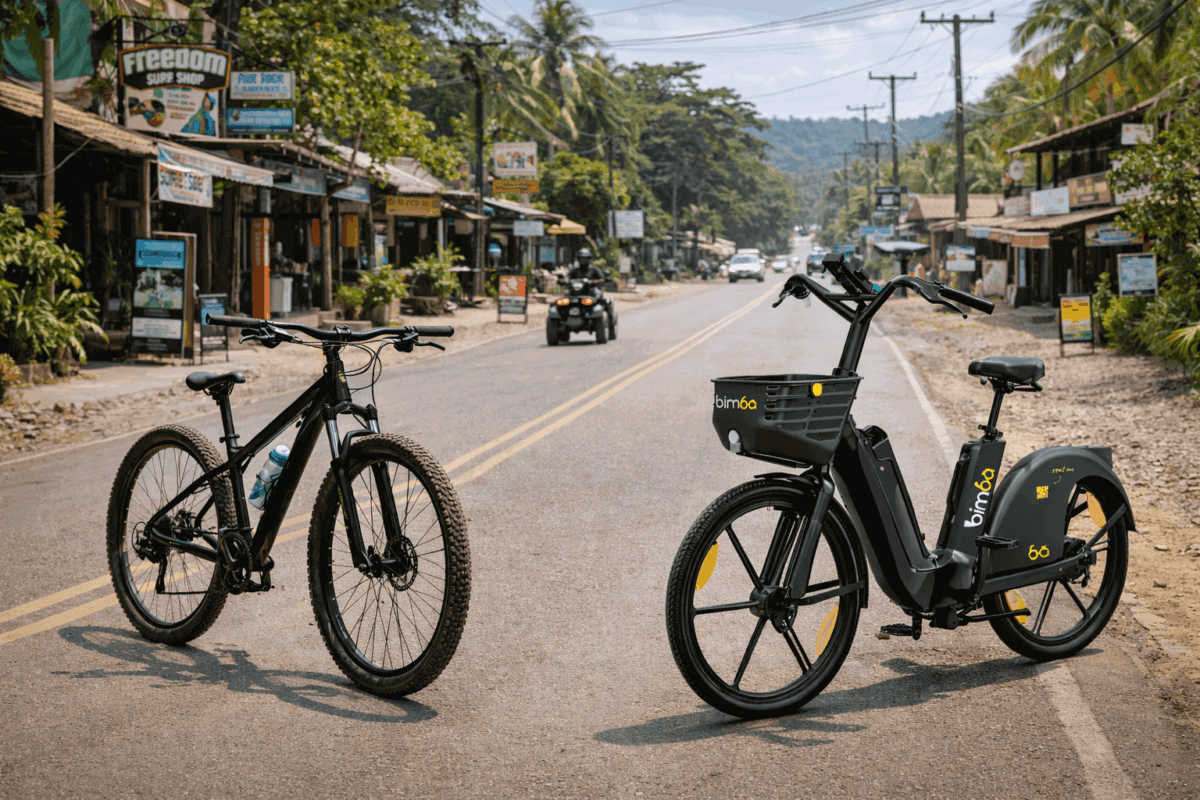
- Bikes and electric bikes: Efficient, flexible, and well-suited to the town
This is where Bimba fits naturally into the Playa Santa Teresa lifestyle.
Why Bimba Electric Bikes Make Sense in Santa Teresa
Santa Teresa’s main road is mostly flat, making it ideal for electric bikes. Instead of committing to a car or ATV rental, many visitors prefer using shared electric bikes for short to medium trips.
Bimba offers shared electric bikes that allow visitors to move easily between beaches, cafés, surf spots, and sunset areas without stress. You don’t need to worry about fuel, parking, or long-term rentals. You ride when you want, stop where you want, and keep your day flexible.
Benefits of using electric bikes in Playa Santa Teresa:
- Easy movement along the main road
- No sweating in the heat
- Faster than walking, simpler than vehicles
- Eco-friendly and quiet
- Ideal for short, frequent trips
For travelers who want freedom without responsibility, electric bikes often become the most enjoyable way to explore Playa Santa Teresa
Transportation Comparison Table
| Transportation Option | Cost | Convenience | Best For | Downsides |
|---|---|---|---|---|
| Walking | Free | Low | Very short distances | Heat, time, fatigue |
| Car Rental | High | Medium | Long trips outside town | Parking, cost |
| ATV / Scooter | High | Medium | Daily commuting | Noise, expense |
| Electric Bike (Bimba) | Flexible | High | Beach hopping, cafés, sunset rides | Ride limits |
A Typical Day in Santa Teresa
A day in Santa Teresa beach flows naturally when transportation is easy.
You might start your morning riding to the beach for a surf or swim while the air is still cool. Later, you move to a café for breakfast without thinking about parking or distance. In the afternoon, you head to another beach access point or a yoga class. As sunset approaches, people naturally gather near the ocean again.
This rhythm works best when movement feels effortless. When you can ride instead of plan, Santa Teresa opens up.
Practical Tips for Visiting Playa Santa Teresa
- Bring light clothing and sun protection
- Expect dust in the dry season and mud in the rainy season
- Respect the ocean and ask locals about conditions
- Plan your accommodation based on how you want to move
- Choose transportation that fits short, frequent trips
Is Santa Teresa Worth Visiting?
Santa Teresa is ideal for travelers who value:
- Nature over nightlife
- Experiences over schedules
- Freedom over structure
It is not a resort town, and it doesn’t try to be. That authenticity is exactly why people fall in love with it.
Final Thoughts: Experiencing Santa Teresa the Right Way
Playa Santa Teresa is best enjoyed when you understand how it works. Its length, its pace, and its relationship with the ocean shape daily life here. Choosing the right way to move around can transform your experience from fragmented to fluid.
When movement is simple, you explore more, stress less, and connect deeper with the place. Playa Santa Teresa is not about rushing from attraction to attraction. It is about finding your rhythm, one ride, one wave, and one sunset at a time.
That is what turnsSanta Teresa from a destination into a place people never want to leave.