

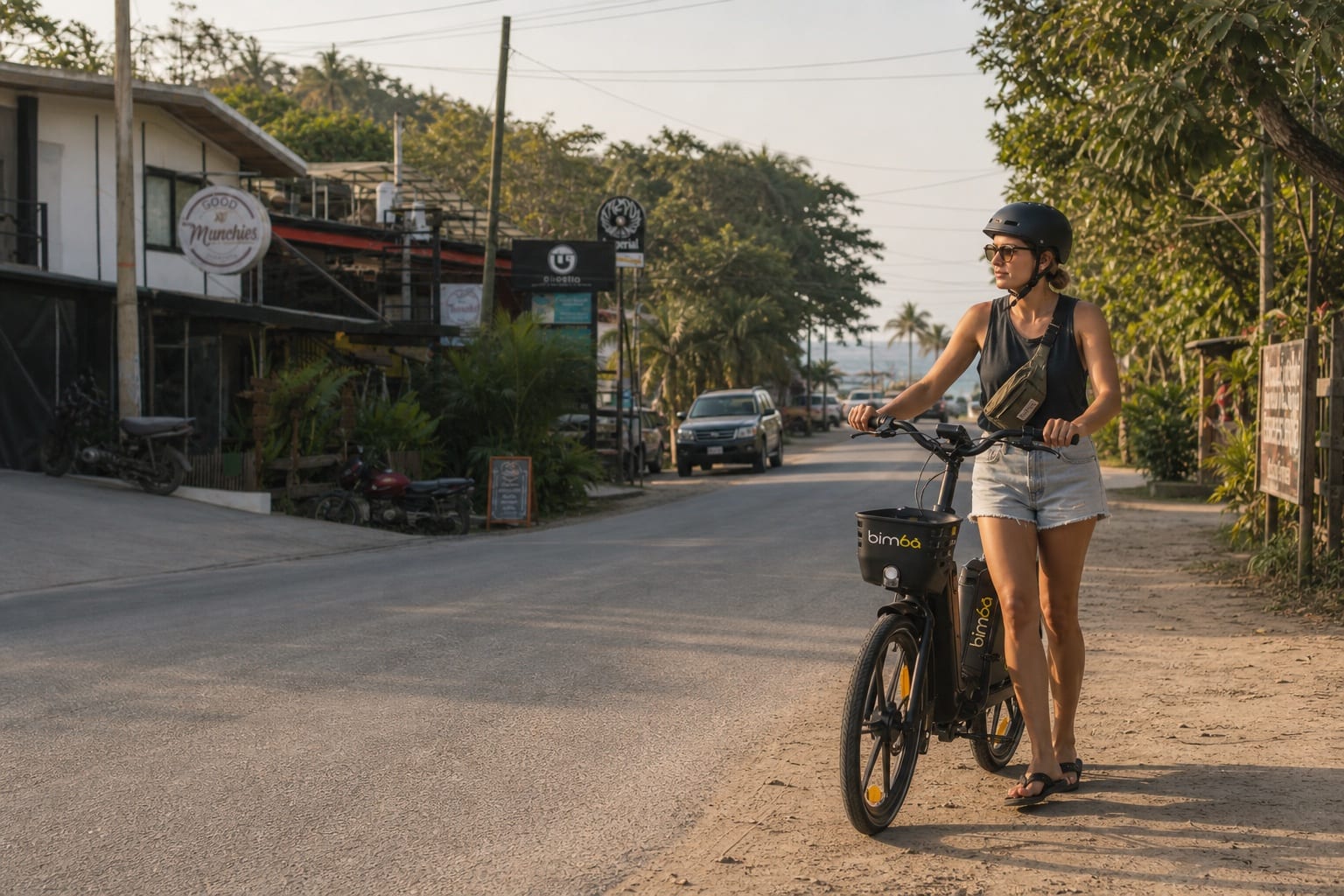
Yes, you can stay in Santa Teresa without a car if your accommodation is near the main coastal corridor and your daily plans are local. Walking works for short distances, Bimba can suit eligible riders making short trips when roads and weather are appropriate, and taxis cover luggage, rain, darkness and steep access roads. A car or ATV becomes more useful for remote villas, groups, surfboards and day trips beyond town.
A practical, honest guide to choosing where to stay and how to move—without paying for a rental car you may not need every day.
Choose transport by the trip—not by one blanket rule.
The right answer changes with your accommodation pin, the surface outside it and what you need to carry.
| Situation | Usually practical | Why |
|---|---|---|
| Central stay, short daytime trip | Walk or Bimba | Low parking friction when conditions are suitable |
| Luggage, groceries or surfboard | Taxi or suitable rental | Carrying capacity matters more than distance |
| Steep or rough villa road | 4×4, ATV or taxi | Clearance and traction can be essential |
| Heavy rain or after dark | Pre-arranged taxi | Visibility and weather protection |
| Montezuma, Cabuya or regional day trip | Rental car, ATV or transfer | Range and dependable return |
Start with your accommodation pin
Two properties advertised as ‘Santa Teresa’ can create completely different transport needs. One may sit beside the main road, cafés and approved Bimba parking. Another may be at the top of a steep, muddy access road where walking or a small-wheeled vehicle is a poor choice.
Before booking, ask the host for the exact map pin, a current description of the final access road and whether guests normally arrive by ordinary car, 4×4 or taxi. That single check is more useful than a generic claim that Santa Teresa is—or is not—walkable.
Practical checks
- Confirm the final 500 metres, not only the town name.
- Ask how the road behaves after heavy rain.
- Check the walking route after sunset before relying on it.
Use Bimba for the trips it is built to serve
Bimba is an app-based shared e-bike and standing e-scooter service. Eligible riders can use the live map to find a vehicle, unlock it by QR code and finish at an approved parking location. The network connects Santa Teresa, Playa Carmen and selected Mal País locations, but availability and eligible end points change during the day.
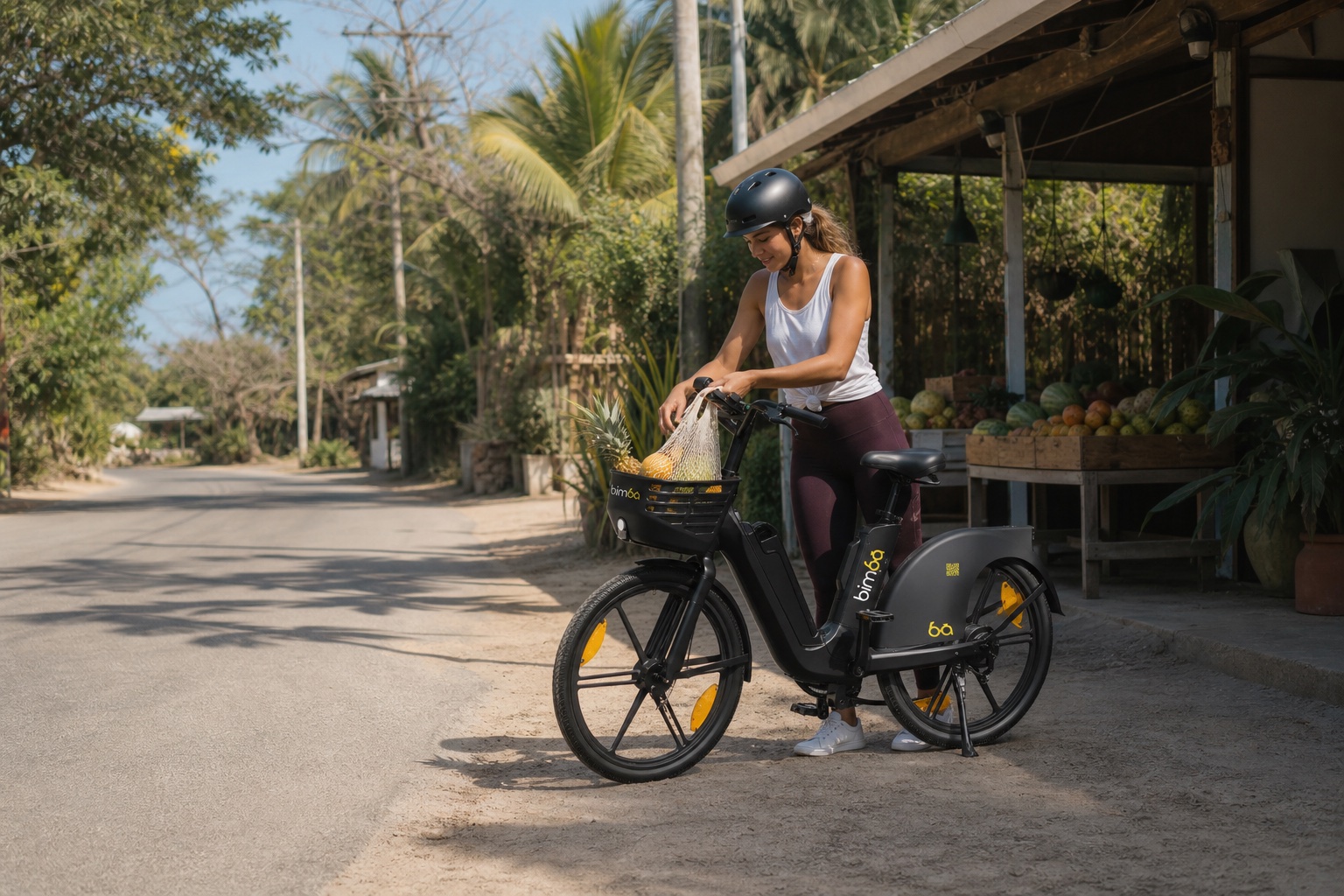
A shared electric ride can be useful for a café, grocery, yoga, coworking or beach-area trip when the route is firm, visible and within the active service area. It is not a substitute for luggage transport, a passenger vehicle, a surf rack or an off-road machine.
Practical checks
- Check the live app before walking to a vehicle.
- Inspect brakes, tires and controls before moving.
- Use only an approved end point shown for the active trip.
Build a mixed transport plan
Visitors without a car do not need to choose one mode for the whole stay. A common low-friction plan is to arrive by shuttle or domestic flight transfer, walk within the immediate neighborhood, use Bimba for suitable short trips and pre-arrange taxis for rain, luggage, dinner after dark or a steep villa road.
This mixed approach avoids paying for a vehicle while it sits parked, yet keeps a safer fallback available. Save one or two reputable taxi contacts, carry enough phone battery and decide how you will return before beginning a time-sensitive trip.
Why Bimba Makes Santa Teresa Without a Car Easier
The strongest reason to use Bimba is not that it replaces every vehicle. It removes the need to keep a rental car for the many small journeys that shape an ordinary day in Santa Teresa. A rider can check the live map, choose an available e-bike, unlock by QR code and travel to an approved point without visiting a rental counter, collecting keys, buying fuel or finding conventional parking.
That model is especially useful for a central stay. Coffee, breakfast, groceries, coworking, yoga, a restaurant and a different beach access may each be only a short trip, yet walking every leg in heat or dust can consume the day. Electric pedal assistance reduces the effort between stops, the seated position suits a relaxed pace and the front basket gives one small secured bag a proper place instead of hanging it from the handlebar.
A realistic car-free day in Santa Teresa
Start on foot for anything immediately beside the accommodation. Open the Bimba app before the first longer daytime trip and select the destination before unlocking. Use an e-bike for a suitable ride toward Playa Carmen, finish at the approved point, complete nearby errands on foot and check the live map again when ready to move. Arrange a taxi for dinner after dark or for a return affected by rain. This combination gives more flexibility than treating one rental car as the answer to every journey.
Who gets the most value from Bimba?
- Solo travelers staying near the coastal corridor.
- Couples comfortable riding separate vehicles.
- Digital nomads moving between accommodation, cafés and coworking.
- Visitors making several short, flexible daytime journeys.
- Residents who want an app-based ride without daily-rental administration.
First, Get the Shape of Santa Teresa
Santa Teresa reveals itself as a ribbon: surf shops, sodas, hotels and jungle strung along a coastal road, with side streets climbing away from the ocean. Playa Carmen, central Santa Teresa and the road toward Mal País may look neatly connected on a screen. On the ground, heat, dust, traffic and one steep final hill can turn a short pin-to-pin distance into a very different outing. That is the local reality behind any useful answer about Santa Teresa without a car.
Before choosing wheels, save both doorways—not just the names of the neighborhoods. Ask the host what the last five hundred metres feel like today, whether a normal car reaches the entrance after rain and how guests usually come home after dinner. A little curiosity here prevents the classic Santa Teresa mistake: planning an effortless trip out and discovering, too late, that the return is the difficult half.
What this guide can tell you—and what the app must
The coastline will still run north to south tomorrow, and an e-bike will still solve a different kind of trip from an ATV or taxi. The moving pieces are availability, Bimba boundaries, approved endpoints, prices, opening hours, roadworks and weather. Use this guide for the local logic; use the Bimba app and the operator's own channel for what is true at the moment you leave.
Old screenshots and social posts can provide context, but they should never be treated as a reservation, a guaranteed parking point or proof that a road remains suitable. Recheck any detail that could leave you stranded, late or unable to end a ride. For a flight, medical appointment, tour departure or last ferry, use confirmed transport with time in reserve.
The Best Ride Is the One That Fits the Day
There is no prize for using the same vehicle from arrival to checkout. Walk to the breakfast spot next door. Take a Bimba when the sun is out and the next stop sits naturally along the corridor. Call a taxi for a wet night, a suitcase or a dinner where nobody should be riding home. Save the car, shuttle or ATV for the days that genuinely need their space or capability.
Start by listing passengers, bags, surf equipment, mobility needs, departure time and the consequence of delay. Distance comes after those constraints. A cheap or nearby option is poor value if it cannot carry the load, reach the entrance, keep the group together or provide a dependable return. Choose the lightest mode that genuinely completes the whole trip rather than the most exciting vehicle in a photograph.
Where the Bimba e-bike shines
Bimba is at its best in the useful middle: farther than you want to walk in tropical heat, but far too small a journey to justify organizing a car. The e-bike has a relaxed seated position, electric pedal assistance, full-size wheels and a front basket for one small secured item. Open the app, see what is available now, choose an approved endpoint and make the trip without a counter, keys or an all-day rental clock.
A Bimba is not designed for passengers, surfboards, airport luggage, trails, deep sand, floodwater or steep damaged access. Pedal assistance reduces effort but does not create traction, visibility or road experience. If the route exceeds the rider's ability or the vehicle's intended use, choose a taxi or suitable rental. Stating where Bimba does not fit is essential to an honest local guide.
In Santa Teresa, the Road Gets a Vote
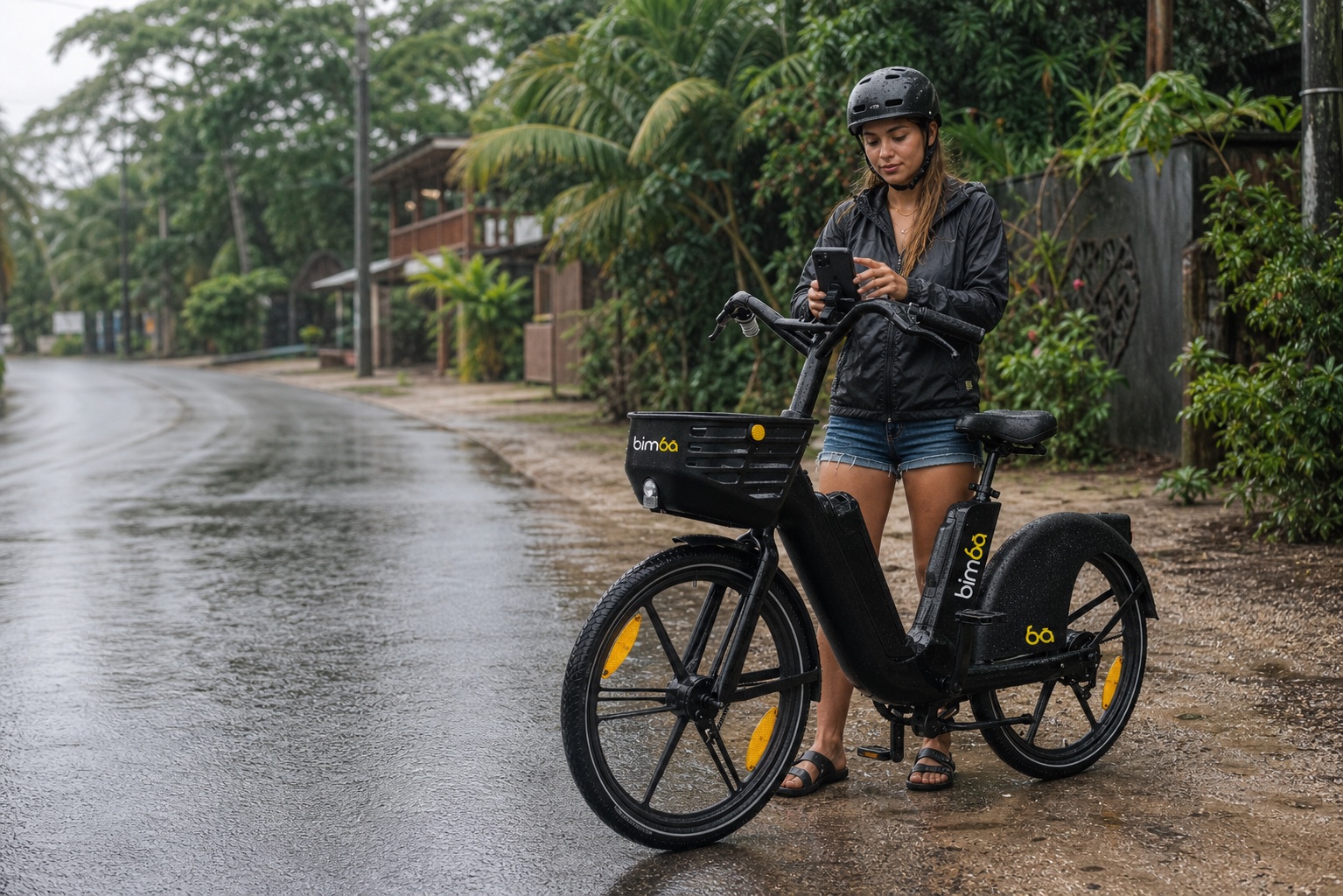
Dry-season roads can be dusty, corrugated and loose at the edges. Rain can hide potholes, carry gravel across the surface and increase braking distance. The same route can therefore require a different choice on consecutive days. Look outside, check a current forecast and ask a local person about the access road instead of relying only on a weather icon for the wider region.
Daylight is part of the route assessment. A familiar road can feel completely different after sunset when surface changes, pedestrians, animals and turning vehicles become harder to see. If the return may happen after dark, arrange it before leaving. A pre-arranged taxi is preferable to waiting beside the road while searching for an uncertain option.
A sixty-second pre-ride check
- Confirm the exact destination, active service boundary and approved end point in the live app.
- Inspect the tires, wheels, brakes, lights, frame, saddle and controls before moving.
- Fit the helmet, secure the basket load and put the phone in the holder before entering traffic.
- Scan the first section of road for water, sand, loose stone, traffic and a safe place to merge.
- Do not start until the return method and weather fallback are realistic.
While moving, keep both hands available, avoid headphones and never operate the phone. Brake before loose material or standing water rather than turning sharply on it. Leave space around doors, driveways and pedestrians, and assume other road users may not have seen you. Stop somewhere safe whenever navigation or support requires attention.
What the Cheapest Option Usually Leaves Out
Transport cost includes more than the advertised rate. A shared ride may include an unlock charge and time-based use or a pass shown in the app. A daily rental may add tax, deposit, fuel, insurance, delivery or equipment. A taxi quote may change with route, waiting, late hours or oversized luggage. Ask what the total includes and what happens if the plan changes.
Time and risk also have value. Holding a rental all day can be wasteful if it remains parked, but paying for flexibility may be sensible for a family or remote villa. A Bimba can remove counter visits and parking friction for appropriate short journeys, but shared availability is not suitable for a critical departure. Compare realistic daily scenarios rather than multiplying one ideal trip across the entire stay.
The sweet spot is usually a mix
The most relaxed stays tend to combine modes: a confirmed ride from the airport, walking around the immediate neighborhood, Bimba for bright daytime hops and taxis for nights, rain or luggage. Rent a car or ATV on the days that truly call for one. You spend less time managing a vehicle—and never have to force the wrong ride simply because it is already paid for.
The Ride Is Not Over Until It Is Parked
A Bimba trip does not end wherever the rider decides to stop. The active app identifies approved locations and provides the current end-ride instruction. Some points use physical docking equipment; others are approved parking areas at participating businesses. Select a destination before unlocking, approach slowly and follow the instruction shown for that exact trip.
Park upright without blocking entrances, ramps, paths, gates, driveways or customer access. Never leave a vehicle on beach sand, beside an informal trail or against private property. Wait for the app to confirm that the trip ended and keep the ride record until the final status is clear. If it does not close, remain with the vehicle where safe and contact support with the vehicle number and precise location.
Build a real fallback
Save at least one verified taxi contact, carry phone charge and data, and know where you can wait safely. Shared availability can change, tropical weather can arrive quickly and a business may close earlier than an old listing suggests. A fallback is not a vague intention to “find something”; it is a named option, contact method, pickup point and acceptable latest departure time.
Four Days, Four Different Answers
A solo traveler staying near the main road
Walking and shared electric rides can cover many flexible daytime needs when destinations remain inside the active corridor. Cluster coffee, groceries and errands by area, and reserve taxis for rain, late returns or anything time-critical. Check the accommodation entrance itself; being near the main road does not guarantee that the final access is flat or illuminated.
A couple or group with different confidence levels
Choose for the least confident rider, not the most experienced person. Each Bimba is for one eligible rider, and separate vehicles can split the group when traffic or availability changes. If someone is uncomfortable, carrying equipment or needs help with balance, keep the group together in a suitable passenger vehicle.
A traveler with groceries or luggage
The e-bike basket is useful for one small secured load that does not affect steering or visibility. Do not hang bags from the handlebar or overload the basket. Airport luggage, several grocery bags and bulky equipment belong in a taxi, shuttle or car with appropriate capacity.
A rainy-season visit
Use clear weather windows for flexible trips and keep protected transport for fixed commitments. Recheck roads after each substantial rain, especially side routes and unpaved approaches. If water depth, grip or visibility cannot be judged, do not test it with a shared vehicle.
Ride Like You Live Here
Santa Teresa's roads and business entrances are working community spaces. Ride predictably, reduce speed around pedestrians and animals, yield generously and avoid unnecessary noise. Approved parking partners are businesses, not empty storage lots; leave their customer areas and accessibility routes clear and follow staff guidance.
At beaches and natural areas, finish the vehicle trip at a valid point before continuing on foot. Protect vegetation, wildlife and private boundaries, carry rubbish out and do not turn an informal opening into an assumed public entrance. Responsible behavior protects both the community relationship and future access for other riders.
Before You Head Out
- Save the exact origin, destination and approved parking point.
- Confirm current weather, daylight and the final road surface.
- Check live Bimba availability, boundary, price and end-ride rules in the app.
- Use an official or first-party source for changing third-party details.
- Choose a taxi, shuttle, car or suitable rental for passengers, luggage, darkness or unsuitable roads.
- Wear a helmet and inspect the vehicle before every ride.
- Secure one small basket load without affecting steering.
- Keep a charged phone, water and a confirmed return fallback.
- Park only where the active trip allows and keep every access route clear.
- Confirm the ride is closed before walking away.
The aim of this Santa Teresa without a car guide is simple: help you spend more of the day where you meant to be, and less of it wrestling with transport. Bimba is part of the story—and, for the right short trip, often the best part—but live conditions still get the final word. Spotted something that has changed? Send the page URL and a current source to hello@gobimba.com.
Plan the Rest of Your Santa Teresa Trip
Use these related Bimba guides to verify the vehicle, price, route and place where a trip can finish:
- complete Santa Teresa transport guide
- Bimba e-bike guide
- current Bimba pricing
- approved Bimba locations
- how to ride a Bimba
- Santa Teresa safety guide
- Playa Carmen e-bike guide
- short-trip ideas along the coast
Research sources and live checks
Accommodation, weather, surf conditions and business details can change. Use these destination and operator sources as starting points, then confirm time-sensitive details directly:
Frequently Asked Questions
Do you need a car in Santa Teresa?
Not always. A central stay can work with walking, shared electric rides and taxis. A car becomes more useful for remote accommodation, children, luggage, heavy rain or regional trips.
Is Santa Teresa walkable?
Parts of the main corridor are walkable, but heat, dust, darkness, traffic and the exact access road matter. Check the real route from your accommodation rather than judging by straight-line distance.
Can I use Bimba everywhere in Santa Teresa?
No. Use the live app to confirm the current service boundary, vehicles and approved end locations. Website information describes the network but does not guarantee live availability.
What should I use at night or in heavy rain?
A pre-arranged taxi or suitable enclosed vehicle is generally the more practical choice when visibility, traction or weather protection is a concern.