
A controlled-condition figure; real range varies with the trip.
Shared electric scooter · Santa Teresa, Costa Rica
Electric scooter rental in Santa Teresa, Costa Rica.
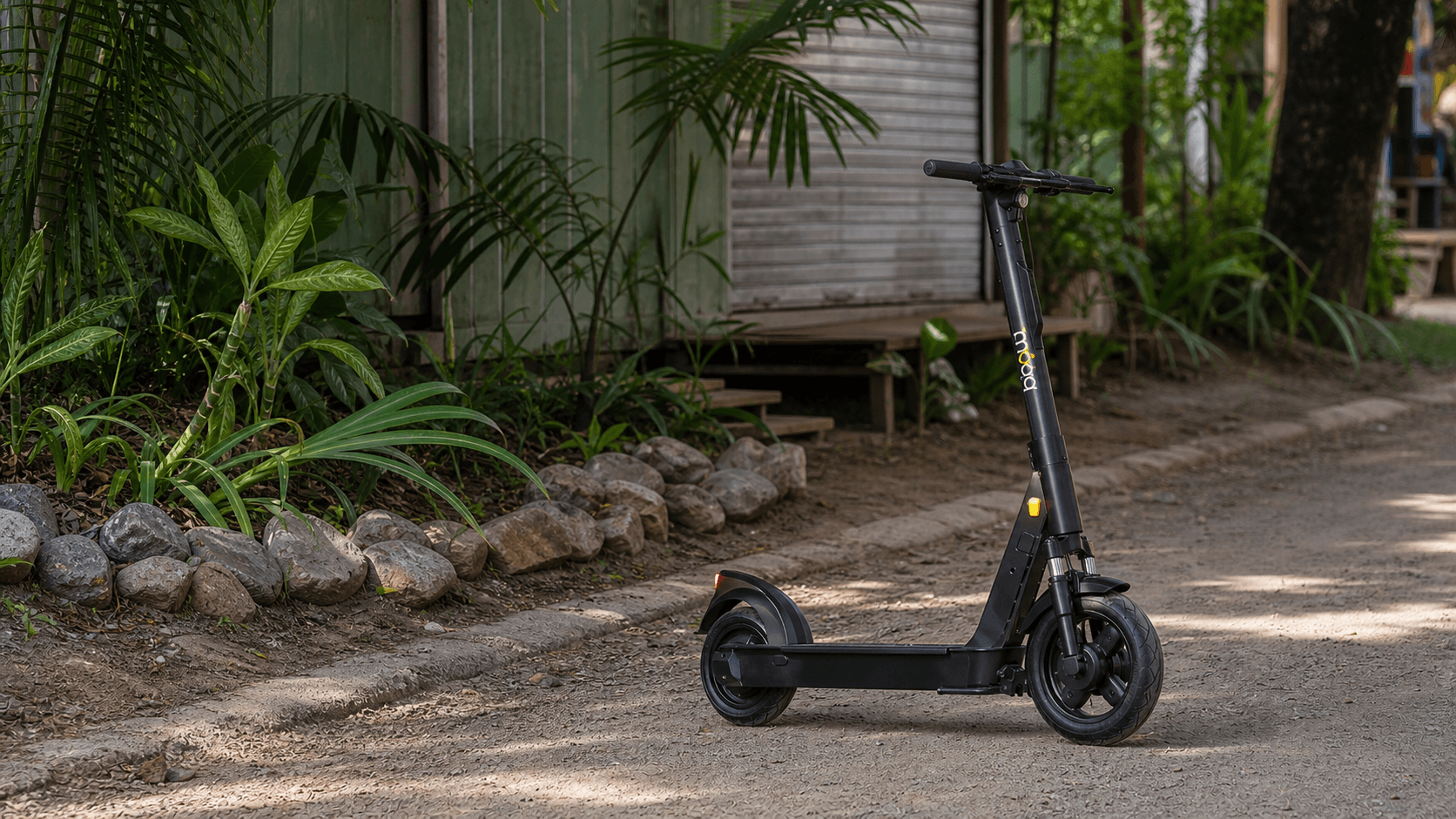
Find a Bimba scooter in the app, scan its QR code and start a local trip without visiting a rental counter. The standing position feels compact and direct, while the commercial fleet construction is designed for frequent shared use.
A compact local alternative
Why choose the Bimba electric scooter?
For short solo trips around Santa Teresa, a Bimba electric scooter offers a compact alternative to taking a car, ATV or motorcycle. You can find and unlock one in the app without visiting a rental counter, travel without buying fuel or adding engine noise, and finish at an approved Bimba parking point that uses far less space than a car. Compared with an e-bike, there is no pedaling and the standing format can feel simple and direct for a quick local ride. It still shares the same roads and changing conditions as every other vehicle, so choose it only when the route and standing position feel comfortable to you.
Explore the details
Built around the rider.
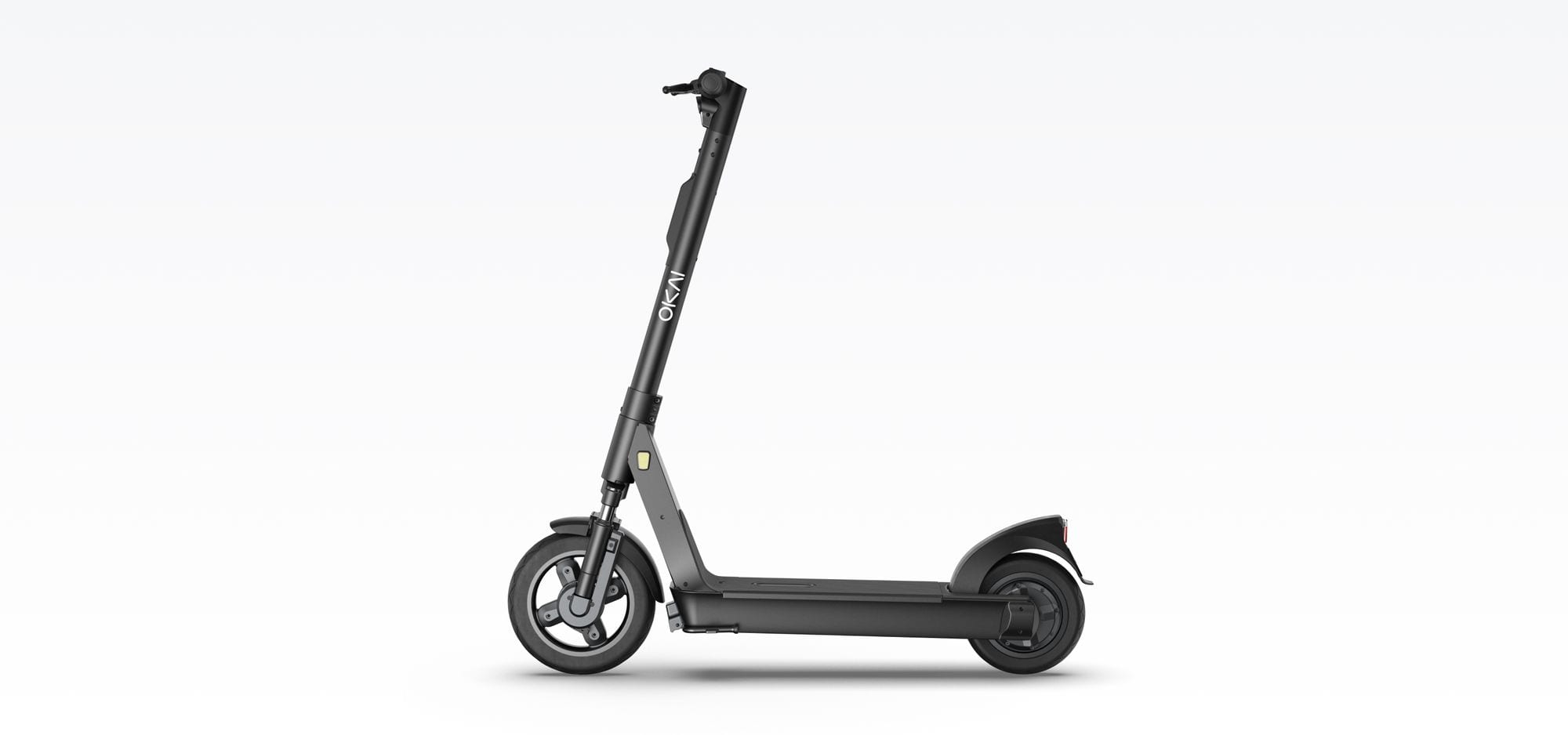
Explore the parts that shape the scooter's standing position, control and durability. The callouts use the official engineering image of the underlying shared-fleet platform.
- 01
Handlebar controls
Braking and acceleration controls are positioned for two-handed use. Keep both hands ready throughout the ride.
- 02
Reinforced steering column
The tall, rigid column forms the scooter's main control point and is built for repeated shared use.
- 03
Hydraulic front suspension
Front suspension helps soften vibration from mild surface imperfections; it does not make potholes or loose gravel safe.
- 04
Wide standing deck
The long deck gives room for a stable staggered stance, with one foot slightly ahead of the other.
- 05
Rear braking system
Rear regenerative braking works with the front drum brake. Riders should still brake progressively and early.
- 06
Protected lower body
The battery and electronics sit inside the substantial lower structure, away from casual contact and road debris.
Designed around comfort and control
A stable standing platform, not a portable toy.
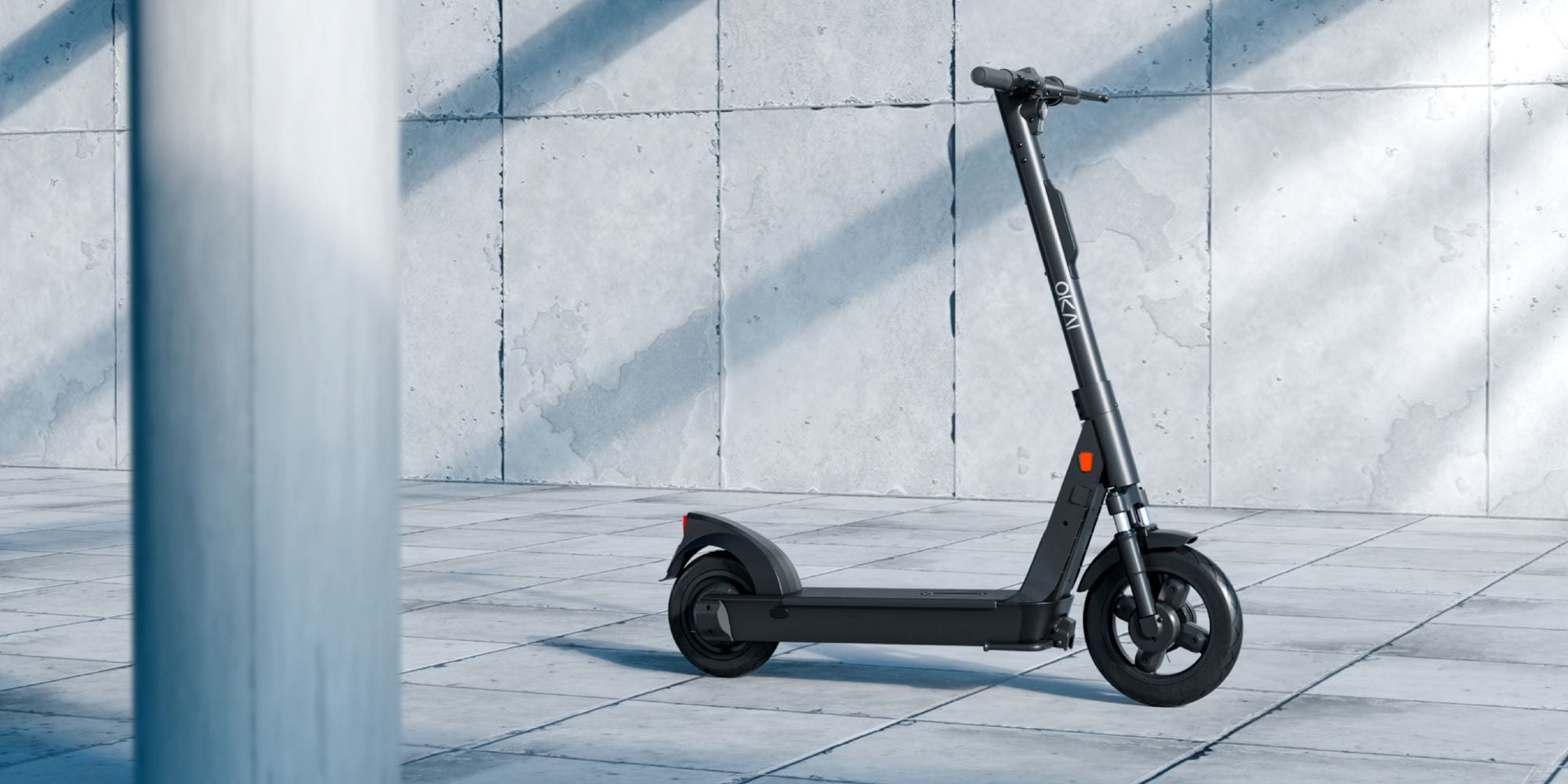
The scooter is designed to feel substantial underfoot. Its wide deck supports a balanced stance, while the reinforced stem and front suspension provide a direct, controlled connection to the road. Because it is a commercial fleet vehicle, it will feel heavier than many personal scooters. Start gently and learn its steering and braking response before entering traffic.
At a glance
Useful details, explained clearly.
These figures describe the vehicle platform and the features a rider can actually notice. Battery state, fleet configuration, weather, surface and riding style can change the real experience, so the Bimba app and the vehicle in front of you remain the practical reference.
Bimba may configure a lower operating speed or apply local ride zones.
Manufacturer specification, not a promise of constant output.
Lithium battery with a swappable design.
One eligible rider only; never carry a passenger.
Do not treat this laboratory figure as approval for every hill or road.
A substantial fleet vehicle; allow room to maneuver and stop.
Published overall dimensions of the underlying platform.
Commercial-grade design
Made for daily shared use.
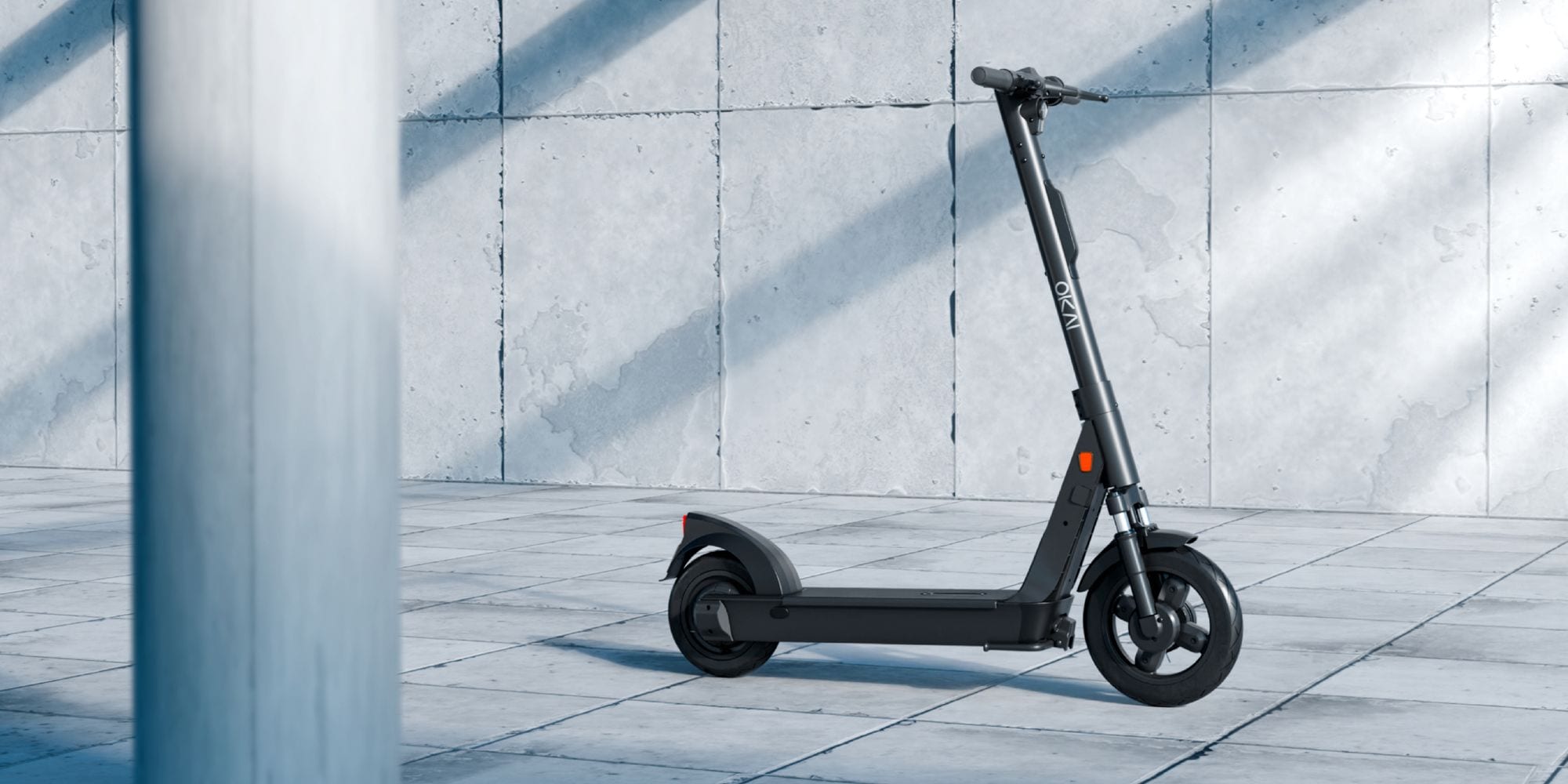
This is not a consumer vehicle adapted with a QR sticker. The platform was developed for shared fleets, where the frame, battery enclosure, controls and connected electronics need to withstand frequent use by different riders.
Bimba adds the part riders do not see in a specification table: local inspection, charging, maintenance, app access and an approved parking network. The actual vehicle and the Bimba app are always the reference for controls, battery status and current ride rules.
A closer look
Engineering you can understand.
These official engineering images show the underlying vehicle platform. We focus only on the parts that affect comfort, control, durability and the everyday riding experience.
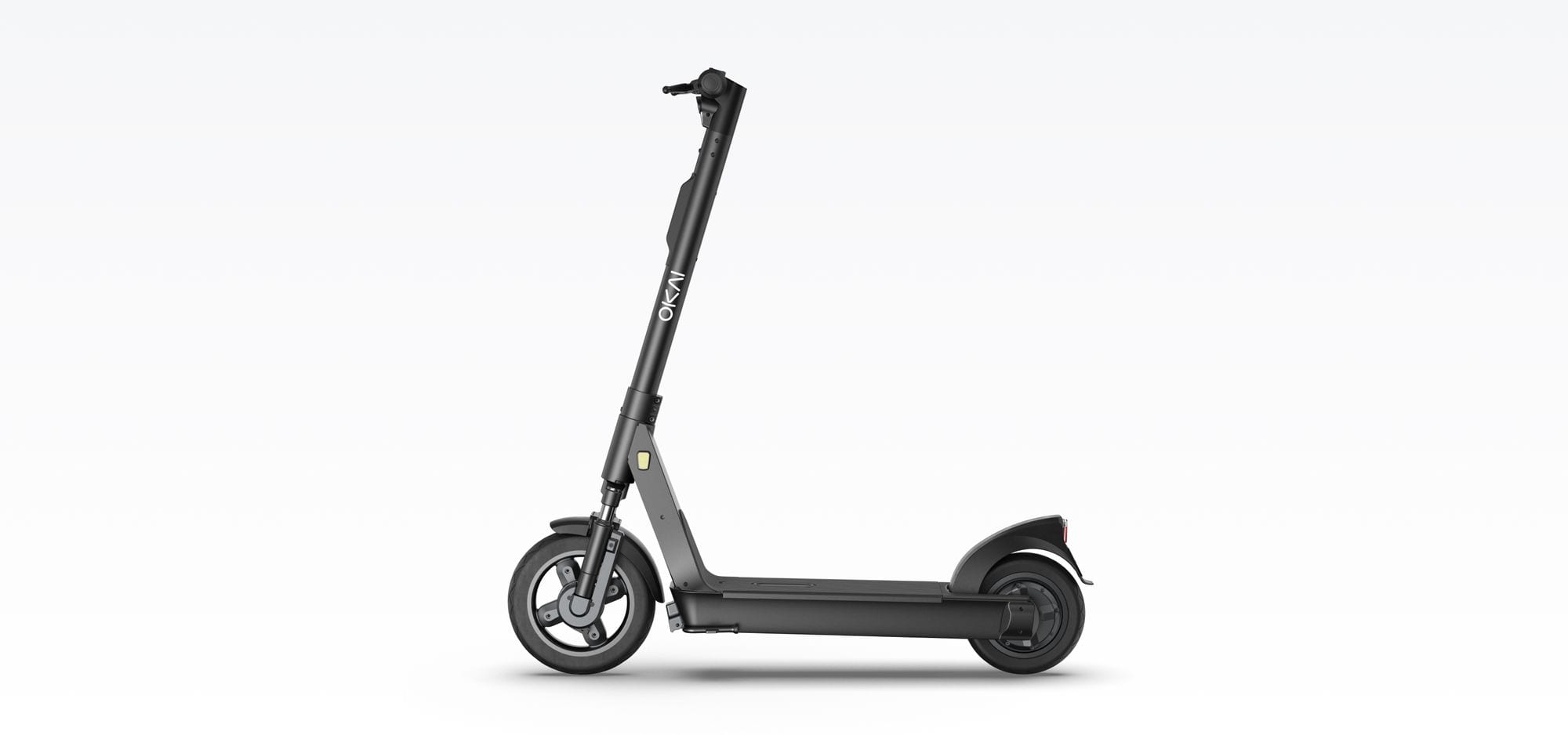
A strong one-piece silhouette
The reinforced frame, wide deck and protected lower body are designed around repeated shared use. The low deck gives the rider useful standing room, while enclosed components reduce exposure to everyday knocks and road debris.
Suspension, wheels and braking
Hydraulic front suspension helps absorb part of the vibration from an imperfect surface. The scooter also uses front drum and rear regenerative braking. These systems add control, but riders still need to slow before gravel, sand, water and potholes.
Designed for shared mobility
Features that matter on a real ride.
A durable fleet platform
High-strength materials and standardized core parts are used to support repeated shared operation and more practical maintenance.
Help on imperfect surfaces
The manufacturer's hydraulic suspension is designed to soften some road vibration. It cannot make potholes, loose gravel, sand or standing water safe.
Faster fleet servicing
The battery can be removed by trained fleet staff, allowing the operations team to service energy needs without treating the scooter as a disposable product.
App-based access
Integrated IoT functions include GSM and Bluetooth locking, geolocation and remote vehicle telemetry. The rider experiences this through the Bimba app.
Stable parking support
A stable stand helps when the scooter is parked correctly, but the rider must still use an approved Bimba location and keep access clear.
Information for operations
Remote signals can support maintenance decisions. They do not replace the rider's visual and physical pre-ride check.
Electric rental without a counter
Find it. Unlock it. Ride it. Return it.
- 01
Find a nearby vehicle
Open the Bimba app to see current availability, pricing and approved parking locations around Santa Teresa.
- 02
Scan and check
Scan the QR code, then check the brakes, tires, lights and controls before entering the road.
- 03
Ride at a comfortable pace
Stay within the active area, keep your attention on traffic and stop safely before using your phone.
- 04
Finish in the app
Return the vehicle at an approved Bimba location and wait until the app confirms that the trip has ended.
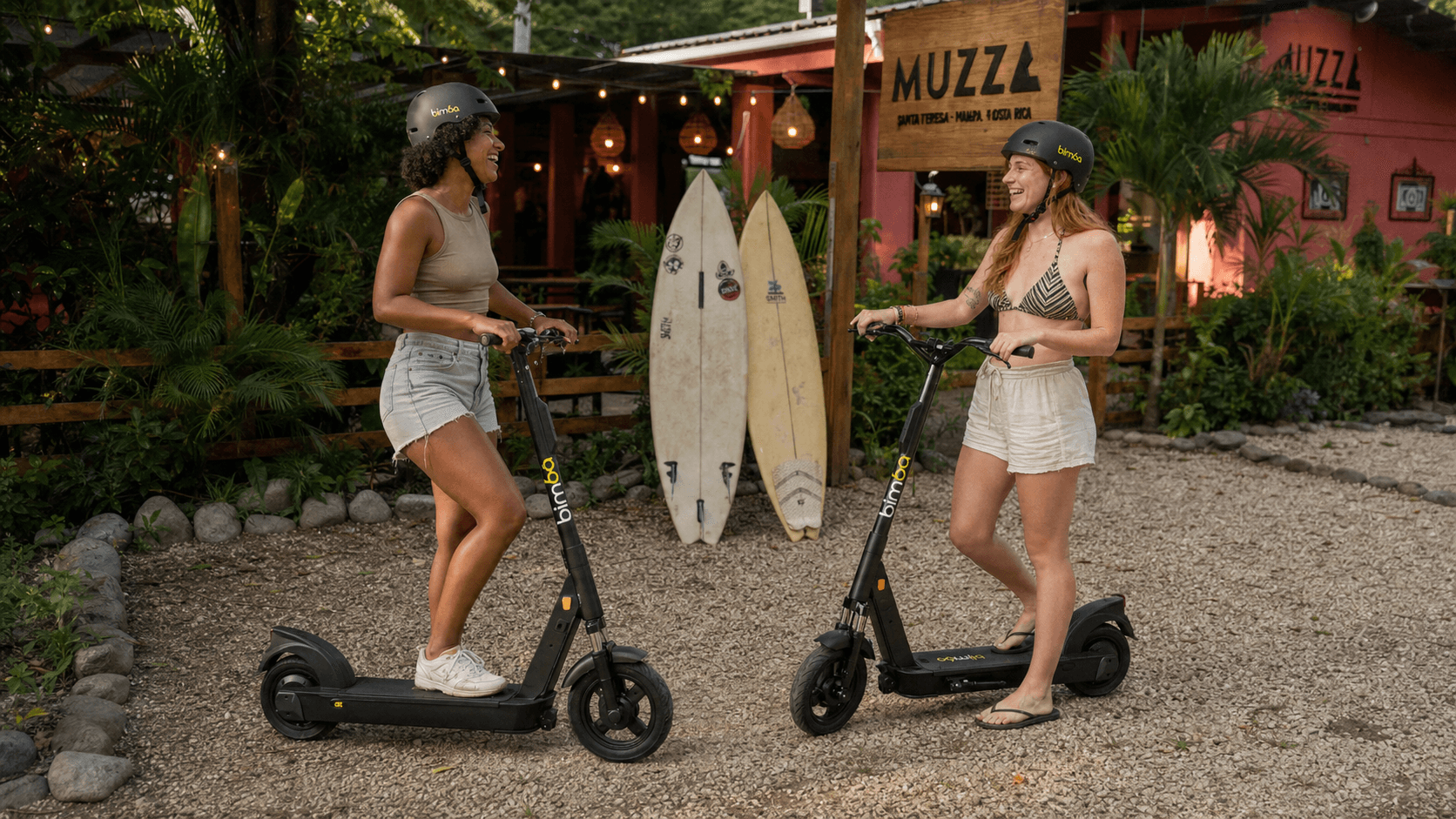
In the Bimba fleet
Built elsewhere. Operated for Santa Teresa.
A strong vehicle is only one part of a reliable shared ride. Bimba's local team checks, charges, maintains and repositions the fleet. The app connects each vehicle with an account and active trip, while approved parking locations give riders a clear place to finish.
Local operation also means responding to the road in front of us. Dust, rain, salt air, heavy use and changing surfaces require regular inspection. Riders contribute by reporting damage instead of continuing on a vehicle that does not feel right.
See how the Bimba system works ↗Local riding guide
What to know before riding in Santa Teresa.
Choose the e-scooter for the right trip
A standing scooter can be useful for a short, direct trip when the road is visible, reasonably firm and within the active Bimba area. It may feel simple to start, but its smaller wheels react more sharply than an e-bike to holes, gravel, sand, puddles and abrupt edges. Look at the route before unlocking, not only at the distance. If the journey includes a rough side road, heavy rain, darkness, luggage or a surface you do not trust, choose the Bimba e-bike, a taxi or another suitable option.
Start with balance, not speed
Stand with one foot slightly ahead of the other, keep your knees relaxed and place both hands on the handlebars. Push off gently and build speed gradually only after the scooter feels stable. Look ahead rather than down at the front wheel. Sudden steering, hard acceleration and abrupt braking reduce the time available to react. Santa Teresa's traffic includes cars, ATVs, motorcycles, pedestrians, animals and vehicles entering from business driveways, so a predictable line and conservative pace matter more than reaching the scooter's technical capability.
Treat wet, sandy and loose roads differently
The e-scooter has a robust fleet structure, but no technical feature cancels the limits of traction. Reduce speed before loose gravel, wet paint, sand, standing water or a change in surface. Keep the scooter as upright as possible and avoid braking hard while turning. If water hides the road or rain makes it difficult to see, stop in a safe place and change the plan. A tested gradeability figure is not a recommendation to ride every steep local access road.
Use the technical numbers as context
Published figures describe a vehicle tested in controlled conditions, not the exact result of a particular Bimba trip. Remaining battery, fleet configuration, tire pressure, rider weight, speed, heat, hills and repeated stopping all influence real performance. Check the live vehicle information in the Bimba app and plan a reasonable local journey rather than treating maximum range or gradeability as a target. If the available battery or route does not leave a comfortable margin, choose another scooter or another form of transport.
Finish at an approved Bimba location
The ride is not complete simply because the scooter has stopped moving. Use the Bimba app to select a valid parking destination. Leave the scooter upright in the indicated area, away from doors, driveways, roads, ramps, beach access and pedestrian movement. Follow any on-site dock or parking instruction and wait until the app confirms the ride has ended. Take a moment to look back: the scooter should be stable, easy for the next rider to reach and out of everybody else's way. If the trip remains active, stay with the scooter where appropriate and contact Bimba support with the vehicle number and exact location. A clear photo and a precise business or station name can help the local team understand the situation without guesswork.