

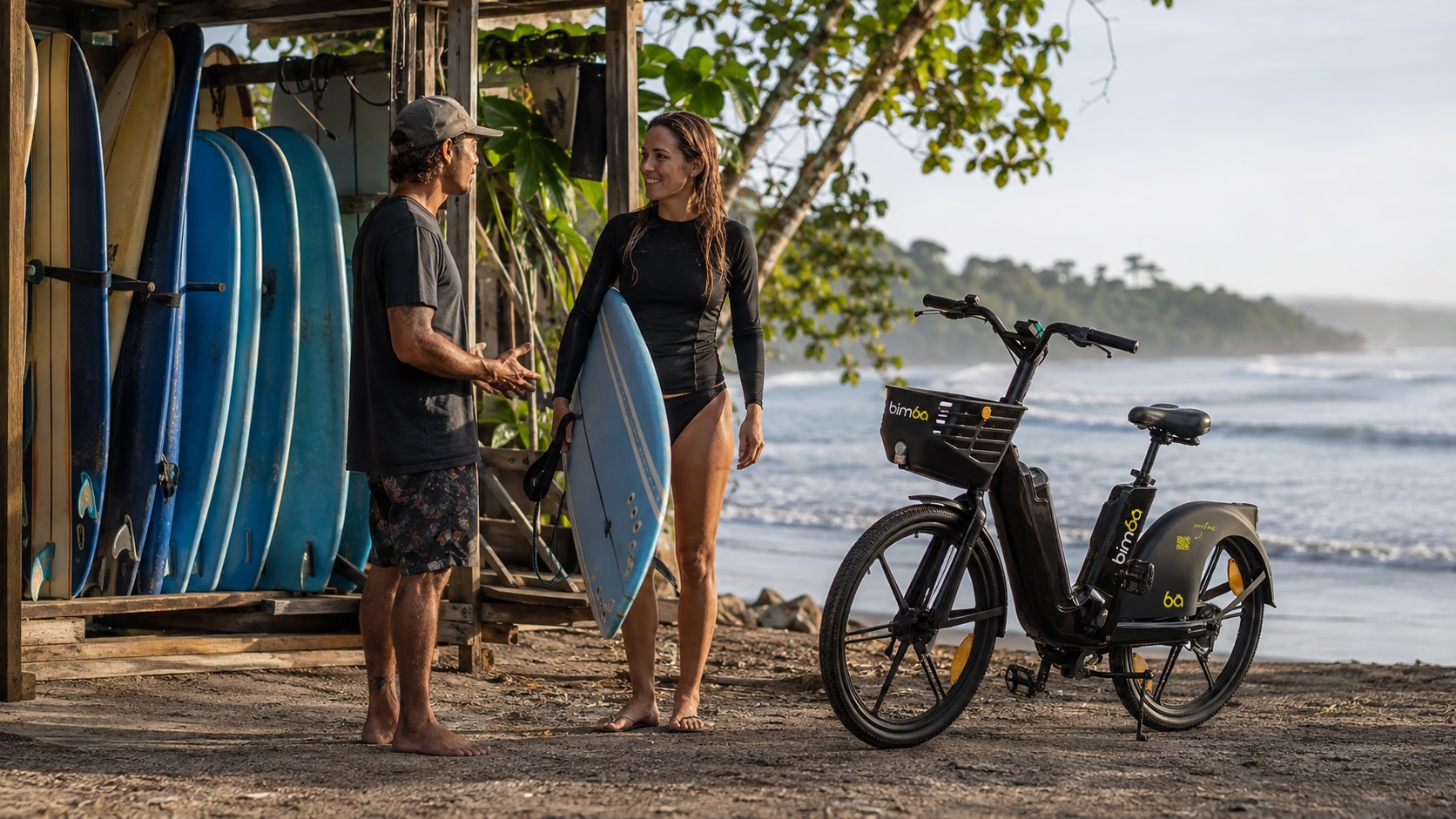
Santa Teresa can work for beginner surfers when a qualified local instructor selects the beach and time for the day's conditions. Playa Carmen is commonly used for beginner lessons, but swell, tide, wind and crowd change the decision. Book a school that explains supervision, group size, equipment and cancellation policy, and never assume a Bimba can carry a surfboard.
Choose the instructor and conditions before the postcard beach—and solve board transport before leaving your accommodation.
Compare schools by the lesson—not the logo.
A useful first lesson has the right beach, board, supervision and honest plan for changing conditions.
| Question | Good signal | Warning sign |
|---|---|---|
| Where do we meet? | Selected after checking current conditions | Same beach promised for every day |
| How large is the group? | Clear student-to-coach limit | No answer about in-water supervision |
| What is included? | Board, leash, rash guard and safety briefing stated | Equipment assumptions left vague |
| What if conditions change? | Reschedule or safer-location policy | Pressure to enter regardless |
| How does the board travel? | School storage, delivery or suitable rack | Improvised carrying on a bike or scooter |
Let the instructor choose the beginner window
Playa Carmen is often recommended to first-time surfers because parts of the beach can offer approachable whitewater, but no beach is permanently beginner-safe. Swell direction, period, tide, wind, currents and crowd change the session from hour to hour.
A responsible school explains why it chose the meeting point and is willing to move, delay or cancel when conditions exceed the group. Treat confident promises about a specific wave several days ahead as marketing, not a forecast.
Practical checks
- Ask who supervises you in the water.
- Confirm the board and leash are included.
- Share swimming ability and injuries honestly.
Choose group, private lesson or camp
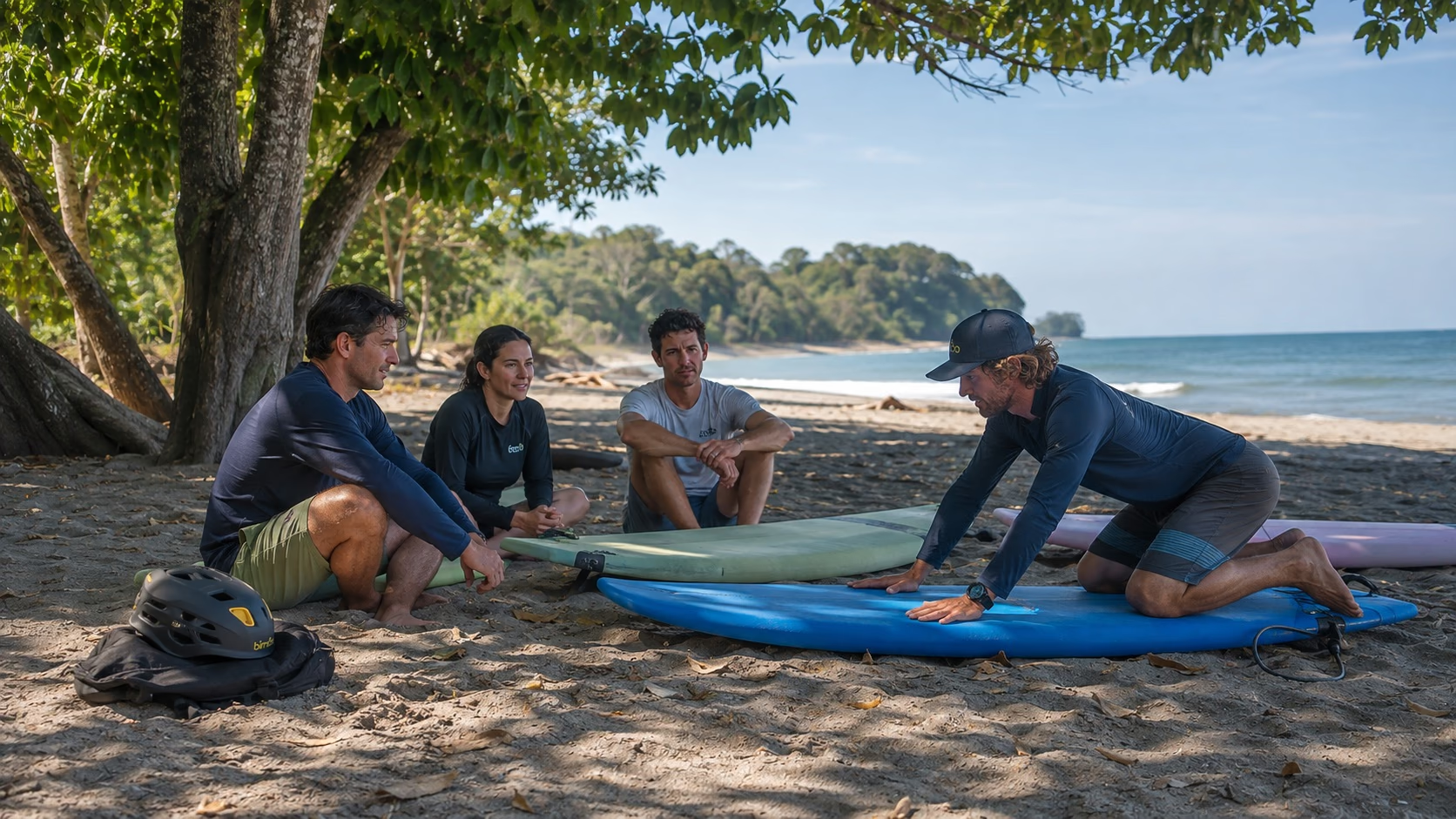
A group lesson can be sociable and economical when the group-size limit is clear. A private lesson gives more individual feedback and may suit nervous beginners, children or returning surfers correcting one skill. A multi-day package is valuable only if the school adapts each session rather than repeating the same lesson.
Ask how much of the advertised duration is spent in the water, whether transport is included, which languages the coach uses and what the cancellation policy says about unsafe conditions. Compare the complete lesson rather than the headline price.
Separate rider transport from board transport
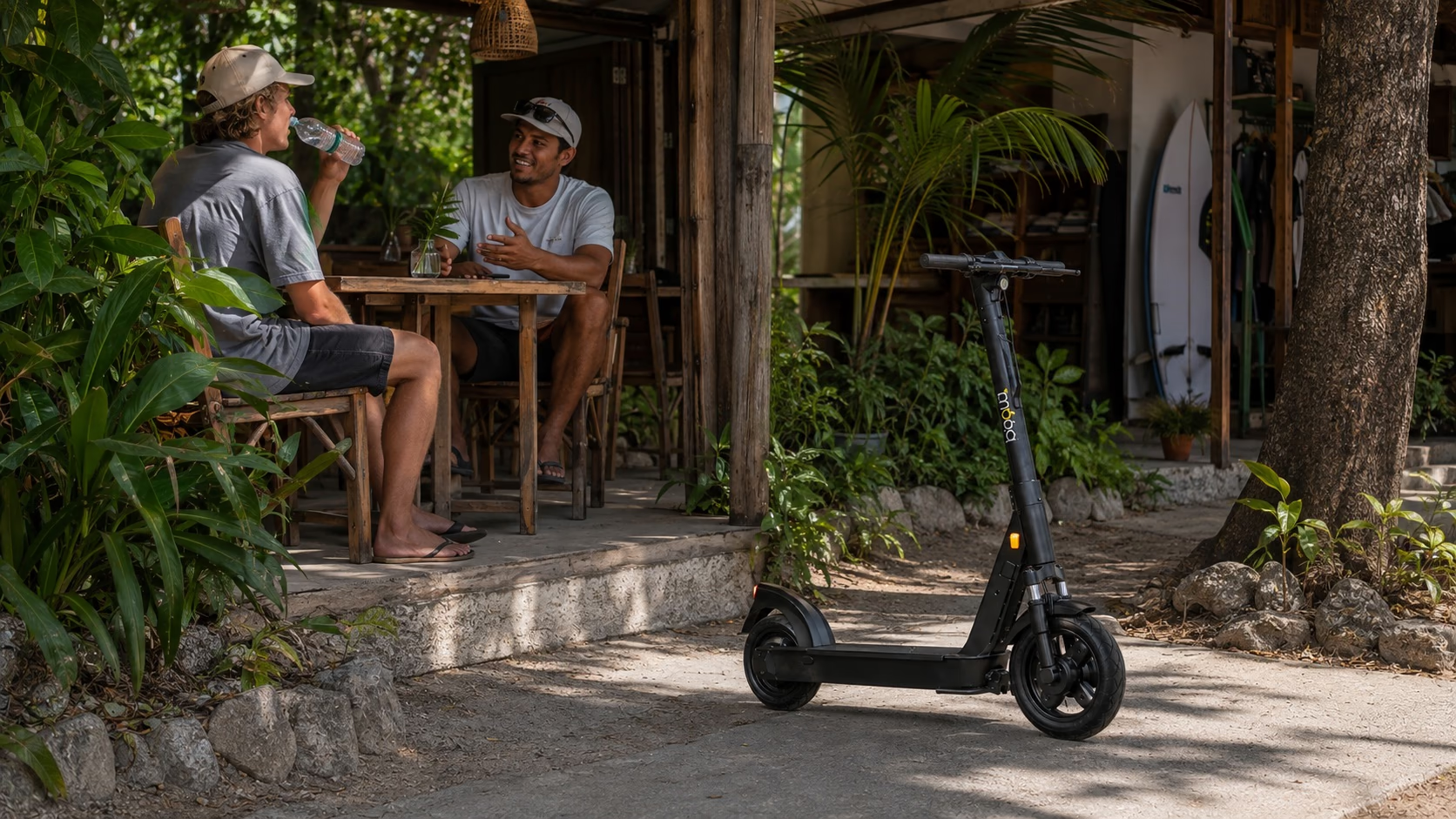
Bimba can be useful for a suitable dry trip to a surf school when the board and equipment are already stored there. It is not a surfboard carrier, and no rack should be improvised on an e-bike or standing scooter.
For a board, use school delivery, approved rental racks, a taxi that confirms capacity or a vehicle designed for the load. After the lesson, dry off and change before riding; fatigue, wet hands and an unsecured bag reduce control. When in doubt, recover nearby and take a taxi.
What Should You Ask a Santa Teresa Surf School?
Ask who will coach the lesson, the maximum student-to-instructor ratio, what equipment is included, how the meeting beach is chosen and what happens when conditions are unsuitable. A responsible answer explains supervision and adaptation; it does not promise one beach or guarantee that every student will stand up.
Disclose swimming ability, injuries and anxiety honestly. Confirm the lesson language and how much advertised time is actually spent in the water. For children, ask about age policy, flotation approach and whether the instructor remains within immediate reach. The Santa Teresa Book beginner guide can help frame the options, but the school's current assessment must control the session.
What Should a First Surf Lesson Include?
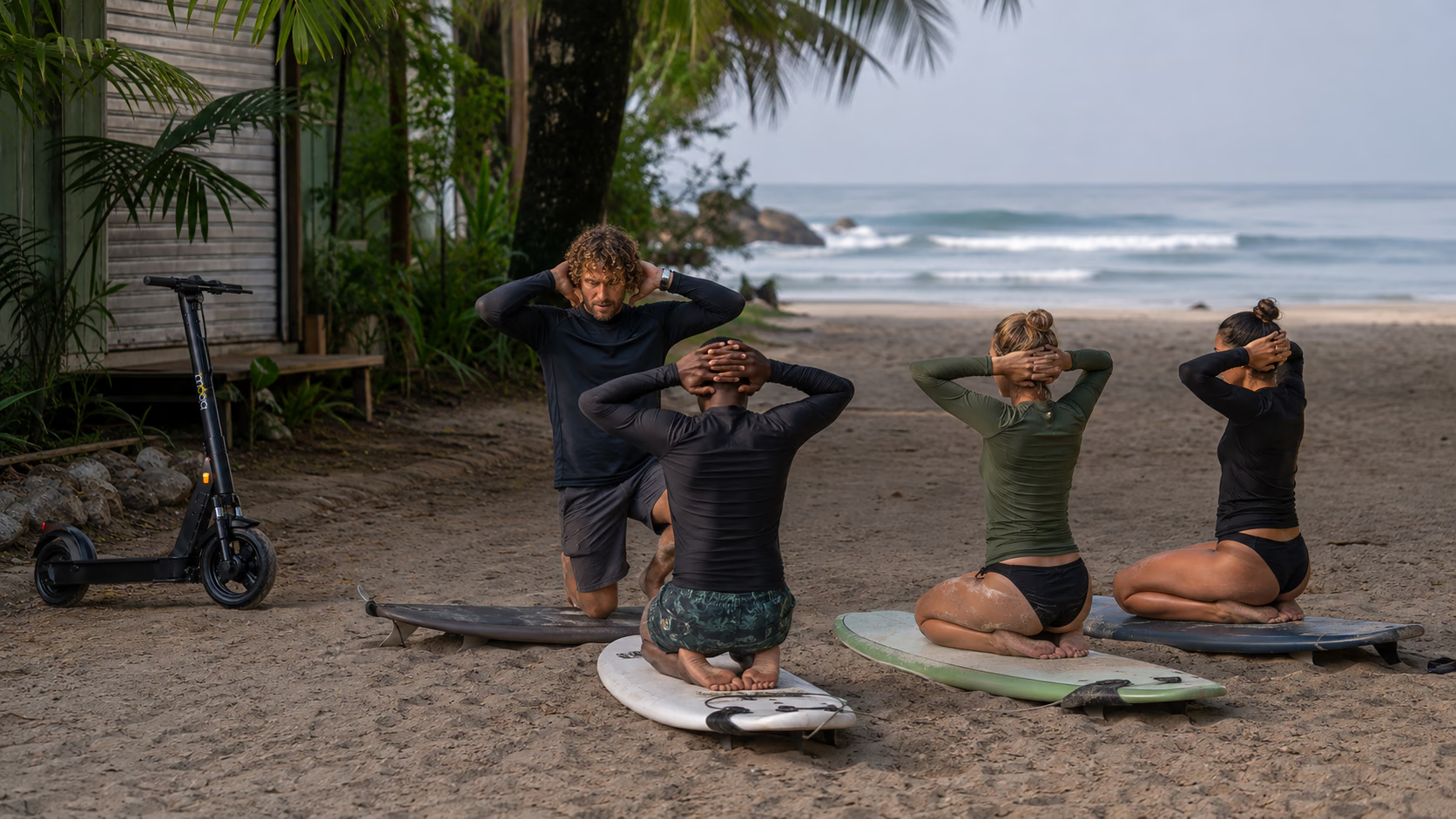
Before entering, the coach should explain the board, leash, safe carrying, prone position, pop-up, fall technique and the session boundary. The water briefing should cover currents, other surfers, hand signals and what to do if separated from the board or group. Beginners normally start where the coach can supervise manageable whitewater; the exact place changes with the day.
Playa Carmen is commonly used for lessons, but its name is not a safety guarantee. Swell, tide, wind, sandbars and crowd can transform the same stretch of beach. Check current tide information and listen to the instructor at the beach; an old forecast or travel article cannot declare a live session safe.
How Should You Travel After a Beginner Surf Lesson?
Surf fatigue is easy to underestimate. Drink water, eat, dry your hands and change out of restrictive wet gear before deciding how to travel. Store the board with the school or use its delivery, a confirmed taxi with capacity or an approved rack on a suitable rental vehicle. Never improvise board carrying on a Bimba bike or scooter.
Stop and reassess when
- the coach cannot explain why the selected area fits beginners;
- conditions have materially changed since booking;
- the group is larger than promised;
- equipment is damaged or poorly fitted;
- fatigue, injury or fear makes continued participation unsafe.
A good lesson is not measured only by standing up. Safe decisions, board control and understanding the environment are meaningful first-session outcomes.
Which Ocean Variables Change a Beginner Session?
Swell height alone is not enough. Period influences the energy arriving at the beach; direction changes how that energy meets the coastline; tide affects depth and where waves break; wind changes surface quality; sandbars and currents can shift; crowd adds collision risk. These variables interact, so an old statement that one beach is “for beginners” cannot approve today's lesson.
Use services such as Surfline's local tide information for context, then let a qualified local instructor make the beach-level decision. Forecasts are planning tools, not safety guarantees. If the school cannot explain why the selected area suits the group, ask for clarification before entering.
How Do Board Choice and Fit Affect the First Lesson?
Beginners generally benefit from a stable board with enough volume to support early positioning and whitewater practice. The correct board depends on the student's size, mobility and lesson conditions, not on choosing the smallest or most advanced-looking equipment. The leash should be intact and appropriate for the board; the instructor should explain how to handle both without wrapping the cord around fingers or standing between the board and incoming water.
A rash guard, suitable sun protection and a board in good condition should be clarified before payment. Ask whether equipment is included, how damaged equipment is handled and whether the school changes boards when the first fit is clearly wrong. Good instruction treats equipment selection as part of safety and learning, not a warehouse detail.
What Does Respectful Beginner Surfing Look Like?
A first lesson should introduce awareness of other water users. Beginners need a defined practice zone, clear signals from the instructor and enough spacing to avoid sending a loose board toward someone else. When falling, move away from the board when possible, protect the head on resurfacing and look before recovering equipment. Never dive headfirst into unknown shallow water.
Progress is not measured only by standing. Recognizing a current, controlling the board, stopping when tired and following the instructor are valuable outcomes. The Santa Teresa Book beginner guide offers local orientation, but conditions and school policies must be reconfirmed directly.
After the session
- Report pain, impact or dizziness rather than hiding it.
- Hydrate and protect skin from further sun exposure.
- Store or return the board using the school's system.
- Do not attach a board to a Bimba bike or scooter.
- Choose protected transport when fatigue or rain changes the margin.
Should a Beginner Choose a Group or Private Surf Lesson?
A group lesson can be a good first format when the student-to-instructor limit is clear, participants have reasonably similar needs and the coach can maintain direct supervision. It offers a social setting and lets beginners observe common corrections. Ask for the maximum group size, not the average, and confirm whether additional instructors enter the water when the group grows.
A private lesson may be more appropriate for a nervous swimmer, a child, someone returning from injury or a student who needs a slower explanation. It does not make unsuitable conditions safe, and it should not be sold as a guarantee of standing up. A multi-day package is useful when each session responds to progress and current conditions; repeating the same routine is not automatically better value. Choose the format that improves attention, communication and safety—not the one with the most impressive promise.
Plan the Rest of Your Santa Teresa Trip
Use these related Bimba guides to verify the vehicle, price, route and place where a trip can finish:
- best Santa Teresa beaches
- where to stay without a car
- Playa Santa Teresa guide
- Bimba safety
- Bimba locations
- rainy-season transport
- download the Bimba app
- choose a Bimba vehicle
Research sources and live checks
Accommodation, weather, surf conditions and business details can change. Use these destination and operator sources as starting points, then confirm time-sensitive details directly:
Frequently Asked Questions
Is Santa Teresa suitable for complete beginners?
It can be when a qualified instructor selects an appropriate beach and time. Current conditions matter more than the destination's general reputation.
Is Playa Carmen always beginner-friendly?
No beach is always suitable. Playa Carmen is commonly used for lessons, but swell, tide, wind, current and crowd must be assessed that day.
How should I choose a surf school?
Compare group size, in-water supervision, included equipment, coach qualifications, meeting-point logic and the unsafe-conditions policy.
Can I take a surfboard on a Bimba?
No surfboard-carrying setup is promised. Use school storage or transport, a confirmed taxi, or a suitable rental vehicle with an approved rack.