
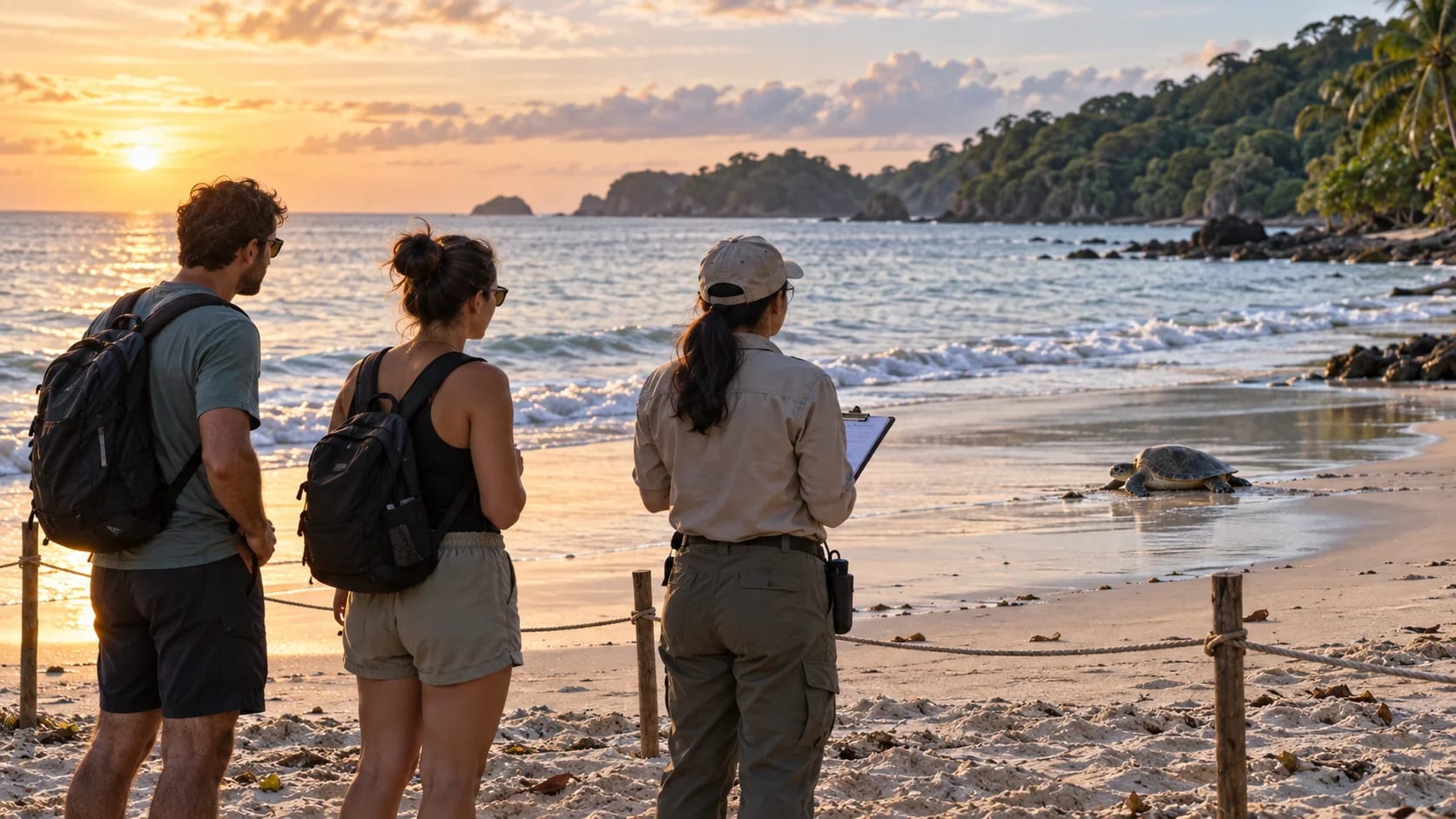
Supporting sea turtle conservation near Santa Teresa begins with deciding how much time you can give and what role you are seeking. You might want to learn from a supervised observation, complete an accepted volunteer placement or contribute resources. Each can serve a different need. Choose according to the project's work, rather than expecting a particular encounter in return.
ASVO's current website lists a conservation station in Montezuma with turtle protection, research, beach cleaning and community work. That provides a concrete organization to contact from Santa Teresa. It does not establish an open visitor session on your preferred afternoon or guarantee that hatchlings will emerge while you are there.
Distinguish learning, volunteering and donating
An educational visitor attends an activity the team has agreed to host. The purpose may be to learn about the project and observe from an appropriate place. The visit should have a clear organizer and conditions, even if the content depends on what happens in nature. Avoid arriving at a work area expecting staff to interrupt their tasks for an unscheduled tour.
A volunteer accepts assigned work and the training, schedule and supervision that accompany it. The useful question is whether you can complete the commitment the station needs. A volunteer role can include tasks with little direct wildlife contact. Cleaning equipment or keeping a shared space organized can matter even when nobody takes a photograph of the result.
A donor supports the organization's work without needing a place on a shift. That can be appropriate for a short holiday or for someone whose availability does not match the project. Ask whether the organization prefers an unrestricted contribution or a specific item. Buying supplies without checking can leave staff with unsuitable materials to store or dispose of.
Start with ASVO's current application route
ASVO identifies itself as a Costa Rican volunteer association operating since 1989. Its website distinguishes international and occasional volunteering, among other categories. The occasional category addresses people with at least three free days, but that general description does not confirm a three-day turtle placement at Montezuma.
Use the application link on ASVO's current site and name Montezuma as the station you are asking about. Explain your dates, languages and relevant experience. Ask the coordinator which category applies and whether the station needs help during that period. A form submission is an inquiry until the organization accepts the arrangement.
Third-party listings can describe placements with different lengths or inclusions. Before paying a booking service, identify the host organization and the exact project. Ask which organization receives the fee, who provides orientation and what happens if the advertised station cannot accept you. Keep the confirmed terms together with the host contact.
Assess the work rather than the wildlife photograph
Ask for a description of a normal work period and the tasks a new participant might perform. Distinguish responsibilities that require training from those suitable for a short contribution. You should understand who supervises you and what to do when a situation falls outside your instructions.
If a role includes night work, consider sleep and transport as part of the commitment. A late shift followed by an early excursion can leave you unable to contribute as agreed. A person staying in Santa Teresa should discuss whether commuting makes sense or whether the placement expects accommodation near the station.
Describe physical limitations through tasks: carrying equipment, walking on sand or standing for a long period. Ask about alternatives if needed. Do not hide a limitation to secure a place and expect the coordinator to redesign the work when you arrive. The team needs reliable information to assign useful responsibilities.
Keep animal handling within the station's authorized procedures and trained supervision. A volunteer label does not grant permission to move eggs, handle hatchlings or approach a nesting turtle on your own. If you are uncertain, stop and ask the coordinator. Curiosity can lead to a good question without becoming an unauthorized action.
Keep hatchling expectations realistic
A photograph of a release records one moment in a conservation program. It does not create an appointment that staff can reproduce for visitors. Ask what the project offers if no wildlife event occurs during an educational activity. A useful explanation of monitoring and habitat protection can stand on its own.
Do not ask staff to delay animals for your arrival, keep one aside for a child or repeat an action for a camera. Arrange your visit around the project rather than asking the project to organize wildlife around your holiday. If observing a release is the only outcome you would accept, explain that before booking and reconsider whether this is the right activity.
Use careful language with children. Explain that people help protect animals and that the visit may involve learning without touching or seeing a turtle. The Santa Teresa family guide can help you keep another enjoyable plan available without treating an absent wildlife sighting as a failed day.
Observe without changing the animal's behavior
NOAA's current conservation guidance explains that artificial light can disorient hatchlings and discourage nesting females. It recommends organized observation that avoids disturbing turtles, nests and young. Apply that biological principle by following the local conservation team's lighting and viewing instructions. A colored torch does not grant permission to illuminate animals.
Keep your phone screen and camera flash under control. Ask about photography before an activity begins, while staff have time to explain the rules. During a sensitive moment, put the device away if instructed. You can remember an encounter without creating a close-up image.
Give the animals an unobstructed path and stay where the team directs visitors. Do not reach out because a hatchling seems slow or a turtle appears to pause. Let trained staff assess the situation. Keep pets away from the activity and ask the organizer about visitor restrictions before arriving with an animal.
If you encounter a turtle outside an organized visit, keep your distance and contact the appropriate local conservation personnel rather than attempting to take over. Describe the location and what you observed. Do not move an animal to make it easier for responders to find unless a qualified responder gives you a specific instruction.
Support the beach habitat between visits
You can reduce avoidable obstacles on the beach without entering a conservation work area. Take your own belongings away at the end of the day and keep waste contained. Leave marked areas and natural features undisturbed. Ask the local team how visitors can help in the section of beach they manage.
A coordinated beach cleanup in Santa Teresa offers another way to contribute when a station placement does not fit your dates. Follow the organizer's rules about sensitive areas and hazardous objects. Do not dig into sand near a nest marker or remove natural material because it looks untidy.
The visitor recycling guide addresses what happens to sorted waste after collection. Keeping rubbish out of the environment requires a disposal plan, not merely filling a bag. For a cleanup, leave the material with the organizer's agreed collection system rather than moving it to an unrelated property's bins.
Read the placement terms as a working agreement
Confirm the start and end dates, orientation requirements and the expected work schedule. Ask what accommodation and meals include, whether you share a room and which personal expenses remain yours. A package price can cover very different services, so compare the actual agreement instead of choosing from the headline amount.
Ask how the host handles days off and changes in work caused by weather or wildlife needs. You should know whether staff expect flexibility and whether you can leave for other activities. Avoid buying nonrefundable tours during the placement before understanding those responsibilities.
For university credit or a required internship, obtain written approval from your institution before paying. A volunteer certificate may not meet a course's learning or supervision requirements. Tell the host what documentation you need and ask whether it can provide it without creating an extra administrative burden.
Keep the regional journey realistic
Montezuma and Santa Teresa are separate destinations. The Montezuma day-visit guide helps plan an educational outing that the station has accepted. Confirm the exact meeting place and finish time with the organizer before arranging a driver. Do not use a general beach pin as the station entrance.
For repeated shifts, compare staying near the project with commuting. The Santa Teresa and Montezuma base comparison can help with that accommodation decision. Include sleep and reliability, not only the fare, when considering a late return after work.
Bimba's short local trips within live app boundaries do not provide regional travel to Montezuma or transport across nesting beaches. Keep the placement's road transfer and the site's permitted walking access separate from local mobility in Santa Teresa.
Choose support the team can use
Send a concise inquiry that states your available dates and whether you seek a visit, a placement or another form of support. Include a relevant skill if you have one, while accepting that the coordinator may need a different task completed. A clear offer lets staff respond without guessing what you expect.
After participating, describe the work with accuracy. Distinguish what you observed from what the organization reports, and avoid claiming that your short visit saved a certain number of turtles. Share the host's official information rather than posting precise nest locations or promising others the same encounter.
Choose a role you can complete with care. For a brief stay, an accepted learning visit or donation may fit better than a volunteer shift. For a longer commitment, follow the station's schedule and training. In either case, the conservation team should decide how visitors fit around the animals and the work.
Match your contribution to the station’s needs
Contact ASVO with dates and a clear choice of visit, placement or support. Accept the station’s schedule and animal-handling limits, and keep release expectations separate from your commitment.