
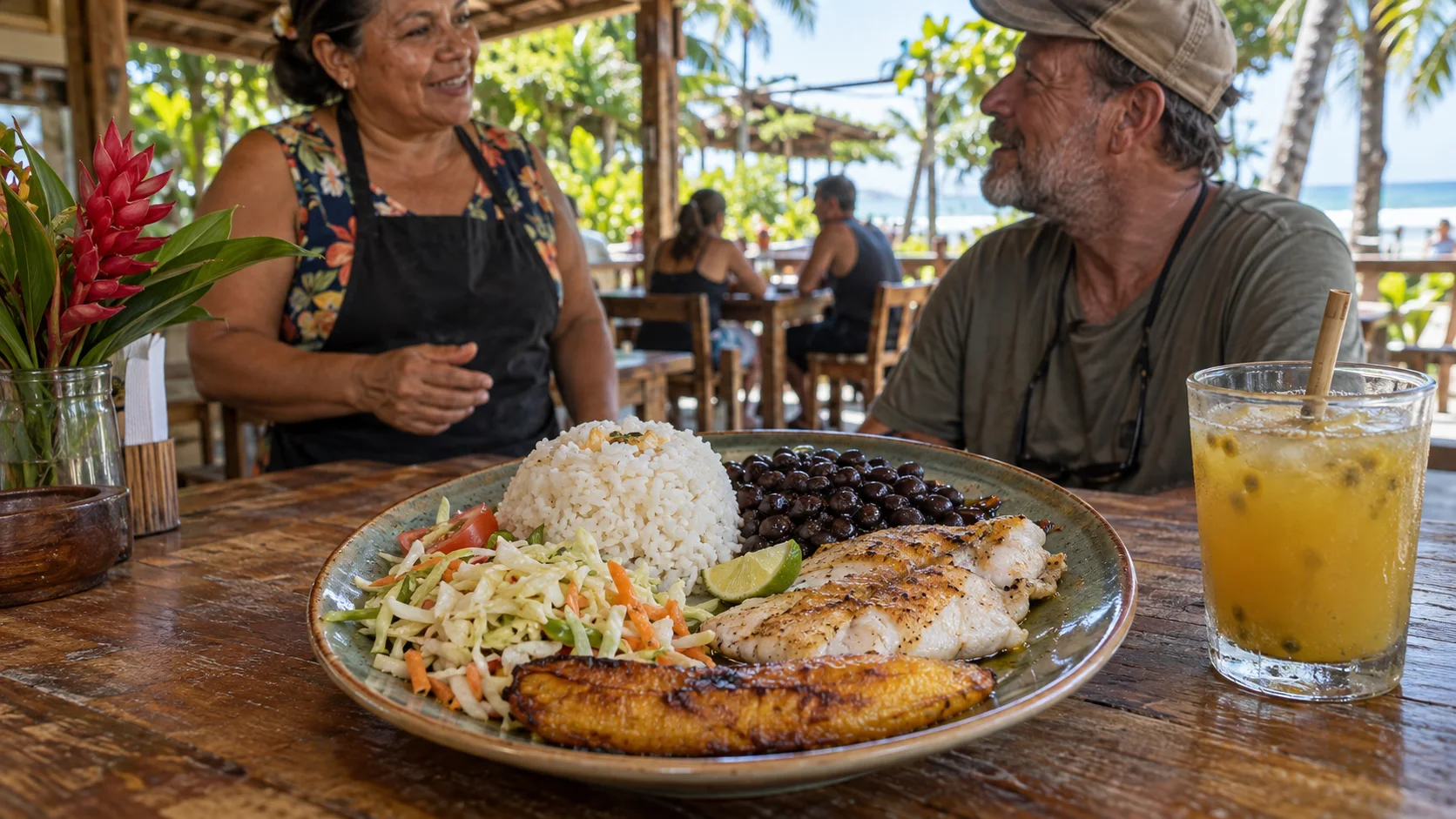
Costa Rican menus become much easier to read once you know a few everyday terms. Gallo pinto points you toward a familiar breakfast; a casado describes a complete meal format; a soda is a place to eat. Here is how those words can help you choose a meal in Santa Teresa.
Gallo pinto: the breakfast starting point
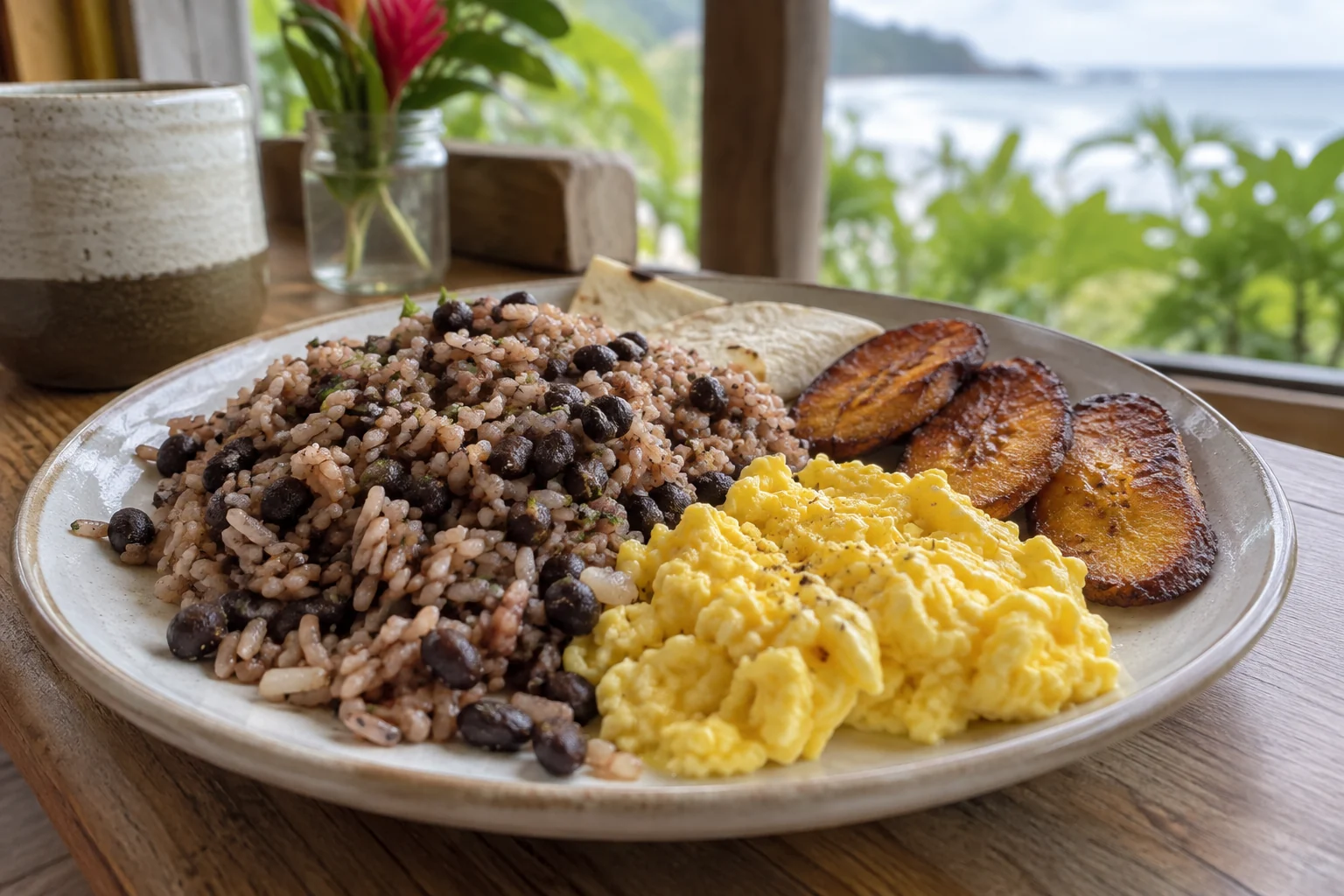
Gallo pinto is a rice-and-bean preparation commonly served at breakfast in Costa Rica. The accompaniments make a substantial difference to the meal: eggs, plantain, cheese, tortillas or other sides may be included or ordered separately.
When comparing breakfast prices, compare the complete plate. A menu line for gallo pinto alone is not necessarily the same order as a breakfast combination with eggs and coffee. Ask which drink and sides are included before deciding that one option is cheaper.
For Santa Teresa breakfast locations, use the local café guide alongside the restaurant's current menu. A business serving international breakfasts may also offer a Costa Rican option; the cuisine label on a map is not a complete menu.
Casado: compare the whole lunch plate
A casado is a plate-style meal built around rice, beans, a selected protein and accompanying sides. The protein choice and the kitchen's accompaniments vary, so it is better understood as a meal format than one fixed recipe.
This makes it useful when comparing lunch value. Identify the main protein, vegetables or salad, additional starches and drink. A single item with a lower menu price may require enough extras to cost more than a complete plate.
Do not assume a casado is vegetarian because rice and beans are prominent. Ask about the main protein, the bean preparation and any broth or sauces when those ingredients matter to your diet.
Other menu terms worth recognising
| Term | What it generally describes | What to check on the menu |
|---|---|---|
| Patacones | Flattened, fried green plantain | Toppings, dips and portion size |
| Maduro | Ripe plantain preparation | Whether it is a side or part of a plate |
| Arroz con pollo | Rice prepared with chicken | Accompaniments and portion |
| Ceviche | A citrus-seasoned seafood preparation | Seafood used and exact preparation |
| Tortilla | A flatbread, often corn-based in local dishes | Filling, size and whether sold separately |
| Refresco natural | A fruit-based drink | Fruit, water or milk base and added sugar |
Menus and recipes vary between kitchens. Use these terms as a starting point, then check the version the restaurant serves.
What is a soda?
In Costa Rican travel usage, a soda is a small, informal eating place associated with local meals. It is not a guarantee of a particular price, opening schedule or menu. Read the day's offerings and compare the full order as you would at any restaurant.
For general background on national dishes and regional cooking, use the Costa Rica Tourism Board's gastronomy information. For an actual meal in Santa Teresa, the current kitchen menu is the useful source for ingredients and cost.
Avoid choosing solely because a venue is described as “authentic”. A clearer decision is whether it serves the dish you want, at a price and location that suit your day.
How to compare a local lunch with café food
Build two complete orders: the main dish, sides you will actually eat and a drink. Then compare the full amount you will pay. Keep currencies consistent and check any stated additions rather than treating a displayed base price as the final bill.
For example, a bowl and a separate side should be compared with a complete plate only after both orders contain enough food for your needs. The better-value order is the one that meets your needs at a price you are happy with.
Takeaway can change the calculation if there is a packaging or delivery charge. It can also change which dishes travel well. Ask the restaurant rather than assuming the dine-in presentation will be identical after transport.
Ordering with dietary requirements
Use specific ingredient questions. “Does this contain milk?” is more precise than assuming a fruit drink is dairy-free. Ask whether rice or beans use meat stock and whether a garnish includes cheese or cream if you need a plant-based meal.
For an allergy, speak directly with staff about ingredients, preparation and how the kitchen handles cross-contact.
The Santa Teresa café guide provides café leads, but confirm the particular dish rather than treating an entire venue as suitable for every diet.
Fit the meal into your route
A local meal is easiest to include near the activity or accommodation you are already using. Avoid a long cross-town trip solely because an undated list promises the cheapest casado. Confirm the current meal service and opening time first.
If traveling by Bimba, check a valid return point near the restaurant in the live app and finish the ride before eating. A restaurant address is not itself proof of approved parking. See Bimba locations for orientation.
Use the menu terms to ask better questions
You can keep the conversation simple. “What comes with the casado?” tells you more than the main ingredient alone. “Is the refresco made with water or milk?” clarifies a drink that may have several versions.
If you want a change, ask before ordering: can the kitchen leave out an ingredient, replace a side or serve a sauce separately? Check whether that affects the price.
For a dietary requirement, explain the ingredients you avoid rather than relying only on a label. These small questions help you order a meal you understand while still leaving room to try something new.
For the next part of your plan, see our comparing complete meals on a budget and checking vegan ingredients.
Use food names as clues, not fixed recipes
The Costa Rica Tourism Board describes gallo pinto, casado and ceviche as recognizable parts of the country's cuisine and explains the role of local sodas. Those names are useful orientation, but they do not define one preparation at every Santa Teresa kitchen. Ingredients, portion size and what comes on the plate can change by restaurant, day and season. Read the actual menu and ask about the version being served rather than expecting a national dish to have one universal price or set of sides.
Approach the menu in three steps. First identify the main dish or format. Next list what is included: protein, rice, beans, vegetables, plantain, tortilla, sauce and drink where relevant. Finally ask what can be changed and what additions cost. This turns an unfamiliar word into a clear order. It also keeps a food guide from treating a photograph of one plate as a promise about another restaurant's service.
Build a complete gallo pinto breakfast
Gallo pinto combines rice and beans, commonly at breakfast. A breakfast plate may add eggs, cheese, ripe plantain, tortillas, bread or a drink, but the extras are not automatic. If the menu lists “pinto” and another line lists a breakfast special, ask what each includes. A smaller plate can suit a light start; a larger combination may be better value when you want the accompaniments anyway. Compare the amount you will actually order, not just the price beside the dish name.
Ask how the beans are prepared if that matters to your diet. A plate can look plant-based while cheese, egg, cooking fat or another ingredient changes the answer. If you want a specific preparation, ask politely before ordering and accept that a kitchen may not be able to change a batch made earlier. At a café, confirm whether coffee or fruit drink is included; a photograph of a breakfast next to a cup does not establish the package price.
Read a casado component by component
A casado is a composed meal, often with rice, beans, a chosen protein and accompanying vegetables or other sides. The choices vary. Before ordering, ask which proteins are available today, how the protein is prepared, whether plantain or salad is included and if a drink comes with it. Someone comparing fish with chicken should check whether the price changes. Someone avoiding meat should ask whether there is a suitable option and how the beans and sides are cooked.
The format can be a practical lunch because several components arrive together, but “complete” is relative to what you want. If you are especially hungry, a small plate might not satisfy; if you want only a snack, a casado may be more than you need. When judging value against a café bowl or sandwich, compare portion and included sides rather than relying on the label “local.” The official tourism description identifies the dish, while the kitchen's current menu determines today's actual order.
Know green from ripe plantain
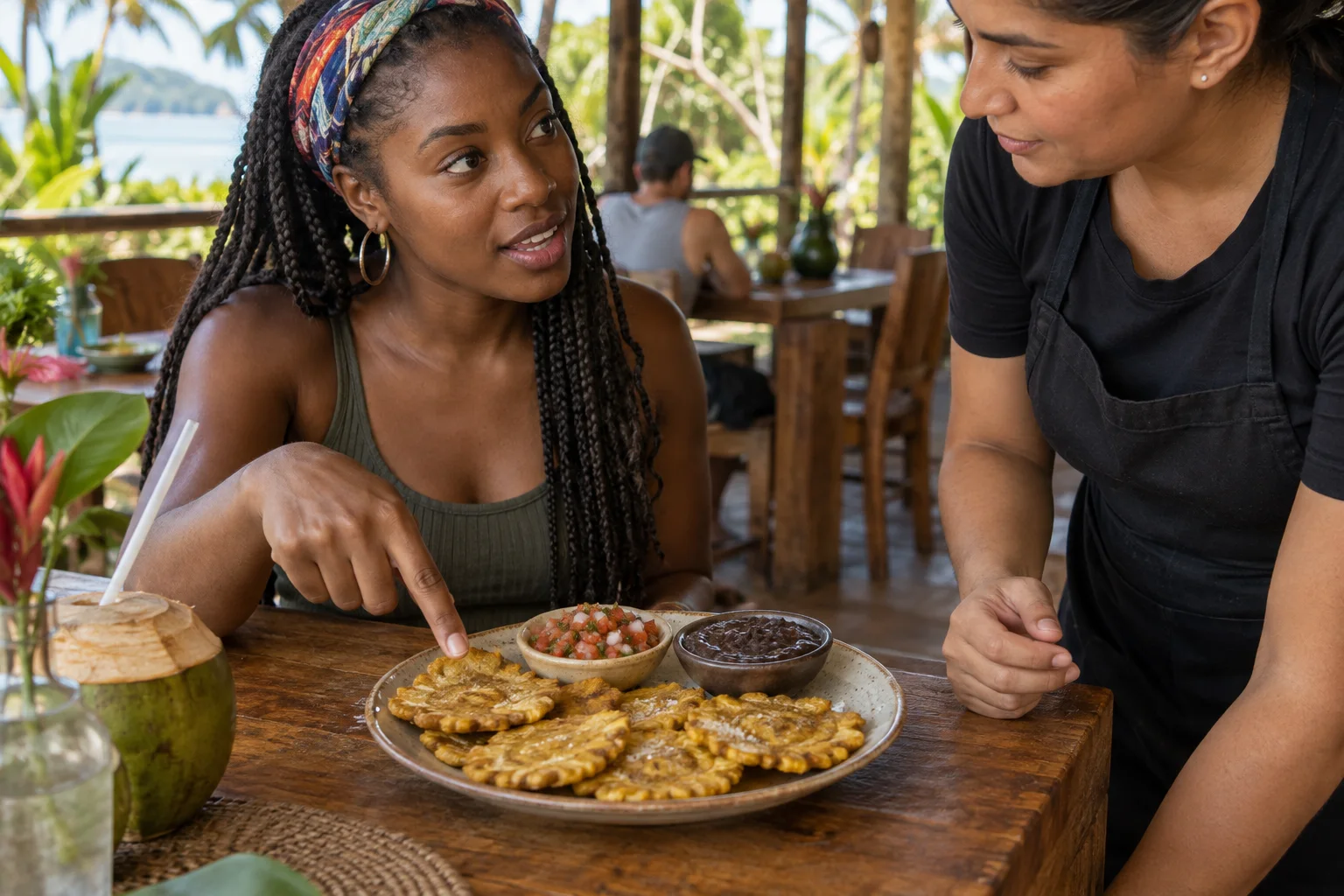
Patacones are flattened, fried green plantain pieces that may be served plain, with dips or under toppings. “Maduro” usually points to a ripe plantain preparation with a sweeter taste. Ask whether the item is a side, a snack plate or a full serving with toppings. If you expect a savory starter, check the dip and portion; if you expect a side, check whether it is already part of the main plate. Names alone do not tell you how many pieces arrive.
Recipes also differ in oil, seasoning and accompaniments. If you need to avoid an ingredient, ask about both the plantain preparation and what is served with it. A photograph of one restaurant's patacones may show a topping that another does not use. The image here illustrates a representative plate and should help you recognize the broad form, not claim to show a specific Santa Teresa menu item.
Ask specific questions about seafood dishes
Ceviche is a citrus-seasoned seafood preparation, but the seafood type, added vegetables and serving style vary. Ask what seafood is used today, whether it is prepared to order or in advance, and what comes with the portion. Do not assume that citrus makes every preparation suitable for every dietary or health need. If you have an allergy, contact the kitchen directly about ingredients and cross-contact. If you prefer cooked seafood, choose a dish explicitly prepared that way rather than treating the name ceviche as a cooking method.
Coastal menus can also change with supply. A board or old online image may list a fish that is not available during your visit. Ask for the current option and its price before ordering. When comparing two seafood meals, look at preparation, accompaniments and portion as well as the displayed name. If a dish is priced by weight or market availability, clarify the final amount before it is prepared.
Decode drinks and complete the meal price
A “refresco natural” usually tells you that fruit is involved, not the complete recipe. Ask which fruit is available, whether the drink is made with water or milk, how it is sweetened and what size is served. A smoothie, juice and “fresco” may use different fruit quantities and added ingredients even when the same fruit appears in the name. If you avoid dairy or added sugar, ask rather than interpreting the menu category as a guarantee.
Calculate the full meal with the drink you actually want. For a dine-in lunch, note any stated taxes or service charges. For takeaway or delivery, ask about packaging, delivery area and fees. A meal that looks inexpensive without drink, sides or delivery may not be cheaper than a fuller plate nearby. Keep the comparison in the same currency and use current prices rather than an undated article or a photographed menu from another year.
Choose a soda by its current offering
In Costa Rica, a soda is an informal local eating place; the tourism board uses the term while describing home-style meals. That says nothing by itself about price, hygiene, opening hours or what is served today. Look at the actual menu, ask what is available and decide whether the location fits your route. A polished café may serve a good gallo pinto, and a soda may serve dishes beyond a casado. The venue label is not a quality score.
If you have a short lunch window, check when the kitchen serves the dish you want and how long an order might take. Breakfast items may not be sold all day. Ask about seating, takeaway and payment before building an itinerary around a meal. For a simple decision, pick a place that is open, has the dish you want and gives a clear answer about the total. No national food guide can establish live availability for an individual Santa Teresa kitchen.
Use short, precise ordering questions
“What comes with the casado today?” is more useful than asking whether it is traditional. “Is this refresco made with water or milk?” clarifies a dietary and taste difference. “Are the patacones plain or topped?” avoids ordering the wrong size or style. If a side can be replaced, ask whether the change is possible and whether it alters the price. Repeat the final order when several people are paying separately.
For allergies or strict dietary needs, ask about the specific ingredients and preparation process with staff who can check the kitchen. Do not rely solely on an icon, a broad venue label or a travel article. The best food experience is one where you understand the plate well enough to enjoy it. The photographs show representative dishes, not menu promises from named businesses; use them to recognize forms and then verify the current order.
Frequently asked questions
Is gallo pinto always served with eggs?
No. Eggs are a common accompaniment, but the actual breakfast combination depends on the menu. Check what the listed price includes.
Is a casado one specific dish?
It is a meal format with several components. Protein choices and sides vary by kitchen.
Are fruit drinks always made with water?
No. Ask about the base and additions when ordering. The name of the fruit alone does not describe the full recipe.
Summary
Costa Rican menu terms give you a helpful starting point for choosing a meal in Santa Teresa. Use the dish descriptions to narrow your options, then ask about ingredients, sides and portions for the order you want. Understanding what is included makes it easier to try something new and compare complete meals.
Start with a casado, then explore
Use a casado to understand the local plate structure, ask about the day’s protein and sides, and add regional dishes according to appetite rather than ordering every famous name at once.