
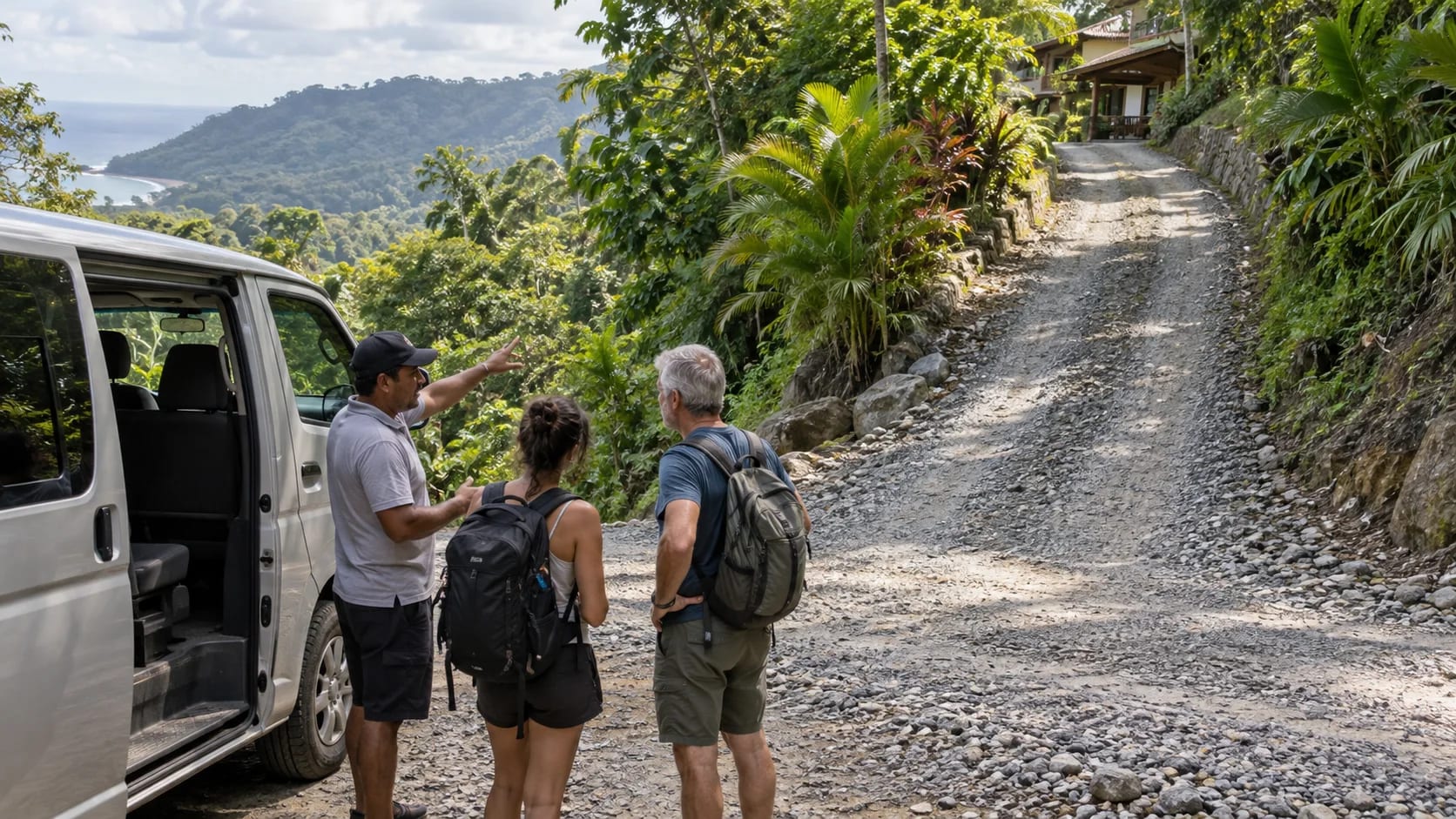
A hillside room in Santa Teresa may come with a view you love. Before booking, make sure the journey to that view also fits your stay. The last stretch from the main road can shape every meal, grocery run and evening return, so ask about the actual entrance and approach.
Why the final approach matters
An accommodation can be geographically close to the coast while its entrance sits above a steep or indirect approach. The last section can determine whether you can walk to breakfast, use a standard transfer or need a different vehicle.
Compare the property's entrance with the places you will visit daily. A pin placed near the main road may refer to a turnoff rather than reception. Request the entrance pin and arrival instructions from the host, then give those same details to your driver.
The car-free accommodation guide explains how location affects a stay without your own vehicle. Here, the key detail is the route from the main road to your room.
Six access details to obtain
| Detail | What to ask |
|---|---|
| Entrance | Can you send the reception or gate pin? |
| Surface | Is the final approach paved, gravel or another surface? |
| Gradient | Are there steep climbs, descents or sharp turns? |
| Wet conditions | How does access change after heavy rain? |
| Vehicle | What vehicle do you recommend for our dates and load? |
| Walking | Is the actual route practical on foot, including the return? |
A recent photograph or short video of the approach can clarify what a map cannot. Ask for current conditions rather than relying on an old listing image taken in different weather.
What “4x4 recommended” means for the booking
Ask the host whether four-wheel drive is a requirement for reaching the property or a preference for comfort in certain conditions. Then have the transfer provider confirm that its vehicle can complete the approach with your passengers and luggage.
Do not treat a generic vehicle category as a guarantee. Driver knowledge, clearance, load and the actual condition of the road all affect the journey. If the provider only drops guests at a junction, arrange the remaining connection before arrival.
For self-drive guests, share the accommodation's instructions with the rental company and check the applicable vehicle-use terms. Ask the host and rental provider to confirm the fit for the actual approach.
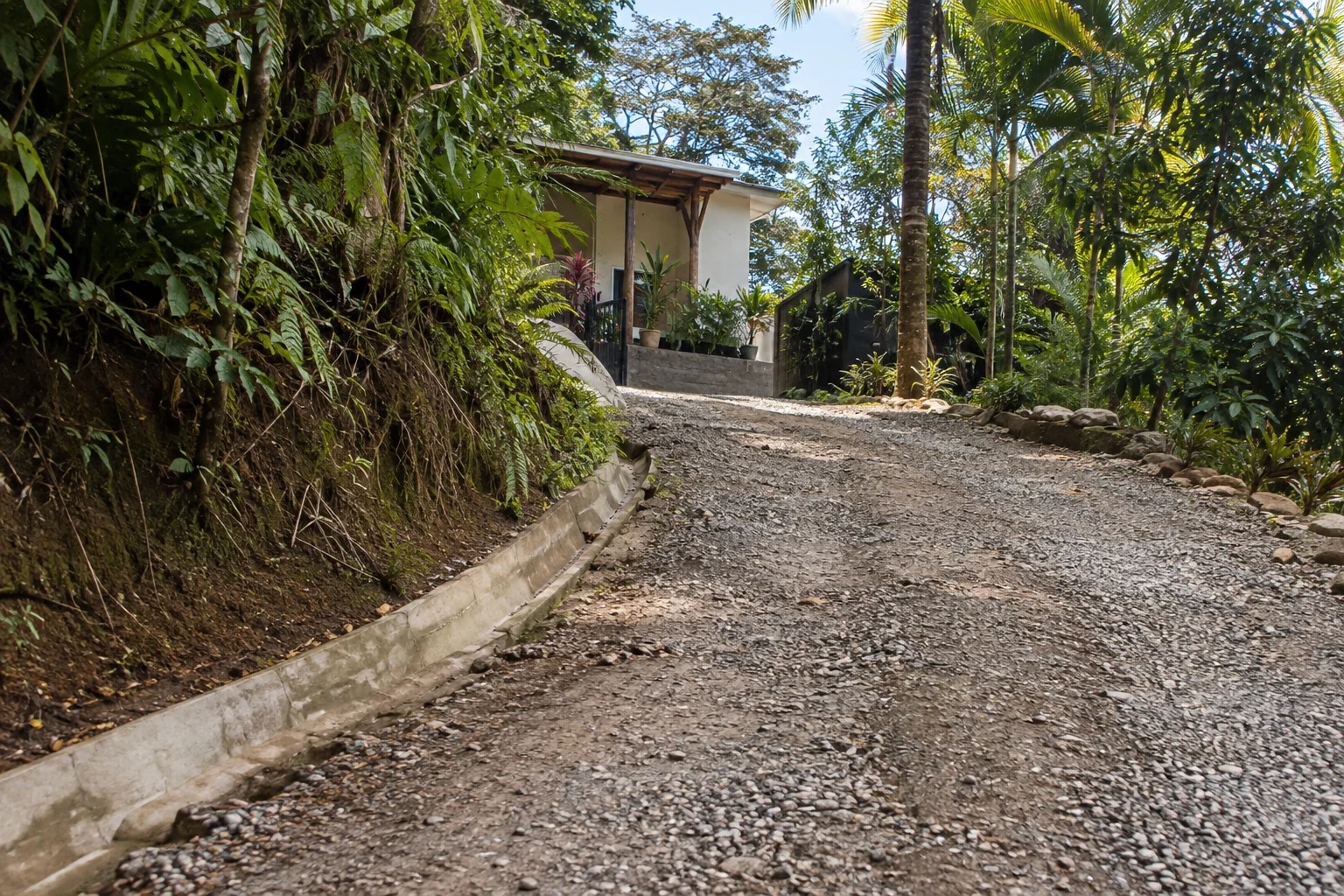
Walking down is only half the trip
A route that seems manageable downhill can be a different experience when returning with groceries or after an activity. Consider the climb, road edge and crossings as well as distance. Assess it in daylight before treating it as your routine route.
Ask where the nearest practical breakfast and grocery options are from the entrance. A host may be able to identify a useful local route, but confirm whether it uses public access rather than a neighbouring property's private path.
If walking is central to your holiday, accommodation with easier access may offer better value than a cheaper hillside room plus repeated transfers. Compare the total stay, not the room rate alone.
Do not assume an e-bike solves the climb
Electric assistance does not make every steep or wet road suitable. Bimba's pricing and trip guidance directs riders toward other transport for steep roads, heavy rain, darkness and luggage.
The other question is where a shared ride can end. Even if a road is rideable, the property may not be an approved endpoint. Check the live app and the locations guide. Include the final stretch to your room when arranging the journey.
A conventional bicycle rental creates a different arrangement, but it also requires a suitable route and storage. The fact that you can retain the bicycle does not resolve an unsuitable approach.
Plan the evening return before choosing the room
Ask whether local drivers serve the entrance after dark and how to arrange a pickup. Agree on the meeting point, passenger capacity and quoted trip rather than assuming a daytime service operates identically at night.
If several people share the accommodation, compare the cost of group transport across the stay. One suitable vehicle for a group can produce a different budget from repeated individual rides. The taxi guide is a starting point for the booking questions.
Compare the view with your daily routine
Imagine leaving for breakfast and coming home after dinner. Will you walk, drive or book a pickup each time? Ask the host for practical examples from the property entrance rather than a distance to the nearest road junction.
If the host recommends a particular vehicle, pass that information to your transfer provider and ask whether their quote reaches the accommodation itself. Agree on the handover point before arrival with luggage.
Then include those repeated journeys in the room comparison. You may decide the view is worth the extra organisation, or prefer a base closer to your daily stops. Either choice is easier when access is part of the booking decision.
For the next part of your plan, see our hotel location and everyday walking and planning a stay without driving.
Separate the view from the approach
A photograph from a terrace shows where you may spend time, but says little about the trip to the door. For a hillside hotel, ask for two different locations: the driveway turnoff from the main road and the actual reception or vehicle drop-off point. A map pin can sit at the turnoff while the final approach climbs and bends for much longer. Ask the host to describe that last section in plain language, including surface, gradient, width and any sharp turns. The exact room may require additional stairs after the car stops.
Request a recent photograph or short video in the conditions expected for your visit, if the property has one. Compare it with the listing's access notes and ask what has changed. An old dry-season image can be a poor guide after heavy rain or road work. Do not treat a scenic photo as proof that a small transfer vehicle can reach reception. A clear explanation from the host is more useful than an invented universal rule about which hills require a particular car.
Confirm the final vehicle with its operator
Send the driver's company both pins and the host's access description. State passenger count, luggage and expected arrival time. Ask whether the quoted vehicle can reach the actual drop-off point on your date, whether the driver has used that approach, and where they will stop if conditions prevent the climb. A recommendation for four-wheel drive may mean a requirement, a comfort preference or a wet-weather contingency. Clarify which with the property and the transport operator rather than deciding from the label alone.
If the driver can only reach a junction, ask who will move people and bags from there to the room and what it costs. A short distance uphill with rolling luggage can be the hardest part of arrival. Agree on a meeting contact and what happens if a late flight changes the time. Keep the host and driver on the same location instructions so you do not arrive at different gates. For self-drive guests, also check the rental company's applicable road and vehicle-use terms.
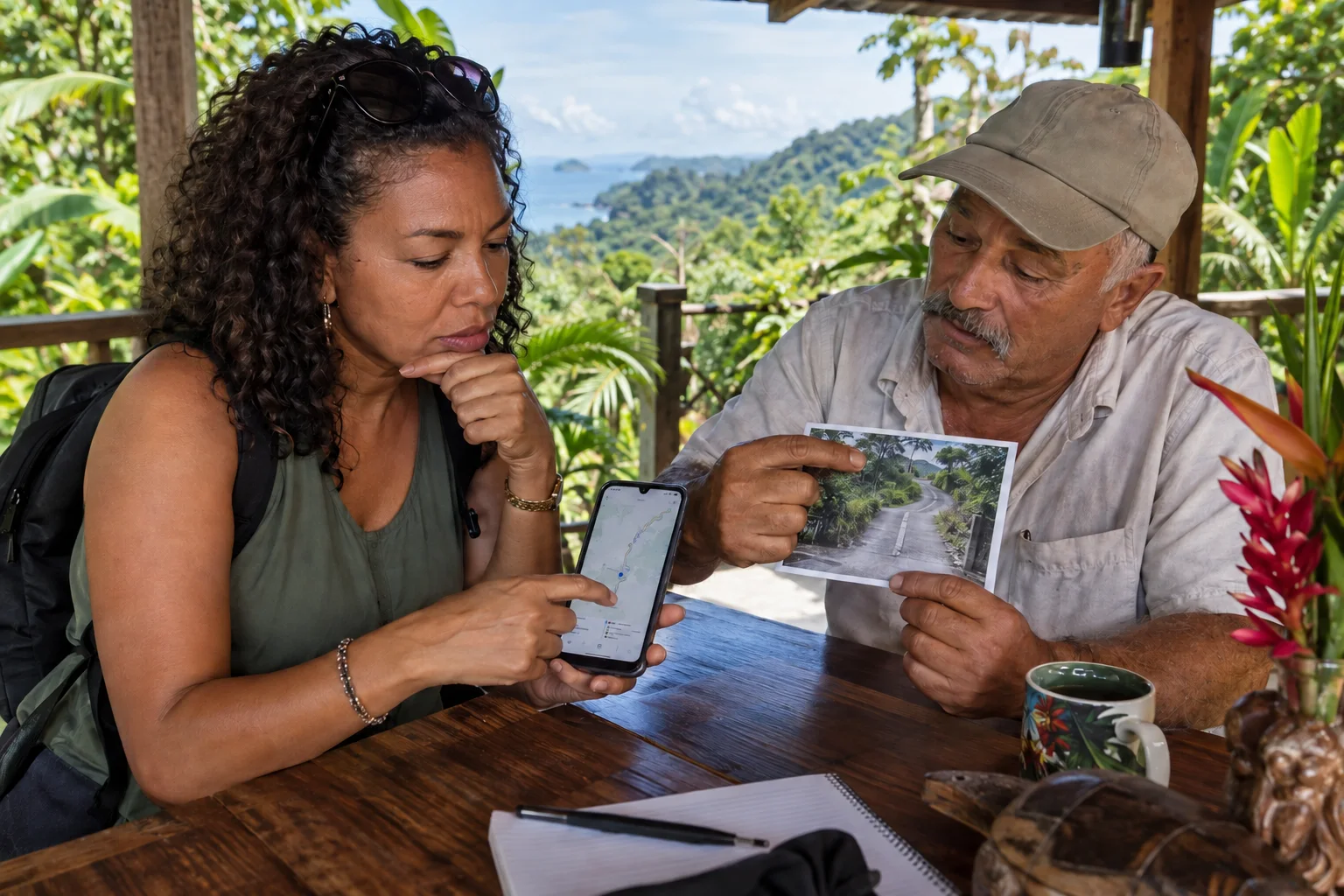
Test the uphill return, not just the descent
A downhill walk to breakfast may feel effortless; the return with groceries, beach gear or fatigue can change the decision. Ask how long guests normally take between the entrance and the main road and what the walking surface is like. Find out whether there is a usable roadside edge, lighting and a public route all the way. A shortcut across another property is not a dependable route unless access is permitted. If walking is important to your holiday, ask specific questions instead of relying on the word “walkable.”
Consider different hours. A path you inspect safely in daylight may be less comfortable after dinner. Rain can make an unpaved driveway slippery even when the main road is passable. If a guest has mobility or access needs, ask about steps, handrails and whether the vehicle reaches the room level. A distance figure cannot establish accessibility. Choose an accommodation only after the return journey works for the people who will actually make it.
Ask how access changes in wet conditions
Request the host's current procedure after heavy rain. Do drivers change vehicles, stop at a lower entrance or wait for conditions to improve? Who contacts a guest if the normal approach is temporarily unsuitable? Do not infer the answer from a generic weather forecast: route surface, drainage and recent maintenance matter. Ask whether the property has a staff pickup from the lower road, whether it must be booked and whether the cost is included.
For a transfer already purchased, understand who decides if the vehicle can continue safely and whether a different drop-off changes the fare. Do not pressure a driver to climb a road they judge unsuitable. Keep a small arrival-day buffer in case the last section takes longer than expected. If a particular access arrangement is essential, get it confirmed in writing before paying a nonrefundable room rate.
Check shared mobility boundaries honestly
An electric bicycle does not make every steep, loose or wet approach suitable. Bimba's published guidance points riders toward another mode for steep roads, heavy rain, darkness and luggage. A further issue is the approved end point: the hotel entrance may lie beyond the service area or away from a permitted parking spot. Check the live app for a real vehicle and return point; do not assume a hotel address is automatically an approved destination. Include the walk from that point to the room.
If a conventional rental bicycle is available from the hotel, ask about the route, storage and ability needed to ride it. Possessing a bicycle throughout the day does not turn a poor access road into a safe everyday ride. For your airport transfer or a dinner return with bags, choose a vehicle that matches the actual approach. Shared riding can still be useful on other, suitable local routes after you are settled.
Plan the evening return before booking
Ask whether local taxi or transfer providers regularly serve the entrance after dark and how to arrange them. Confirm pickup point, number of passengers, luggage if relevant, payment method and expected total for your specific journey. A car available in the daytime is not automatically available when a late dinner ends. If the hotel offers a shuttle or can call a driver, ask how much notice is needed and whether service ends at a set hour.
For a group, divide the cost of a suitable vehicle across the party rather than comparing it with one person's ride. For a solo traveler, calculate how many evenings you expect to go out; repeated returns may change the value of the room. Give the driver a clear gate or reception pin for the final approach. If the group will split up, decide who has the transport contact and whether multiple pickups are possible.
Compare the full stay, not the room rate
Make a simple total: accommodation cost plus arrival and departure access, likely local transfers, and any staff pickup or vehicle upgrade the property requires. Add the time and coordination needed for repeated journeys. A cheaper room higher up can still be the right choice if the view and privacy matter to you, but only after those extra trips are understood. A more accessible room may be better value when you expect frequent meals and activities away from the property.
Do not invent a fixed taxi fare from an online average. Request quotes for the exact entrance and dates, then keep room and transport costs in the same currency for comparison. If you expect to work from the hotel or eat most meals there, fewer journeys may change the calculation. The useful question is how often you will leave and return, not simply how many meters the listing says separate the room from the beach.
Send a practical pre-booking message
Ask the host: “Please send the main-road turnoff and reception pins. Is the final approach paved or gravel, steep, and suitable for our transfer with [number] people and [bags] on [date]? What changes after heavy rain, and how do guests return after dinner?” Request a current photo or short video if available. Send their answer to the transfer provider and ask for confirmation that its quote reaches reception.
Keep both replies with the booking. If a key detail remains unanswered, ask before paying. The images in this guide show representative road and planning scenes, not a specific Santa Teresa hotel's access conditions. A hillside stay can be excellent when the approach, arrival and daily returns are part of the reservation decision rather than a surprise at the bottom of the hill.
Frequently asked questions
Does a beach-distance label prove a hotel is walkable?
No. Check the actual route, gradient and entrance. Straight-line distance does not describe the approach.
Can a taxi reach every hillside property?
It depends on the vehicle and current access. Confirm the exact entrance with the driver and host.
Should I book a shared-bike pass before checking the hotel access?
No. Establish that your expected journeys fit the service and conditions first. A pass does not change road suitability or approved return locations.
Summary
Before booking a hillside hotel in Santa Teresa, establish how you will reach the entrance and make everyday trips from it. Confirm the recommended vehicle and return options with the host and driver. Weigh the setting against that daily access plan rather than relying on a short distance shown on a map.
Ask for the last 500 metres
Request the exact pin and a current description of the final approach in dry and wet conditions. Choose the property only after confirming how every guest and bag will reach it.