
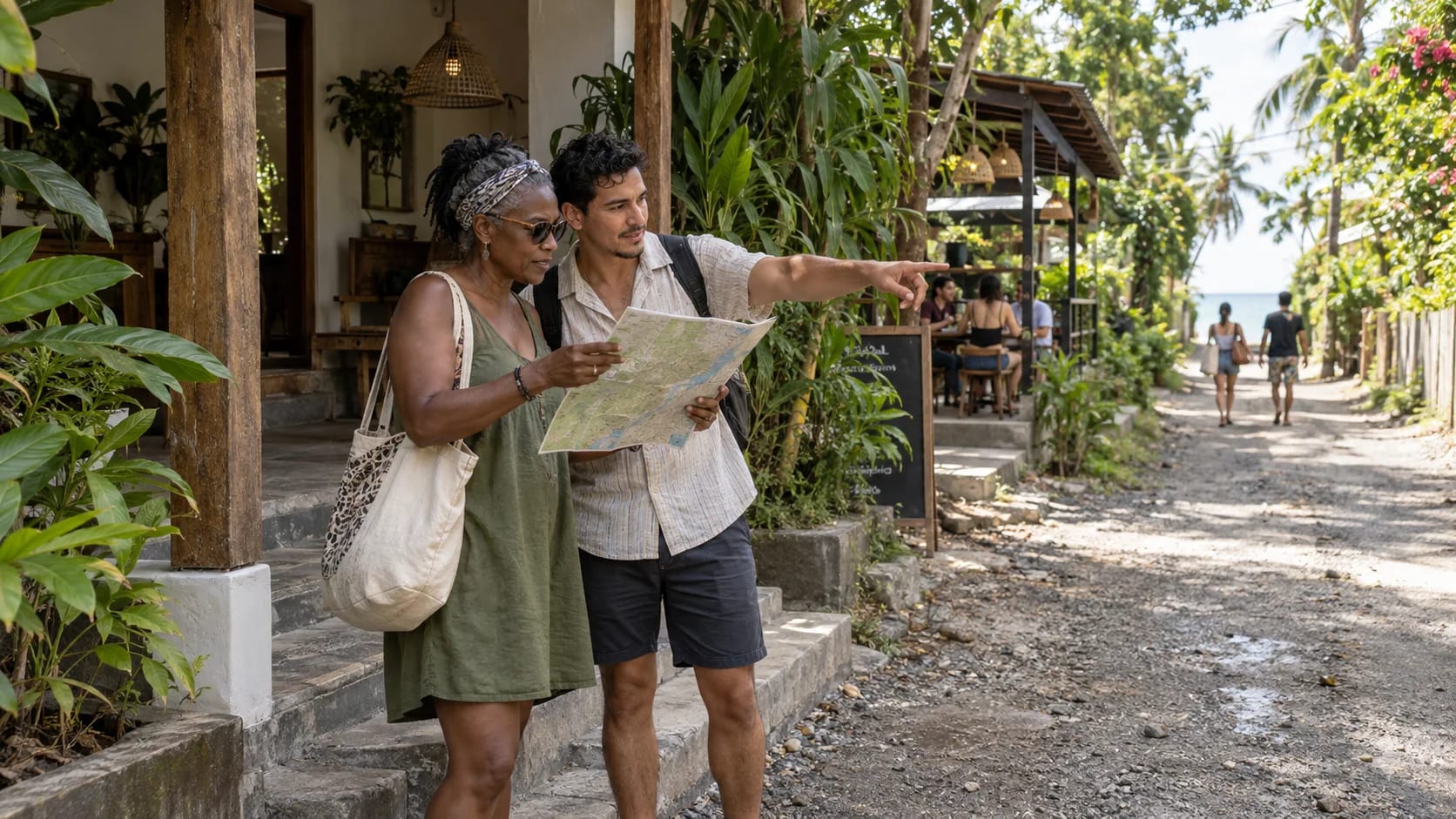
You can plan a Santa Teresa stay without driving by separating three needs: getting there, moving around locally and leaving again. A well-placed room makes the everyday part much easier. Choose accommodation around the trips you expect to repeat, then arrange transport for the longer journeys.
What does a non-driver need to arrange?
Book the regional journeys first, including the final drop-off at your accommodation. Then make a separate local plan for meals, activities and errands during the stay.
The Santa Teresa arrival guide explains the regional connections. Book the final accommodation drop-off as part of that journey. Give the transfer provider the entrance pin rather than only the town or hotel name.
Choose accommodation around everyday trips
Pick three places you expect to use repeatedly: breakfast, a grocery shop and your main activity. Compare their actual routes from the accommodation entrance. A hotel near a surf school may be more useful to a non-driver than a remote property with a panoramic view.
The car-free accommodation guide is the broader area guide. Before paying, establish whether the room is on a hillside, whether the final approach is suitable for walking and what happens to access in rain.
| Daily need | Accommodation question |
|---|---|
| Breakfast | Is it on site or reached by a practical walking route? |
| Groceries | Can small purchases be made nearby? |
| Surf or yoga | Where is the actual meeting point? |
| Dinner | What is the return option after dark? |
| Arrival with luggage | Can the booked vehicle reach reception? |
| Wet weather | Is there covered space and a workable transport alternative? |
Walking: evaluate the route, not the map radius
A short distance does not describe road edges, crossings, lighting or the final driveway. Ask for recent access information and inspect the route in daylight before relying on it after dinner.
Choose fewer repeated journeys over a wider list of distant attractions. Staying near two or three useful services can reduce both transport cost and the amount of coordination required every day.
A beach walk may be enjoyable, but it is not automatically the practical route to a restaurant or accommodation. Confirm public access and the return route rather than assuming the coastline connects every destination conveniently.
Shared bicycles for suitable local journeys
Bimba offers app-based electric bikes and scooters with approved return locations shown in the live app. The published pricing lists US$1 per unlock plus US$0.50 per minute and passes with capped riding allowances. A pass does not reserve a vehicle.
This option fits a short trip with one rider and a light load when the road and conditions are suitable. Check the destination endpoint before starting. If you finish a ride at lunch, a later bicycle depends on availability; you are not retaining that vehicle all day.
Being a non-driver does not automatically mean a person is comfortable cycling. Choose transport around your actual riding ability. For luggage, passengers, steep roads, darkness or heavy rain, use another arrangement.
Taxis and booked local transfers
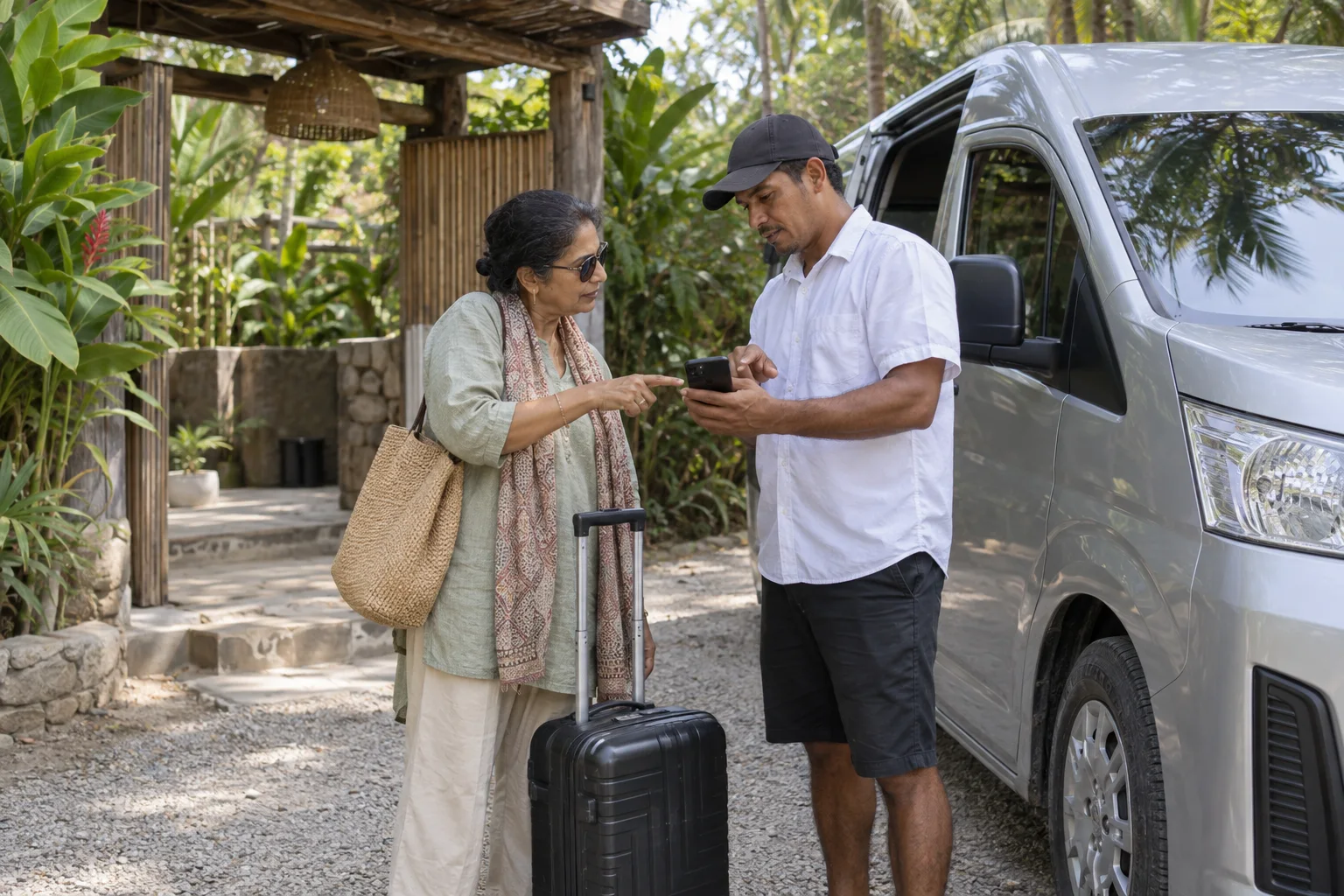
Use a local transfer when the trip has a fixed time, a difficult entrance or a load that does not suit walking or cycling. Confirm the pickup point, destination, passenger count, luggage and final quote.
For dinner, establish the return arrangement rather than only booking the outbound ride. Save the driver's contact and agree how timing changes will be communicated. The taxi guide provides context; the journey still needs its own confirmed booking.
Do not build a non-driver itinerary around an assumed ride-hailing pickup. Read the Uber guide and arrange a dependable alternative for time-sensitive journeys.
Tours can include transport—but check the pickup
A guided activity with included pickup can remove the need to drive for a day trip. Confirm whether “Santa Teresa pickup” means your property or a central meeting point. Also check the return location and expected window before booking dinner that evening.
Compare the full package: transport, activity, equipment, food and any entry charge. An inexpensive activity-only ticket may cost more overall once a separate return transfer is added.
Make the ordinary day easy first
Picture breakfast, your main activity and dinner. If those journeys work comfortably from the accommodation, you have a useful base. A room near one attraction may still be inconvenient for the meals and errands you repeat every day.
Check the actual entrance and route, especially for hillside properties. A short map distance does not describe lighting, surface or the climb home. Ask the host about how guests without a car usually make those trips.
Keep a contact for booked local transport and check activity pickup arrangements. You do not need one solution for every journey; a mix of walking, suitable shared rides and transfers can cover different parts of the stay.
For the next part of your plan, see our choosing a hotel around daily journeys and transport for couples and groups.
Choose a base around repeated journeys
Without a car, the location of your room affects more hours of the trip than any single excursion. List the places you expect to visit repeatedly: breakfast or groceries, your main activity, a practical dinner option and a pickup point for longer journeys. Map the route from the accommodation entrance, not from the center of the neighborhood label. A property can look central on a listing but have a final approach that changes the daily effort. Ask the host to describe the walk and any hill, steps or unpaved section.
Compare two properties by a normal day rather than a headline distance to the beach. If one makes surf lessons easy but every meal requires a vehicle, calculate how often that tradeoff will occur. If another puts food and errands nearby but is farther from an occasional tour, a single booked pickup may solve the rare trip. Ask where local taxis or transfer drivers can meet you and whether they can reach the entrance with luggage. This matters both on arrival and on departure.
Book regional travel and the last drop-off together
Getting to Santa Teresa is a separate transport task from moving within it. Confirm each leg of your regional route, including any ferry or flight connection that applies, and book an appropriate final vehicle for people and bags. Give the provider your accommodation's exact entrance pin and ask whether the quote covers that point. A town name is too broad, and a general hotel map pin may not identify the correct gate. If the property is up a hill or at the end of a rough lane, tell the driver in advance.
Coordinate the arrival window with your host, especially when reception has limited hours. Keep contact details and access instructions available offline. Do not plan to solve a missed connection with a shared bicycle or scooter while carrying luggage. On departure day, confirm collection from the same practical point and allow time for the transfer to reach it. A non-driver plan is strongest when these fixed journeys are settled before the flexible daily ones.
Inspect walking routes as routes
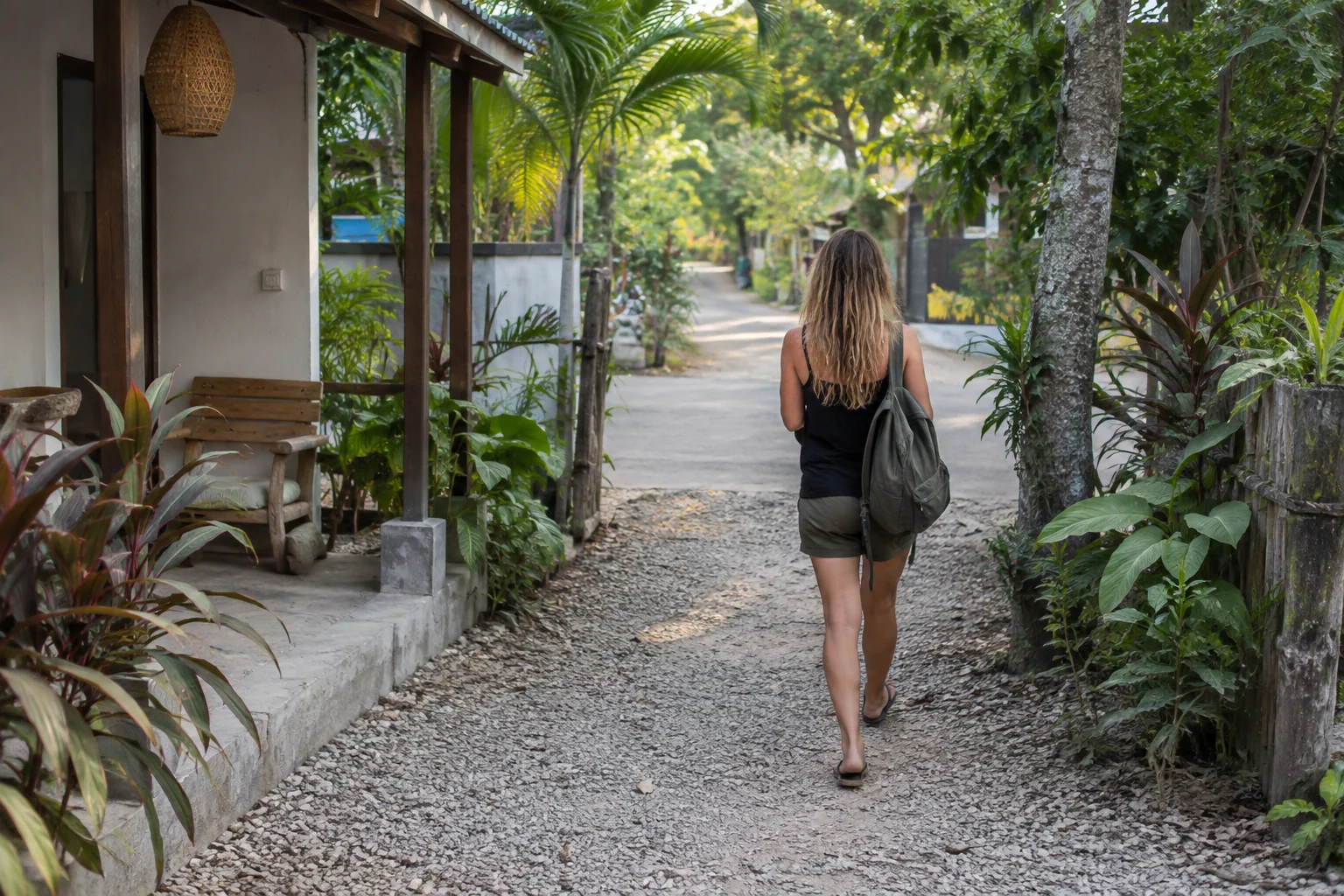
A short map line can hide a narrow road edge, uneven surface, standing water, a steep driveway or an unlit return. Ask the host about the exact path to the places you will use and inspect it in daylight after arrival. Be especially careful about assuming that a beach path connects to a restaurant or accommodation: entry points and conditions vary. If a route feels unsuitable to you, use a different mode or choose another place to stay rather than forcing the daily plan to fit a distance figure.
Test the whole loop of an ordinary day: accommodation to breakfast, activity, groceries and dinner, then back. A walk that feels pleasant outbound in the morning can be different after sunset or rain. For guests with mobility needs, request details on steps, surfaces and transfer access from the actual provider; a “walkable” marketing label is not an accessibility assessment. Consider the amount you expect to carry back from shops as well as the distance there.
Use shared rides only for suitable local trips
Bimba's published pricing currently shows pay-as-you-go at US$1 to unlock plus US$0.50 per minute, with passes that provide capped minutes inside a time window. The official pricing page says a pass does not reserve a vehicle and that the app's terms at purchase are final. Check the live map for an available unit and an approved place to end the ride before starting. If you end a trip for lunch, a later ride depends on another available vehicle. Do not treat a pass as a continuous rental.
Choose a shared electric bike or scooter only if you are eligible, comfortable operating it and the actual road, light and weather suit the journey. A visitor who does not drive a car may also prefer not to ride. One rider with a light bag is different from a person with a suitcase, child passenger or heavy shopping. For luggage, steep roads, darkness or heavy rain, the service's own guidance recommends another mode. Check current riding rules and do not assume a vehicle can be left at a restaurant merely because it is on your route.
Keep a confirmed local transport contact
For a fixed appointment, difficult entrance, group journey or evening return, arrange a taxi or suitable transfer in advance. Ask for the exact pickup, destination, passenger and luggage capacity, total quote and payment method. If the pickup is after dinner, agree on how you will report a changed end time. Save the driver's contact and identify a backup when a missed pickup would affect a flight, ferry or paid activity. A generic online availability claim does not reserve a car.
Ride-hailing may be inconsistent in a specific area or time. Use any app's actual live offer as evidence, not the assumption that a car will appear. For a time-sensitive trip, direct confirmation with a provider is stronger. Arrange the return as carefully as the outbound leg: reaching dinner is only half the journey. Ask the accommodation for reliable local contacts if you do not yet know whom to use.
Read pickup language in tour offers
“Pickup included in Santa Teresa” can mean your door, a central meeting point or only certain zones. Before paying, ask for the exact meeting place, departure time, return point, approximate return window and what happens if the outing runs late. If equipment or entrance fees are needed, ask whether they are included. A cheaper activity ticket can become a more expensive day when transport to and from the meeting point is added.
If an excursion ends outside the area where you started, determine how you will reach the accommodation. Do not book a tight dinner reservation against a tour's estimated finish. When the activity itself requires a boat or another operator, distinguish the local pickup from the activity transport. Keep the tour confirmation and driver's contact accessible without relying on a perfect signal.
Compare a car-free stay as a complete plan
Calculate the lodging rate plus regional transfer, expected local taxis, any shared rides and tour pickups. A cheaper room far from meals can create repeated paid journeys. A somewhat more central room may cost more per night while reducing daily coordination and transport spend. There is no universal cheapest neighborhood; the answer depends on your repeated destinations, route comfort and how many people share the cost.
Plan one contingency for rain or a late return. If your usual walk becomes impractical, which contact can you call and how would you pay? If you decide not to cycle, can the ordinary day still work? A non-driver itinerary should remain usable without assuming perfect weather or permanent vehicle availability. The photographs illustrate a walkable base, a generic local path and a booked transfer; none confirms the condition of a specific property or route.
Try a sample day before booking
Take the room you are considering and write a simple sequence: breakfast nearby, main activity, lunch, rest and dinner. For every leg, choose a primary way to travel and one realistic alternative. Mark which trips require booking and which can be decided on the day. If the sequence demands several difficult returns, reconsider the accommodation or remove a distant stop. You should be able to explain how you would get home after dinner without relying on a vehicle appearing by chance.
Before paying for the room, send the host two or three specific questions about access and transport rather than asking only “Is it central?” Their answer may reveal a hill, a useful nearby service or a pickup arrangement that changes your choice. A non-driver can have an easy Santa Teresa stay by placing everyday needs close together and reserving suitable transport for the journeys that genuinely require it.
Frequently asked questions
Do I need to rent a car in Santa Teresa?
Not necessarily. The answer depends on accommodation access, the places you want to visit and your budget for transfers. A compact daily routine is easier without a car than a stay involving frequent remote trips.
Is a hillside villa suitable for a non-driver?
It can be if reliable transport reaches it and the cost fits your stay. Confirm the final access and daily transfer arrangements before booking.
Can shared bikes replace my airport transfer?
No. Arrange luggage and regional travel separately. Shared bikes are for suitable local journeys within the service rules.
Summary
A Santa Teresa stay without driving starts with a convenient base and booked transport for arrival and departure. Plan everyday destinations together, using walking or shared mobility only where the journey suits you. Keep another transport option for luggage, regional outings and trips that do not fit the local riding plan.
Choose the base before the transport mix
Stay near your most frequent needs, then combine walking with short, appropriate rides and prebooked regional transport. A cheaper remote room may cost more in time and repeated transfers.