

November in Santa Teresa is a transition, not a promise that the weather changes on the first of the month. You can plan a stay with outdoor time while keeping room to adjust. Book the essential travel pieces first, then check activities and opening schedules for your actual dates.
What November’s transition means for your trip
The Costa Rica Tourism Board's climate guide identifies November as a transition month in the Pacific pattern. That helps with broad preparation, but it cannot forecast a particular week in Santa Teresa.
Keep the parts of the plan that work in changeable conditions: practical access, some covered time and transport alternatives. At the same time, confirm any bookings you consider important rather than assuming seasonal availability will take care of itself.
Make a date-specific checklist
| Booking | November question |
|---|---|
| Accommodation | Is the access suitable in wet conditions, and what is the final price for these dates? |
| Restaurant or café | Are current opening days and kitchen hours confirmed? |
| Lesson or class | Is the published schedule active during my stay? |
| Regional tour | What happens if weather changes the departure? |
| Transport | Can the vehicle reach the actual accommodation entrance? |
| Work location | Are visitor access and backup arrangements available? |
Book the fixed elements first
Arrival, departure and accommodation are the foundations. If you have a particular event, lesson or excursion that matters, check it next. Leave lower-priority outings flexible so the itinerary can adapt without repeatedly cancelling paid arrangements.
Use the arrival guide to consider all transfer legs. A domestic flight, ferry or road journey still needs the final connection to your room.
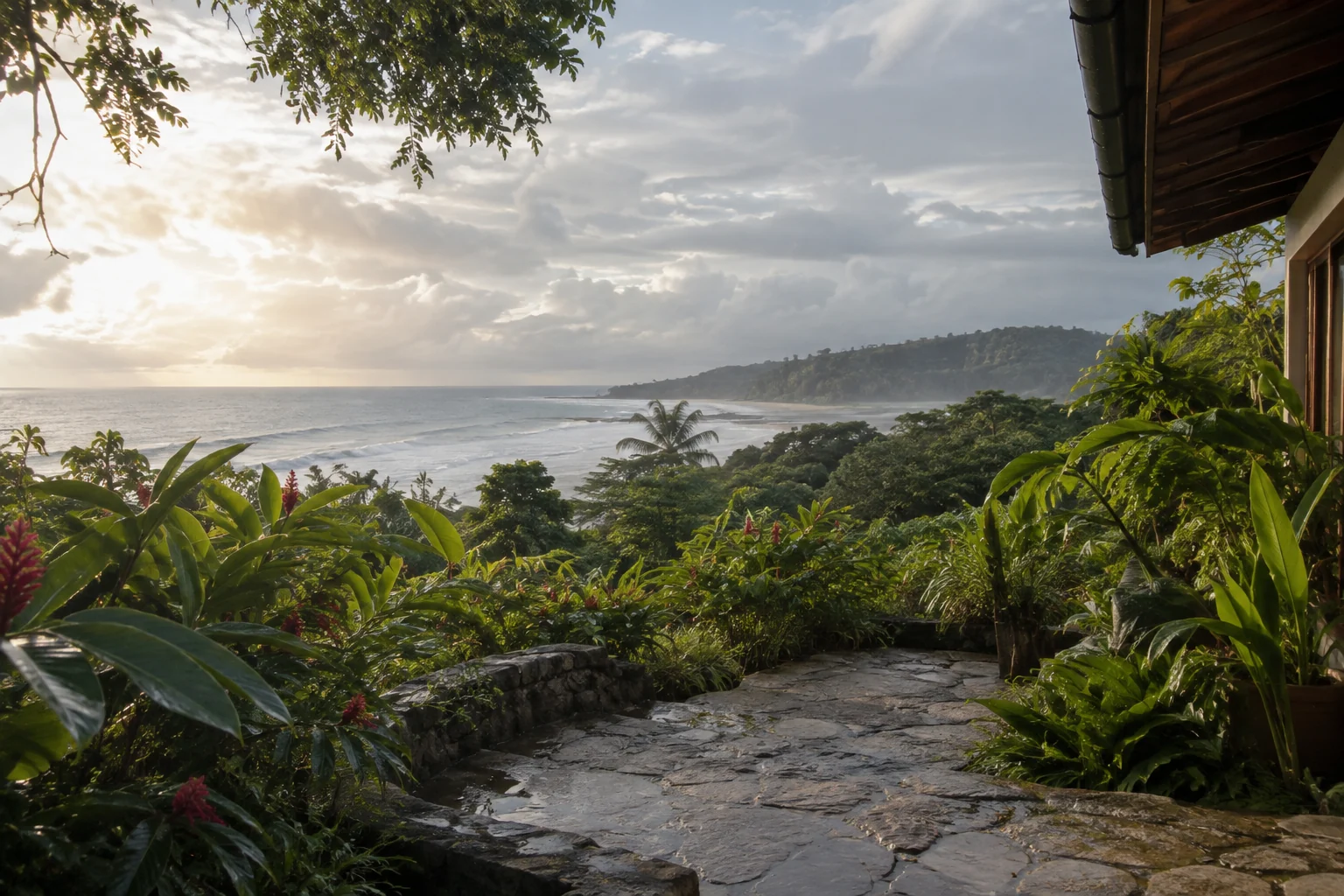
Choose the room for the daily routine
Ask about food nearby, the entrance and the route after rain. If a property is on a hillside, request recent access information. A room may be attractive in both seasons while the approach changes substantially with conditions.
If working remotely, check the actual room and backup workspace. A seasonal change does not remove the need to test the connection or understand what happens during an interruption.
Keep outdoor plans movable
Check the IMN close to the date and listen to the operator responsible for the activity. Avoid promising yourself that every morning will be dry or every afternoon wet. Use the seasonal pattern to prepare, then the current forecast to plan the day.
Put one main outdoor activity in a day rather than stacking several weather-dependent commitments. Keep a nearby meal or covered activity available as an easy alternative.
Reassess transport each day
Use a shared Bimba only when the actual trip, weather and road suit it. Check the current map and riding guidance. Do not purchase an allowance and then treat it as a reason to ride when conditions are unsuitable.
For evening plans, luggage and regional travel, arrange the appropriate mode separately. A flexible mix can be more useful than trying to use one vehicle for the entire holiday.
Book what anchors the trip, then fill the gaps
Arrival, accommodation and departure form the structure of the stay. Confirm those first, including how you reach the actual property entrance. Then add the activities that matter most and read their rescheduling terms.
For restaurants, classes and tours, ask about your specific dates. A business can have an online listing while changing its schedule between seasons. Confirm the service you want, not just whether the business generally operates.
Keep some open time between outdoor plans. If one activity moves, you will have somewhere to put it without cancelling another. This approach lets you enjoy the season without requiring the weather to follow a fixed daily timetable.
Know who can move the booking
A flexible itinerary works best when the booking terms support it. Ask how much notice you need to move an activity and what happens if the operator cancels instead. Those are different situations. Save the answer with the confirmation, then keep an open slot in the stay if the activity matters enough that you would want to try another day.
For the next part of your plan, see our October’s rainy-season pattern and Christmas and New Year planning.
Frequently asked questions
Is November already dry season?
It is better understood as a transition in the official Pacific climate description. Your dates still need a current forecast.
Are early and late November the same price?
Not necessarily. Compare dated offers and their conditions rather than applying one monthly average.
Should I leave everything unbooked?
No. Book the elements that matter or have limited alternatives, and keep the rest adaptable.
Summary
For Santa Teresa in November, plan around a seasonal transition rather than a fixed promise of dry weather. Confirm arrival access and the bookings that matter, then use current conditions to arrange each day. Keeping outdoor activities movable gives you more freedom to enjoy the visit as it unfolds.
Book for flexibility
Use refundable arrangements where possible, verify each seasonal business shortly before visiting and keep both wet-weather and dry-weather versions of important days.