
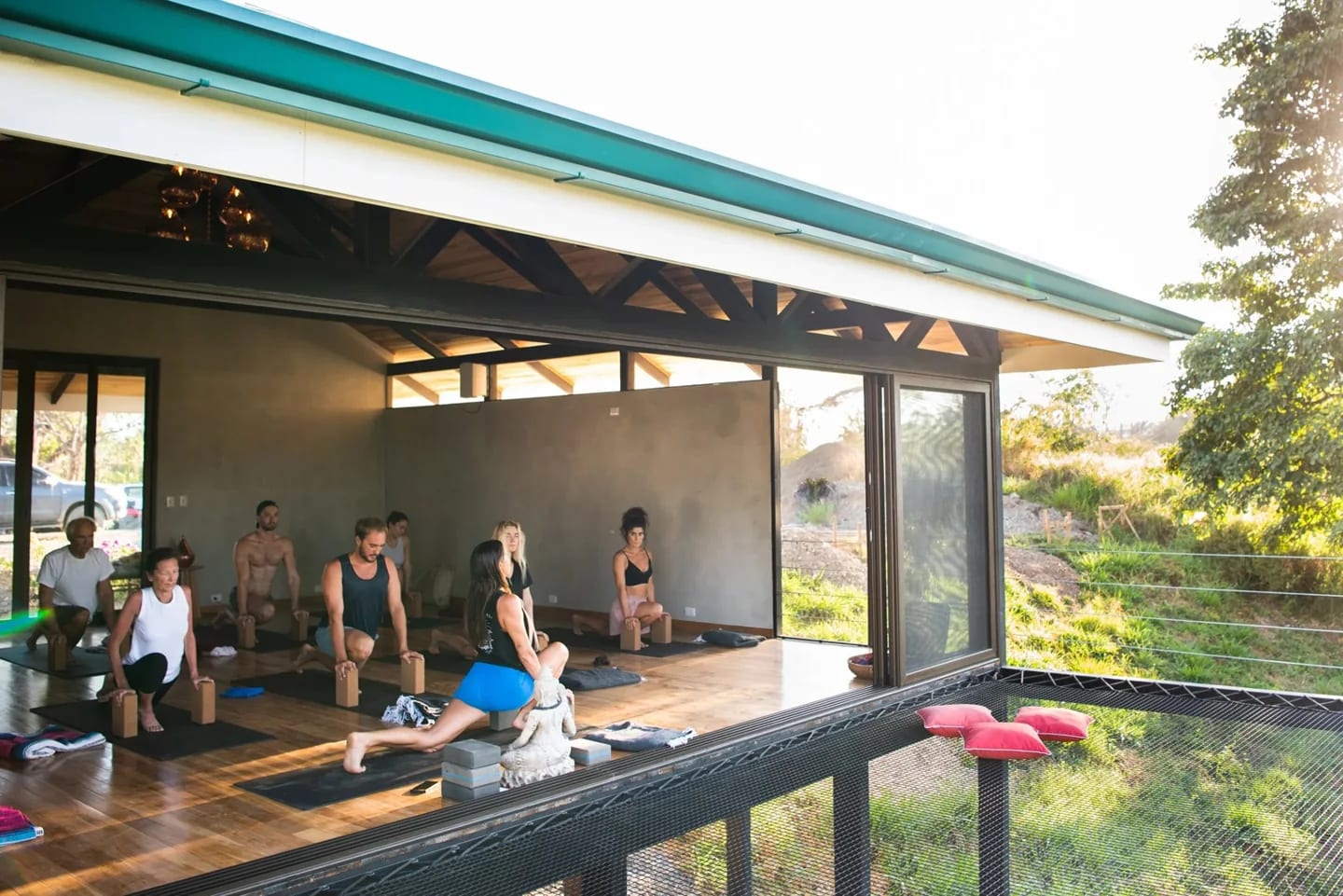
Outdoor yoga space at House of Shakti. Image source: View original photo.
Yoga in Santa Teresa can be a small part of your holiday or the reason for the whole trip. A drop-in class lets you try a teacher and keep your own schedule. A retreat offers a more organized experience. Start with how much structure you want, then compare the actual teaching and inclusions.
What is the difference between a retreat and a drop-in class?
A retreat is a dated program. It may combine teaching, accommodation, meals and other activities, but the inclusions depend on the organizer. A drop-in class is an individual session that you attend without buying an entire program. A class pack sits between the two: several classes purchased together, usually without accommodation.
Santa Teresa has providers offering different formats. House of Shakti publishes a class calendar and packs of five, ten and twenty classes. Zeneidas’ wellness page describes daily yoga classes and directs visitors to Al Deck’s current schedule. Use their current schedules to check the sessions available during your stay.
Compare what you are buying
| Decision | Retreat | Drop-in classes |
|---|---|---|
| Dates | Usually a fixed program | Individual sessions on a calendar |
| Accommodation | May be included or sold separately | Booked independently |
| Teacher | Usually advertised for the program | Depends on the chosen class |
| Daily structure | Set teaching and group activities | More freedom around each session |
| Meals | Check the number and days included | Usually arranged independently |
| Commitment | Deposit and program cancellation terms | Class or pack booking terms |
A teacher-training course is a third product. Do not book one as a substitute for a relaxed holiday without reading the curriculum, attendance requirements and workload. The presence of yoga in the title does not tell you whether the week is introductory, intensive or designed for future teachers.
Compare the full cost, not just tuition
For a retreat, request an itemised total covering tuition, room type, meals, transfers and optional activities. A shared room price cannot be compared directly with the cost of a private room. Also check whether arrival and departure nights are included.
For independent classes, add accommodation, class fees and the trips between the room and studio. A five-class pack is useful only if its expiry and eligible sessions fit your stay. Missed classes and unused credits can change the effective price per session.
Use this calculation: total yoga-holiday cost = accommodation + teaching + meals not included + transfers + optional activities. Apply it to both options using the same number of nights. There is no universal cheaper format; the answer depends on the actual package and how many classes you attend.
Choose the teaching format first
Read the class description before comparing photographs of the venue. Ask about pace, session length, expected experience and whether beginners can participate. A flow class, a restorative session and an intensive workshop are different experiences even when they share a studio.
For a retreat, look for a sample daily schedule. Count the teaching hours, meal breaks and free time. Two sessions a day may suit someone traveling primarily for yoga, while one class on selected mornings leaves more room for surfing, work or excursions.
For drop-ins, choose the specific teacher and session you want, then book accommodation around a practical journey. The Santa Teresa yoga guide provides a broader starting point for comparing studios.
Location changes the experience
Check the studio entrance, not only a map label for Santa Teresa. A retreat may keep most activities on one property; independent classes can mean repeated journeys. Ask whether a package transfer includes the arrival from your airport or simply local transport during the program.
If a daytime trip suits a Bimba, check the live app for an available vehicle and an approved endpoint near the studio. Carry a mat only if it can be transported securely without affecting control. Otherwise, use equipment supplied by the studio or arrange another transfer. Confirm the current riding rules before planning around a shared vehicle.
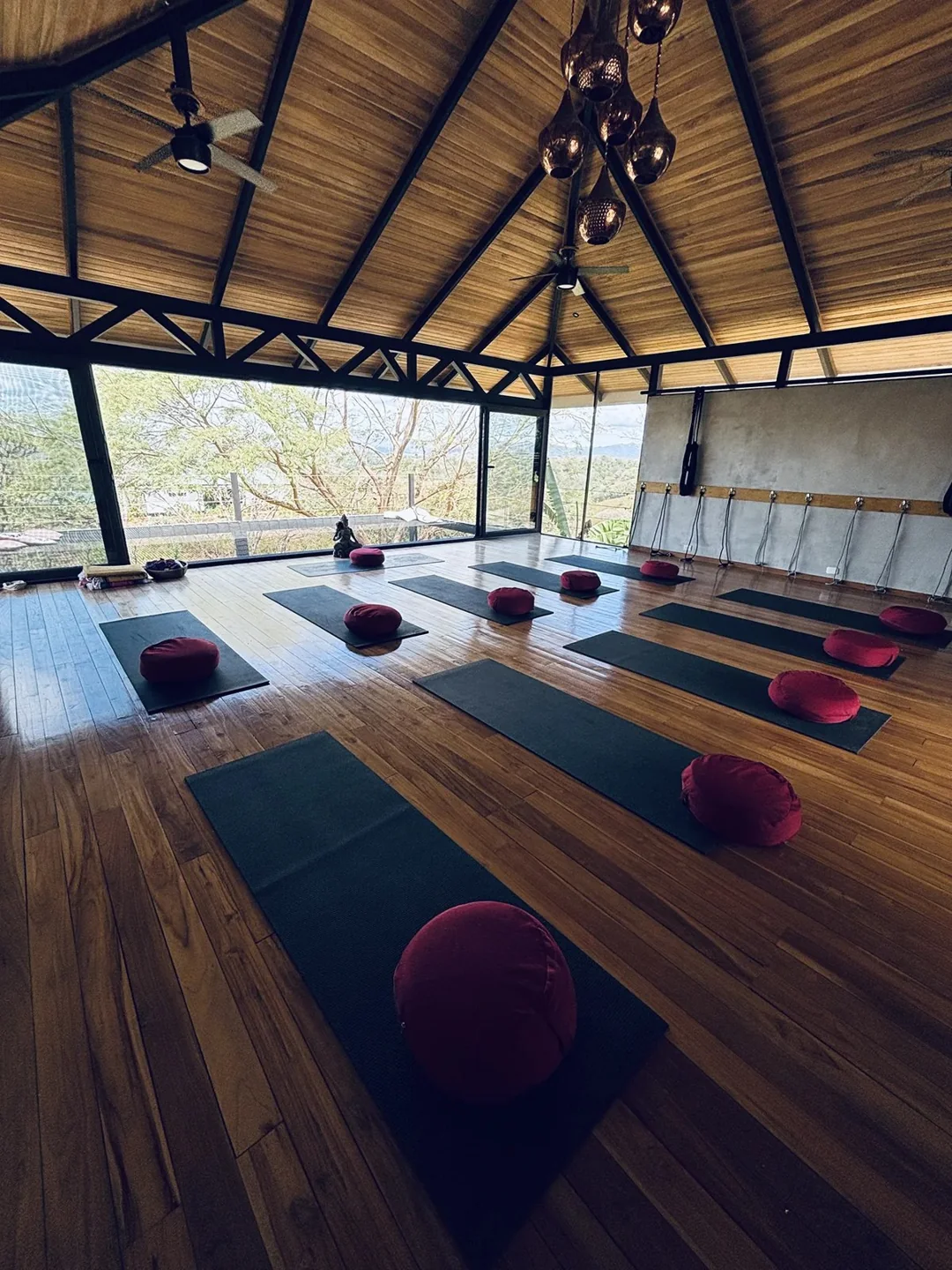
Use a sample day to choose the format
Ask a retreat organizer for a typical day. Look at practice times, meals, other activities and free time. If the schedule appeals to you, having those arrangements made can be part of the value.
For drop-in classes, check the current timetable and whether you need to reserve or bring equipment. You can build sessions around the rest of your trip and try a class before committing to more.
Compare the same stay in both formats: accommodation, meals, classes and transport. Then decide whether you want the shared routine of a retreat or the freedom to make plans day by day.
For the next part of your plan, see our non-surf activities and comparing treatment appointments.
Begin with the role of yoga in your trip
Before comparing websites, write down what a successful stay would look like. Is yoga your main reason to travel, a daily anchor around work, or one activity among beach time and meals? A retreat can be valuable when you want a group, repeated teaching and a timetable already arranged. Individual classes can be better when you want to choose the day, teacher and intensity as you go. Neither format guarantees a particular level of instruction; the published program and the people delivering it determine that.
Set a realistic number of sessions for your dates. A visitor staying three nights may not use an advertised five-class pack. Someone booking a week to focus on practice might prefer the consistency of one program. Include the first and last travel days in this calculation. A morning class immediately after a long transfer or before an early departure may be available on paper but impractical in real life.
Read the actual retreat itinerary
A retreat title can describe a dedicated multi-day practice, accommodation with a few optional classes, or a broader wellness holiday. Ask for a dated schedule with start and finish times, teacher names, session types and the number of hours of guided practice. Check whether attendance is expected at every session and what happens if you skip one. If you prefer free afternoons, count them explicitly instead of assuming they exist because the promotional photograph shows a beach.
Find out whether the group is fixed for the whole program, how many people may join and which language is used in teaching. Ask what the retreat includes outside class: room type, meals, excursions, equipment and local transfers. If the organizer advertises a visiting teacher, check whether that person teaches all sessions or only a workshop. Request a written answer for anything that affects your decision. An appealing itinerary should still work with your flight, transfer and accommodation dates.
Build a drop-in plan around current sessions
For classes booked separately, choose two or three realistic sessions before buying a pack. Compare style, start time, duration, teacher and the studio's booking rules. Ask whether mats and blocks are supplied, when reservations close and whether a full class has a waitlist. A posted schedule can change, especially around holidays or maintenance; check the provider's current channel shortly before travelling and again before you leave your accommodation.
House of Shakti publishes individual classes and packs of five, ten and twenty on its official yoga page. At the time of this update, that page also says the studio is resting and expects to welcome visitors back from November 1. Do not plan an immediate October session from an old calendar entry; verify reopening and an active class directly. Zeneidas' official wellness page describes yoga and points visitors to Al Deck's current schedule. These are examples of how different providers communicate availability, not a guarantee that any specific class has a place for your date.
Compare like-for-like costs
Put both options on the same number of nights. For a retreat, request the final amount for your room occupancy and ask which meals, teaching sessions, equipment and transfers are included. For independent classes, add the room you would book, the actual number of classes, meals, local trips and any equipment rental. If a retreat has a deposit, record when the balance is due. If a class pack expires or cannot be shared, calculate its cost using only sessions you can attend.
Two prices may use different tax or currency conventions. Ask for the payable total and payment method, then compare in one currency using the rate and fees that apply when you pay. Do not present a price from a cached search snippet as today's offer. Leave a small budget for an unplanned change of schedule or a class you decide not to take. The cheaper listed tuition is not always the cheaper holiday after accommodation and travel are included.
Assess fit and accessibility before paying
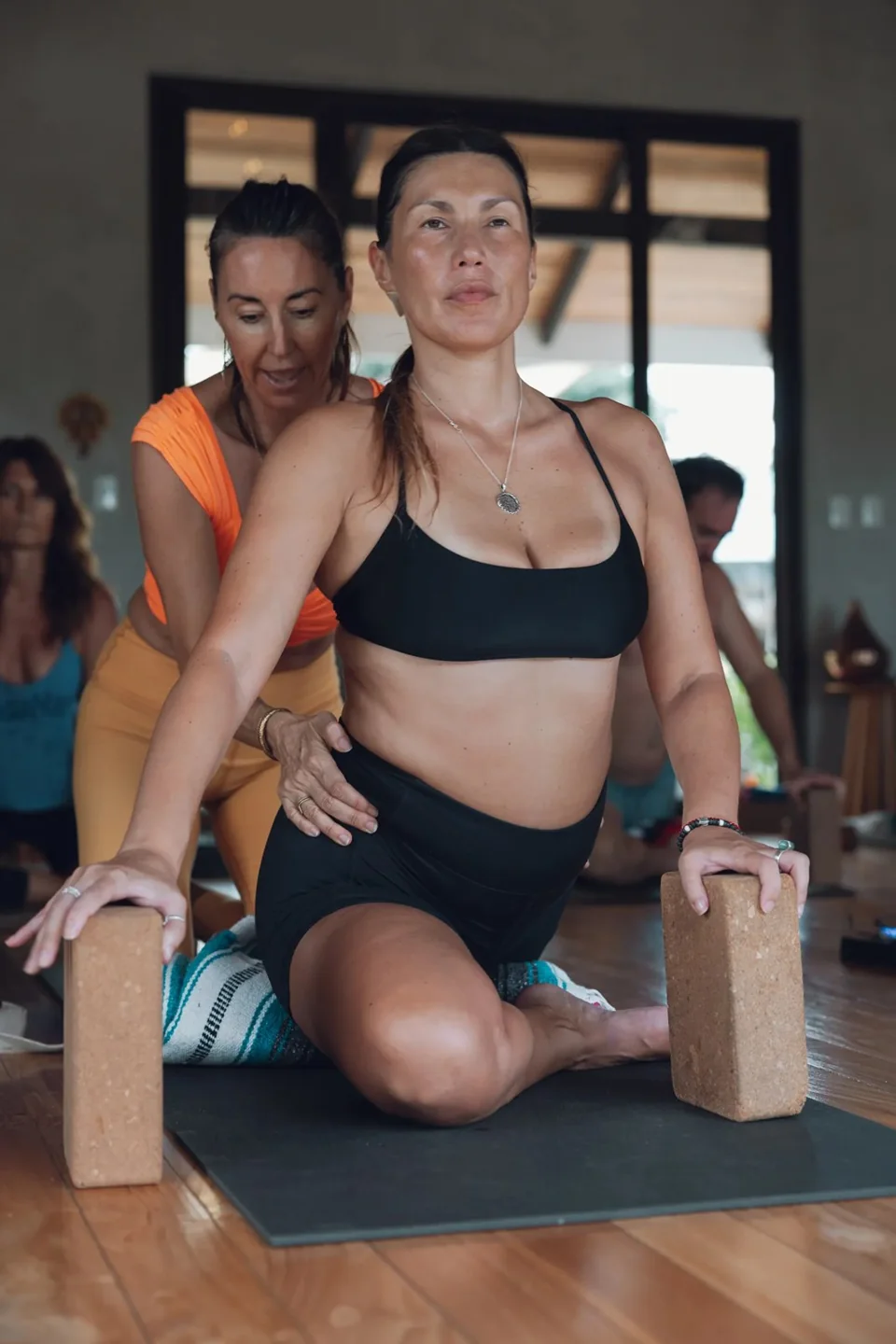
Tell the provider your experience, the styles you enjoy and any access need that affects participation. Ask whether a beginner can join, whether the teacher offers options during practice and whether the pace is explained in advance. If you need a step-free entrance, a particular language of instruction or a quiet space, ask about the exact session and venue rather than assuming every class under one brand is identical. Do not rely on a photograph to infer the physical accessibility of a studio.
For a retreat, ask how the program handles mixed ability groups and whether individual guidance is available. For drop-ins, a single introductory session can help you decide whether to continue, subject to that provider's booking terms. If you have a health concern that may affect practice, discuss it with a qualified professional and the instructor as appropriate; a travel article cannot determine what is safe for your body. Treat claims about healing outcomes as marketing unless supported by appropriate evidence for the specific claim.
Map the whole day, not only the studio
Mark accommodation, class venue, meals and other planned stops on a map. Ask the studio for its exact entrance and arrival instructions. A short straight-line distance can hide a steep or unlit route, and a class scheduled near sunset may end after dark. If you are travelling with a mat, check whether the studio supplies one or whether you can carry yours without compromising control on any vehicle. Travel arrangements should fit the route and conditions on the day.
A retreat on one property may save repeated local journeys but may also keep you farther from independent restaurants or beaches. A separate room near a studio can create a similarly simple daily routine if classes are available at the right times. If Bimba is an appropriate option for a particular trip, use its current app to check availability and approved ride-ending points; a schedule alone does not reserve a vehicle. Arrange a different transfer when a shared ride or carrying equipment is unsuitable.
Check booking and cancellation rules
Retreat deposits, payment deadlines, transferability and cancellation windows can differ sharply from those of individual classes. Ask what happens if the organizer changes the teacher, itinerary or venue. For a class pack, confirm expiry, eligible sessions, missed-class treatment and refund conditions. Keep the confirmation and the latest schedule in one place. If a program includes accommodation from a separate operator, ask which party is responsible for each part of the booking.
Check what the organizer expects on arrival: check-in time, meeting point, items to bring and whether your first class is on the arrival day. If you book a retreat because you want a social group, ask how much of the schedule is shared and which activities are optional. If you book drop-ins for flexibility, avoid prepaying more sessions than you can realistically use. Both choices work best when the terms match the freedom you actually want.
Use a two-day thought experiment
Imagine an ordinary day rather than the best photograph in an advertisement. With a retreat, what time would you wake, practise, eat, rest and meet the group? With drop-ins, when would you travel to the studio, and what would you do if a class fills or moves? If you value predictable practice and a shared rhythm, the retreat may fit. If you want to explore Santa Teresa between sessions or test several teachers, separate classes may fit better.
For a short visit, try one booked class and keep the rest of the itinerary open. For a longer stay, consider a small pack only after checking its usable dates. For a yoga-centred journey, compare two actual retreat itineraries rather than treating all retreats as the same product. The best decision is the one whose teaching, total cost, dates and daily movement you can explain clearly before you pay.
Frequently asked questions
Can I practise yoga in Santa Teresa without booking a retreat?
Yes. Providers publish individual classes and class packs. Choose a current session and confirm whether advance booking is required.
Is a retreat better for beginners?
The program matters more than the label. Ask whether the advertised teaching assumes prior experience and whether the teacher offers suitable options within the class.
Do retreat prices include airport transfers?
Not necessarily. Check the inclusion list and the exact pickup location. Flights, long-distance transfers and optional outings may be separate.
Summary
Choose a yoga retreat or drop-in classes according to the role you want yoga to play in your trip. Compare teaching style, level and schedule, then look at accommodation and meal inclusions. A clear view of both class time and free time helps you choose a stay you will enjoy throughout the day.
Choose the commitment, then the teacher
Book a single class when flexibility matters or you are testing a style. Choose a retreat only when its schedule, accommodation, level and cancellation terms match the experience you want.