
Playa Quesera requires a different plan from a beach stop along Santa Teresa's main road. You need permission to visit the protected area and a way to complete both legs of the journey. Choosing the walk or a boat changes how much energy you spend reaching the sand, what you can carry and how much flexibility you have when you want to leave.
Begin with a reservation inquiry to Curú, then arrange the access method around the response. Quesera forms part of the refuge. A seat on a boat does not, by itself, prove that someone has completed the beach entry arrangements for you. Ask who handles each reservation and keep both confirmations together.
Separate beach access from transport
Curú's current trail page requires a reservation for Quesera. Ask the refuge for the process that applies to your date and arrival method. Explain whether you intend to reach the beach by land or sea, how many people will visit and whether you plan to return the same way. Let the office confirm the information it needs before sending identity details through any unfamiliar booking channel.
A tour seller may include entry administration in its package, or ask you to obtain confirmation yourself. Sitios Ticos, for example, tells its Quesera customers to arrange refuge access before booking its outing. That is evidence of a separate requirement, not a recommendation to buy that itinerary from Santa Teresa: its published departure points are elsewhere.
Keep the refuge confirmation, transport confirmation and regional transfer distinct in your notes. Write the responsible provider beside each. If one operator coordinates the whole day, ask for an itinerary that names Quesera and states what happens if access is unavailable. “Beach tour” can describe a different destination or a stop with a shorter stay than you imagined.
Choose the walk for a hiking day
The refuge describes the Quesera trail as strenuous. Treat that assessment as more relevant to route choice than an older destination article's broad description of easy trails. Ask about the current path, sections with difficult footing and the time staff recommend allowing for your group. Avoid planning from a distance copied from a visitor's old GPS recording.
Choose walking if you want the journey through the forest to occupy a substantial part of your outing. Carry only what you can manage on the return as well as the outward leg. A bag that feels comfortable after breakfast can become awkward once you add wet clothing. Use a pack that leaves your hands free and keeps drinking water accessible.
Discuss the return before you begin. A group may feel strong at the trailhead and tired after its beach stay. Agree on a departure point in the day's plan, with enough margin for a slower walk back. If a companion wants only a short forest introduction, the Curú wildlife walking guide offers a more suitable starting point than using Quesera as a test of endurance.
Choose a boat for more beach time
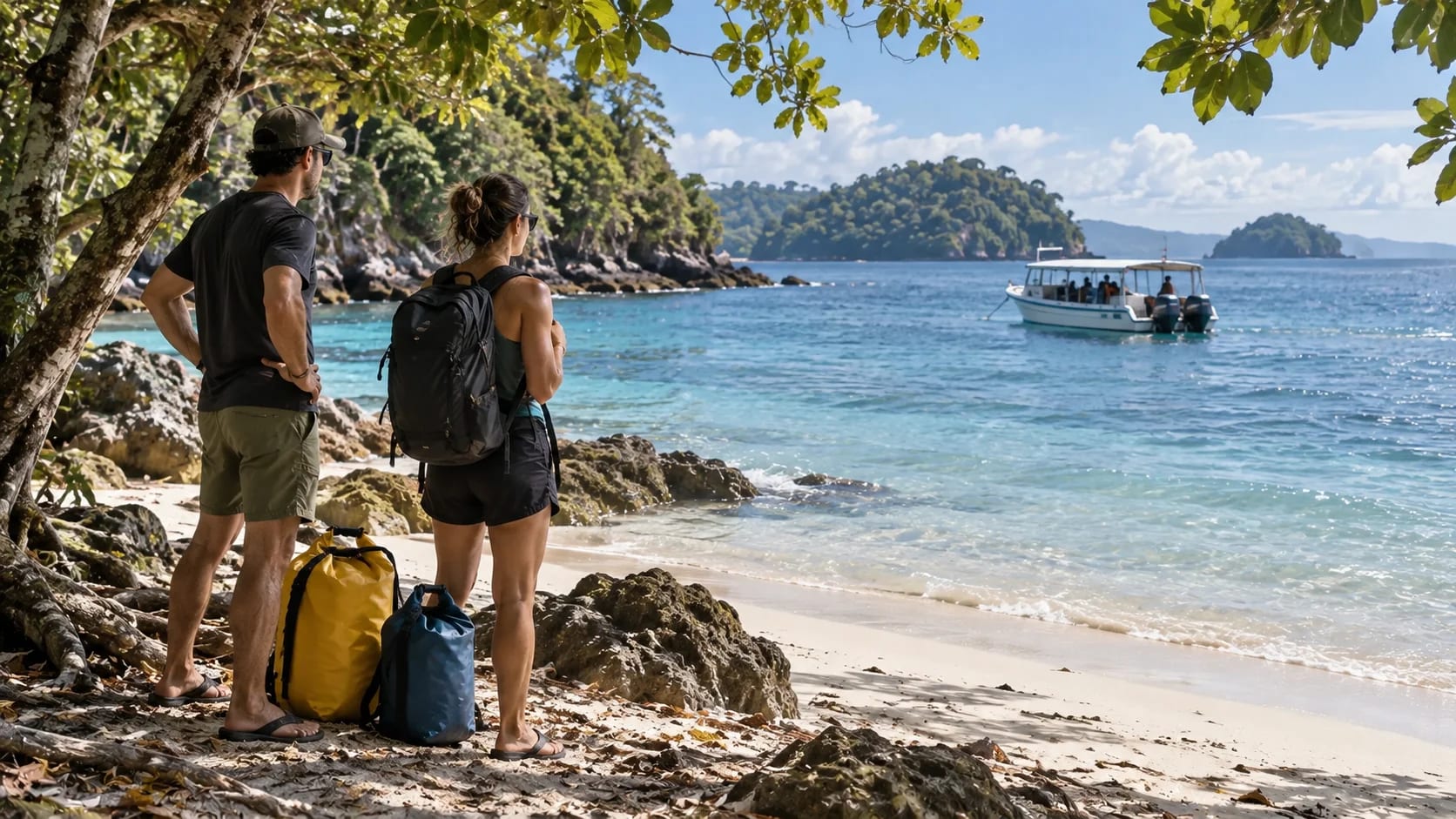
The Costa Rican tourism authority describes boat access as one way to reach Quesera. That establishes the option, but it does not give you a live departure timetable. Ask a provider to confirm its actual service for your date, the embarkation location and whether the quote covers a return trip. A photograph of a boat near the beach cannot answer those booking questions.
Explain any difficulty stepping into a small boat or moving on uneven ground. Ask whether you board from a dock or the shore and whether arrival involves stepping into water. A boat journey may reduce walking without providing step-free access. Travelers who need assistance should describe the exact movement they cannot manage and let the operator assess its equipment.
Check the operator's life-jacket provision and age requirements before booking children. Ask who supervises boarding and how the captain communicates a change of plan. For questions about motion sickness or individual health needs, consult an appropriate health professional instead of choosing from an anonymous review.
Pack belongings so you can secure them during boarding and keep electronics dry. Follow the crew's directions about what stays in your hands. A large beach setup can complicate a small-boat transfer even if you can carry it from the car. Ask about baggage limits before promising to bring chairs or equipment for other members of your group.
A mixed journey needs two confirmed legs
Walking out and returning by boat can sound like the best combination. Use that plan only after a provider confirms the collection, the meeting point and the conditions under which it will operate. Do not count on finding spare space in a passing boat once you reach the beach.
Tell the refuge about the mixed route. Ask whether the arrangement changes the entry procedure, permitted timings or information needed in the reservation. Tell the boat operator that you will arrive on foot, so it does not wait for you at the outward embarkation point. Those two conversations prevent a simple mismatch between reservations.
Agree on what happens if weather prevents the planned collection. The provider should explain its procedure; you should understand whether the walking return remains feasible for your group within the permitted window. If you cannot manage that possibility, choose a fully arranged boat outing or a different destination rather than depending on an unconfirmed rescue ride.
Compare complete days, not two ticket prices
For the walking option, include refuge access, any required guide arrangements and the return regional transfer. For the boat option, add the actual round-trip boat charge and any separate entry administration. Ask how the operator charges children and whether a minimum group size changes the total. Keep the quote in its stated currency rather than estimating an exchange rate in your head.
Time also changes the comparison. Imagine one traveler who wants a long hike followed by a brief rest on the sand, and another who wants to read under shade after arriving. They may spend the same amount on the regional transfer and still prefer different access methods. Neither should choose from the boat fare alone.
The Santa Teresa trip-budget worksheet helps you record the full outing as one expense. Add the cost of food you intend to take or buy, but avoid assuming a particular meal service at Quesera. Ask about facilities at the actual beach, since services at Curú's main visitor area may be some distance from where you spend the day.
Plan a beach stay without promising conditions
Bring enough drinking water for the plan agreed with the operator, plus a way to carry out waste. Confirm rules about food, alcohol and equipment before packing. Choose a small setup that you can keep together and move if staff direct visitors to another area. Leave shells, plants and wildlife where you find them.
A pale beach and clear-looking water in a photograph do not establish swimming conditions on your day. Ask the crew or refuge staff about current restrictions and follow local warnings. Keep the outing worthwhile even if you remain on shore. A beach visit can include reading, observing the coastline and a picnic in a permitted place without entering the water.
Protect the time you need to get ready for departure. Changing shoes, packing wet items and accounting for children can take longer than the ride itself. Agree that someone will watch the collection time while others organize bags. Keep your group at the designated pickup point instead of scattering along the shore as the boat approaches.
Add Santa Teresa at both ends
Ask your regional driver for the exact drop-off and pickup points associated with your chosen operator. A quote to Curú's entrance may not match a meeting point deeper inside the property. Confirm whether the driver waits, returns later or hands you to another provider. Give the driver the operator's contact details with the operator's permission.
Leave room between the expected return from Quesera and your road collection. A tightly timed pickup can turn a relaxed beach stay into repeated clock checking. If you need to be back in Santa Teresa for a fixed commitment, tell the organizer before paying and accept a recommendation to choose another day.
Bimba supports short local trips inside the app's live boundaries. It does not establish a regional route to Curú, a trail ride or beach access. Arrange appropriate transport for the whole excursion. The regional day-trip guide can help you compare the commitment with other outings before you reserve.
Keep the alternative tied to your original goal
If Quesera access is unavailable, identify what you wanted from the visit before accepting a substitute. A traveler seeking a forest walk may prefer another permitted Curú trail. A traveler seeking a boat day may consider an operator's other route, after reviewing its destination and conditions. Do not assume a replacement offers the same beach time or level of exertion.
The Tortuga Island outing guide covers a separate excursion that some sellers combine with Quesera. Check the time allocated to each stop before buying a combined tour. Two named destinations can mean less time at the beach you wanted most, particularly after transfers and boarding.
For a shorter local beach outing, use the Santa Teresa beach-access guide. Choosing a local day after a reservation falls through does not require forcing another regional journey into the same afternoon. Keep the Quesera plan for a date when permission, access and return all fit.
Make the choice with your whole group
Ask each traveler to state whether the hike or the beach is the main attraction. Discuss physical comfort and boarding requirements without pressuring someone to accept the harder option. If the answers differ, a boat plan with a separate short forest walk on another occasion may suit the group better than a demanding shared hike.
Choose walking when the forest route is part of the experience you want and you can complete the agreed return. Choose the boat when you want to conserve walking effort and the operator confirms suitable access. In either case, reserve the beach first and keep the return arrangement as specific as the outward journey.
Reserve access before choosing the route
Choose Quesera on foot for the hiking experience or by boat for more beach time. Confirm refuge permission and both transport legs, with a weather procedure you understand.