
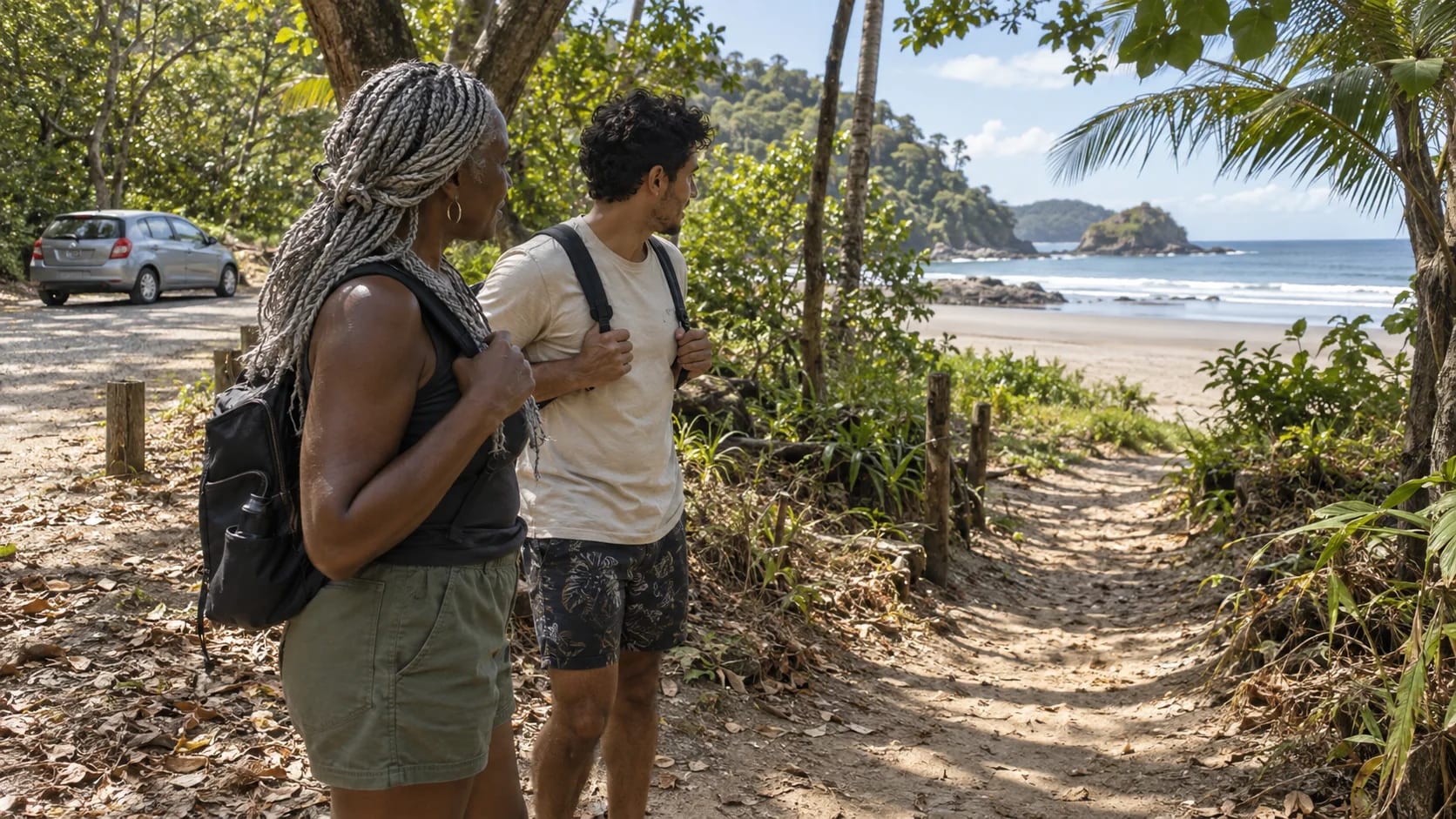
Getting to the beach in Santa Teresa usually includes a final stretch on foot. Choose a suitable access point, finish any shared ride correctly and carry only what you need for the visit. The beach name helps you choose the area; the app tells you where a Bimba ride can end.
Beach names and parking points are different
Playa Carmen, Playa Santa Teresa and the surrounding beaches describe coastal areas. They do not identify where a shared ride can end. Bimba's location directory lists business-based parking points, while the live app shows current eligibility and vehicles.
Select the beach section you want to visit, locate a practical access and then choose an approved endpoint that fits the walk. This avoids reaching the sand with a bicycle but no valid place to complete the ride.
For an overview of the coast, use the Santa Teresa beach guide. The purpose here is the final connection between transport and beach access.
Area anchors in the Bimba directory
The following names are orientation points from the website directory, not promises of available vehicles or a measured walking route. Confirm the endpoint in the app before starting.
| Area | Listed business anchors | What to establish next |
|---|---|---|
| Playa Carmen area | The Bakery, Liam's Place, Lapoint Surf Camp | The public access you intend to use |
| Central Santa Teresa | Super Costa Market, El Somos Cafe, Uma Beach Club | Which endpoint best fits the chosen beach section |
| Northern Santa Teresa | Gula, Somos, Ani's Bowls & Salads | The actual route between parking and the beach |
| Mal País direction | Creativo ART Center, Delizie Italian Bakery & Kitchen | Remaining distance and whether another transport mode fits better |
Use a public beach access. A nearby business listing helps you find the area, but does not give permission to cross private grounds.
Complete the return before leaving the vehicle
Follow the instructions for the selected endpoint and vehicle. Check that the app confirms the trip is closed before walking away. A parked bicycle and an ended ride are not automatically the same state.
Leave the vehicle upright in the indicated area. Keep doorways, paths, driveways and accessibility routes clear. The how-to-ride guide explains the service process; use in-app instructions for the actual return.
If the ride does not close, resolve it through the app or support before leaving. Save the ride information if you need assistance. Do not assume reaching a familiar landmark is enough to end billing.
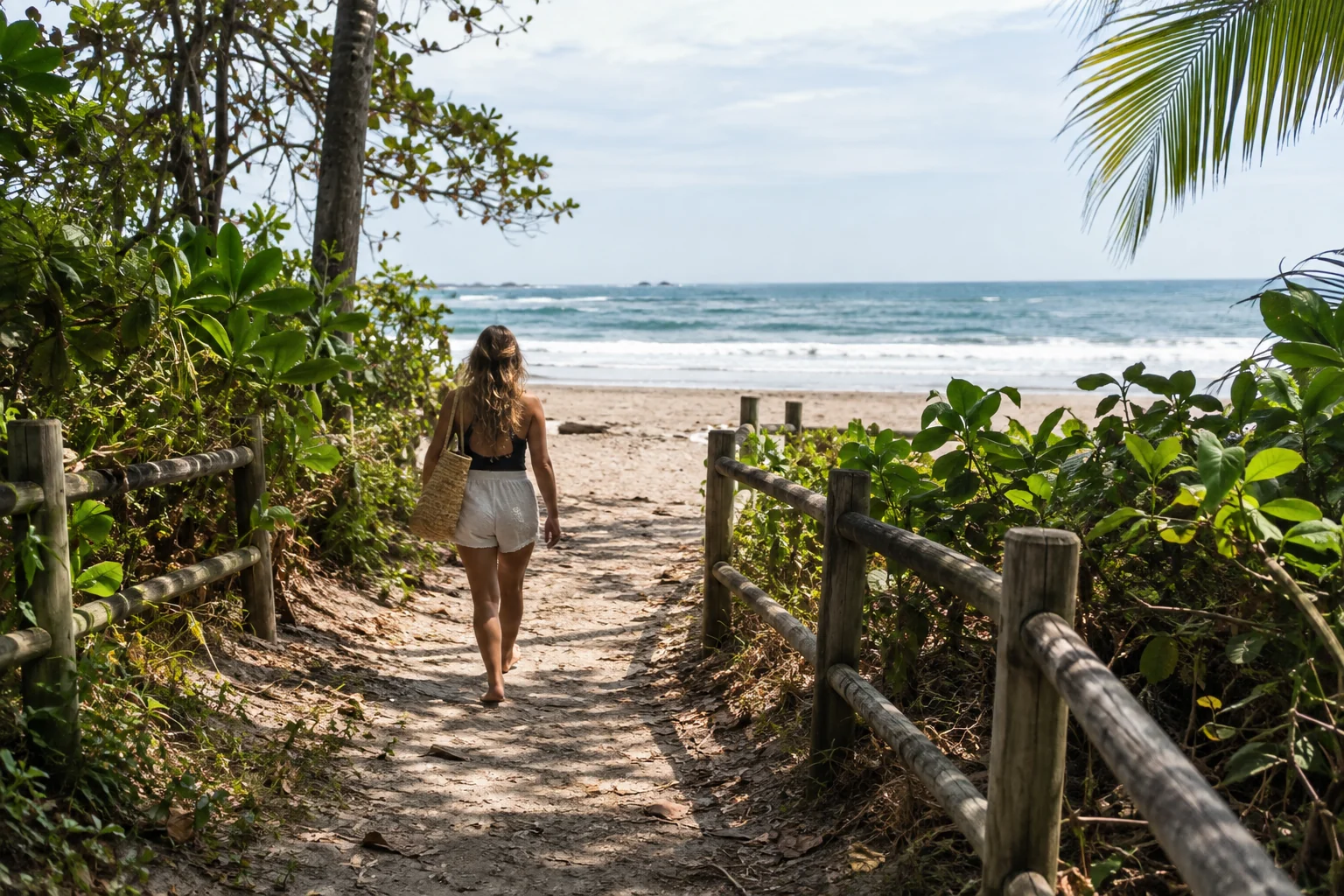
Walk the final section with a light load
Bring what you need for the beach rather than carrying the contents of a travel suitcase. Footwear, water, a towel and protected essentials are easier to manage than several loose bags. Keep the return route and parking-point name saved so you can orient yourself afterward.
A beach visit with a surfboard has different transport requirements from a visit with a small day bag. Arrange a lesson board at the meeting point or use suitable board transport. Do not improvise by carrying an unsecured board while riding a shared vehicle.
For a class, ask the operator for its exact meeting point. A beach name alone may cover a long stretch of coast and may not identify the lesson entrance.
Plan the return as a new trip
Once you end a shared ride, the bicycle can become available to another rider. It may not be there when you return. Check the live map when you are ready to leave rather than treating the morning vehicle as reserved beach parking.
If you intend to stay through sunset, plan the evening return independently. Daylight arrival does not make the later route suitable for riding. Use a practical walking route or arrange suitable transport according to the actual conditions.
For remote beaches or access beyond a useful endpoint, choose another transport arrangement from the start. A shared-bike allowance is not a reason to extend a journey beyond the service area or onto unsuitable surfaces.
Think of the visit as ride, return and walk
First choose the beach area and a suitable access route. Then check whether an approved return point fits that plan. The closest-looking spot on a map is useful only if you can complete the ride there under the current app rules.
On arrival, finish the return process before leaving the vehicle. A parked bicycle and a closed trip are different things, so check the confirmation while you are still there.
Carry a manageable beach bag for the final walk. When you are ready to leave, check your next transport option afresh. A bicycle returned earlier is not held for you, and an evening return may call for a different plan.
For the next part of your plan, see our planning the return after sunset and packing a light beach bag.
Choose the access before you choose the parking point
“Santa Teresa beach” describes a long coastal area rather than a single front door. Start with the section you actually want: the meeting point for a lesson, a quieter place to walk, or the part near a restaurant you plan to visit. Ask the operator or host for a precise public access point. Then compare it with the permitted place where your chosen vehicle can stop. Reverse that order and a parking point that looked close on a small map may leave you with an awkward final walk.
A business name is an orientation aid, not an invitation to cross its property. Use a public access or one a venue has expressly made available to you. If the route between the street and the sand is unclear, ask locally before entering. Paths may differ in steps, shade, drainage and the amount of sand underfoot. Those details matter when someone in your party uses a mobility aid or carries beach equipment. Confirm the actual route for your group rather than assuming that a short map distance means an easy approach.
Save three separate locations
For a smooth visit, keep the destination, approved return point and public beach entrance as three separate references. The destination is the beach section or activity meeting place. The return point is where the app permits a shared ride to finish. The entrance is where pedestrians leave the road and reach the shore. They may be near each other, but their pins do not necessarily overlap. Send all three to a companion if your group will arrive by different means.
A useful note might say “lesson meeting point near the chosen beach section; Bimba return point shown in the app; public access across the road.” Avoid writing “park at the beach” without naming where a vehicle can legally and practically be left. If you use a private car, follow local signs and property rules at the place you intend to park. A photo of a roadside gap does not prove that leaving a car there is permitted or safe. Do not block a gate, junction, pedestrian route or emergency access.
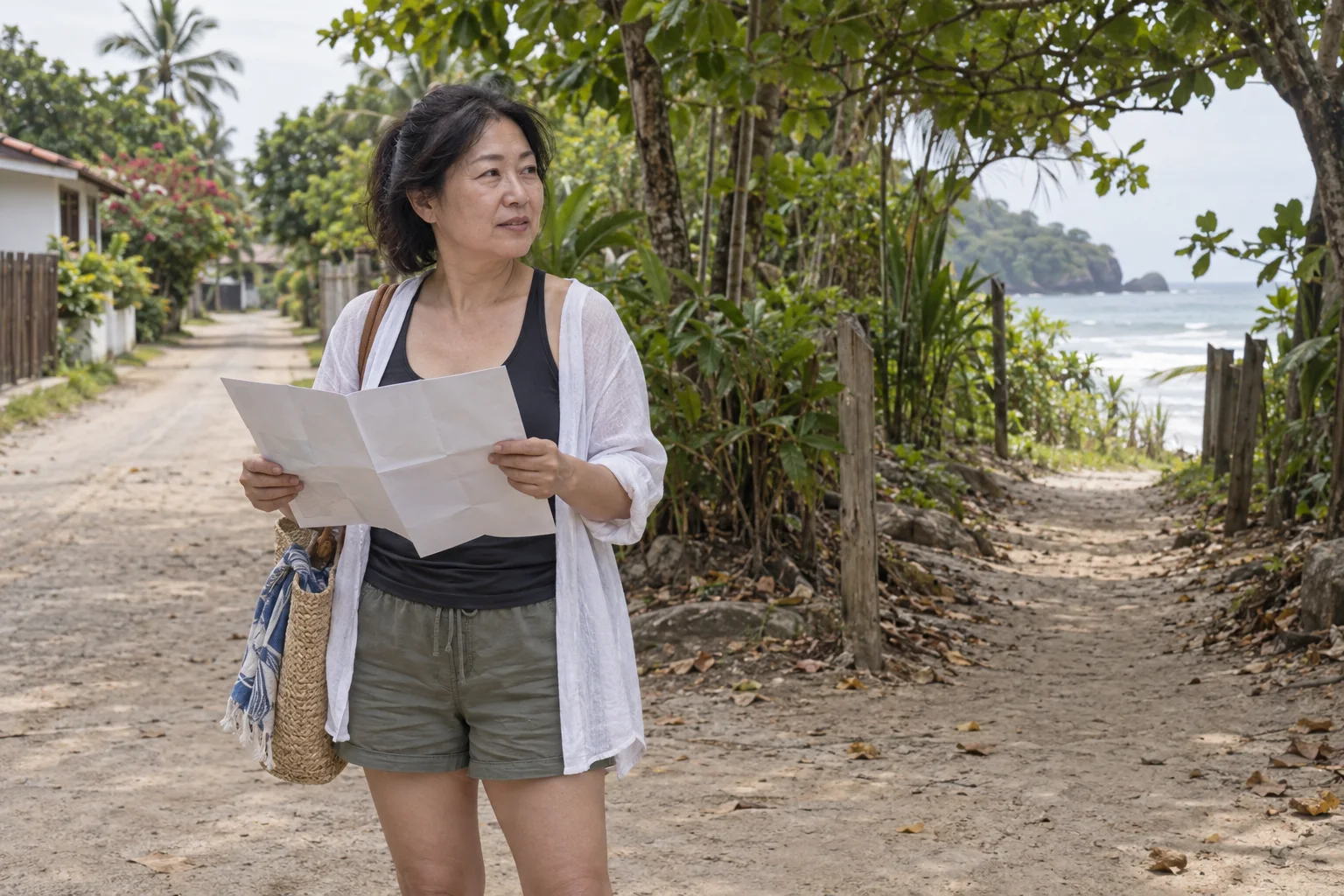
Check the app before departure and again on arrival
Service areas and available vehicles can change. Look at the live Bimba app just before setting out, select a destination that is actually permitted and check the route in daylight when possible. Do not rely on a screenshot from another visitor or an old blog post as proof of a current return point. A point shown in the location directory is a useful area anchor; the app and its current instructions determine the ride you can take now.
At the destination, use the parking area described for that endpoint. Follow the return steps for the specific vehicle and wait for confirmation that the trip has ended. If the app does not confirm the return, deal with it before walking away. Keep the ride details and use support if needed. Taking a photograph of the parked vehicle may document where it was left, but a photo is not a substitute for the in-app confirmation. The aim is to leave the vehicle ready for the next rider and your account clear of an open trip.
Make the final walk practical
Choose a small day bag that you can carry over sand. Bring water, sun protection, footwear that works on the actual path and a way to protect your phone and essentials from rain or spray. A large suitcase, an unsecured surfboard or several shopping bags are signs that another transport plan may fit better. If you book a lesson, ask whether its equipment is supplied at the meeting point. Do not assume a shared vehicle can carry a board or bulky beach gear safely.
After leaving the road, watch for roots, steps, uneven sand and changing light. A route that is easy barefoot on the beach can be uncomfortable over stones or hot ground on the way back. Families should agree on a landmark at the public entrance and a meeting time. Keep personal belongings with you or under suitable supervision; a returned shared vehicle is not storage. If the access is flooded or obstructed, choose another public route instead of crossing private land or forcing a narrow unsafe gap.
Treat the return as a separate journey
Returning a Bimba vehicle ends that ride; it does not reserve the same vehicle for later. Check the app when you are ready to leave. If nothing suitable is available, walk a practical route or arrange another transport option. Decide in advance how you will get back if you stay through sunset or weather changes. Riding after dark or in heavy rain may be unsuitable even if the daytime trip worked well.
Save the name of the return point and the entrance you used before you put the phone away. On a long coastline, coming out through another path can change the walk back. Allow time to reach an agreed pickup point without rushing. Tell a driver the roadside meeting location, not just the beach name; a vehicle cannot collect passengers from the waterline. For a group, agree whether everyone will leave together or needs separate transport.
A workable beach-day sequence
Suppose you have a morning surf lesson. First ask the school for its exact meeting point and whether a board is provided there. Check a public entrance that leads to that point. Open the Bimba app and see whether an approved endpoint fits the walk with your small bag. If it does, ride only within the current service rules, return the vehicle and confirm the trip has closed. Walk the final section to the lesson. Before heading back, check the app again and use another plan if no suitable vehicle is available.
Now consider a late afternoon visit with dinner afterward. The same outward ride may be practical, but the return after dark needs another arrangement. Identify a safe roadside meeting point and contact a driver or other suitable transport before the evening. The decision is based on the whole visit, not on how pleasant the first ten minutes of riding feel. This sequence also helps a visitor who is staying on a hill: the last climb to accommodation may be a separate transport question.
Quick checks before leaving
Can you name the precise beach section, public entrance and permitted endpoint? Is the final walk suitable for the least mobile person and the gear you carry? Have you confirmed the in-app return, and is the later journey home realistic without assuming the same vehicle will be waiting? If any answer is uncertain, adjust the route before you depart. The beach remains the destination; the app defines the shared ride, and the public access connects them.
Frequently asked questions
Can I park a Bimba at any beach entrance?
No. Use an approved endpoint shown in the app and complete the return there.
Will the same bicycle be waiting after my beach visit?
Not after you have ended the ride. Check current availability for the return trip.
Does a listed beach club guarantee public access through its grounds?
No. Confirm access arrangements separately. A business-based parking point is not permission to enter every part of the property.
Summary
For a beach visit by Bimba, check an approved return point, finish the ride successfully and walk the final section to the beach. Keep your bag manageable and plan the journey home independently. Looking at availability and conditions again when you leave makes the return part of the plan, too.
Use the access that fits the whole visit
Choose an identifiable approach, park only where permitted and leave enough daylight for the walk back. Never block a road, gate, path or pedestrian route for a shorter walk.