

Self-catering in Santa Teresa is easiest when you cook for the kitchen you have. A kettle and a small fridge can support simple breakfasts; a hob opens up more meal options. Choose a few meals that share ingredients and you can enjoy the convenience without spending the holiday managing groceries.
Check what “kitchen” means in the listing
A kitchenette, a shared kitchen and a fully equipped private kitchen offer different possibilities. Ask about the appliances, basic cookware, fridge space and utensils you need. Ask for a short equipment list so you can plan meals you will actually be able to cook.
If cooking is central to the budget, confirm the specific unit rather than relying on a property-wide amenity list. The longer-stay planning guide provides context for building an ordinary routine.
Match meals to equipment
| Available setup | Sensible starting plan | Check first |
|---|---|---|
| Kettle and small fridge | Simple breakfasts and cold items | Storage space and suitable utensils |
| One cooking ring | One-pot or simple pan meals | Pan, pot, lid and safe preparation space |
| Shared kitchen | Short meals using labeled ingredients | Access hours, storage and cleanup rules |
| Full private kitchen | A wider rotation of meals | Whether the listed appliances actually work |
Match the examples to the equipment your host confirms is available.
Build meals that share ingredients
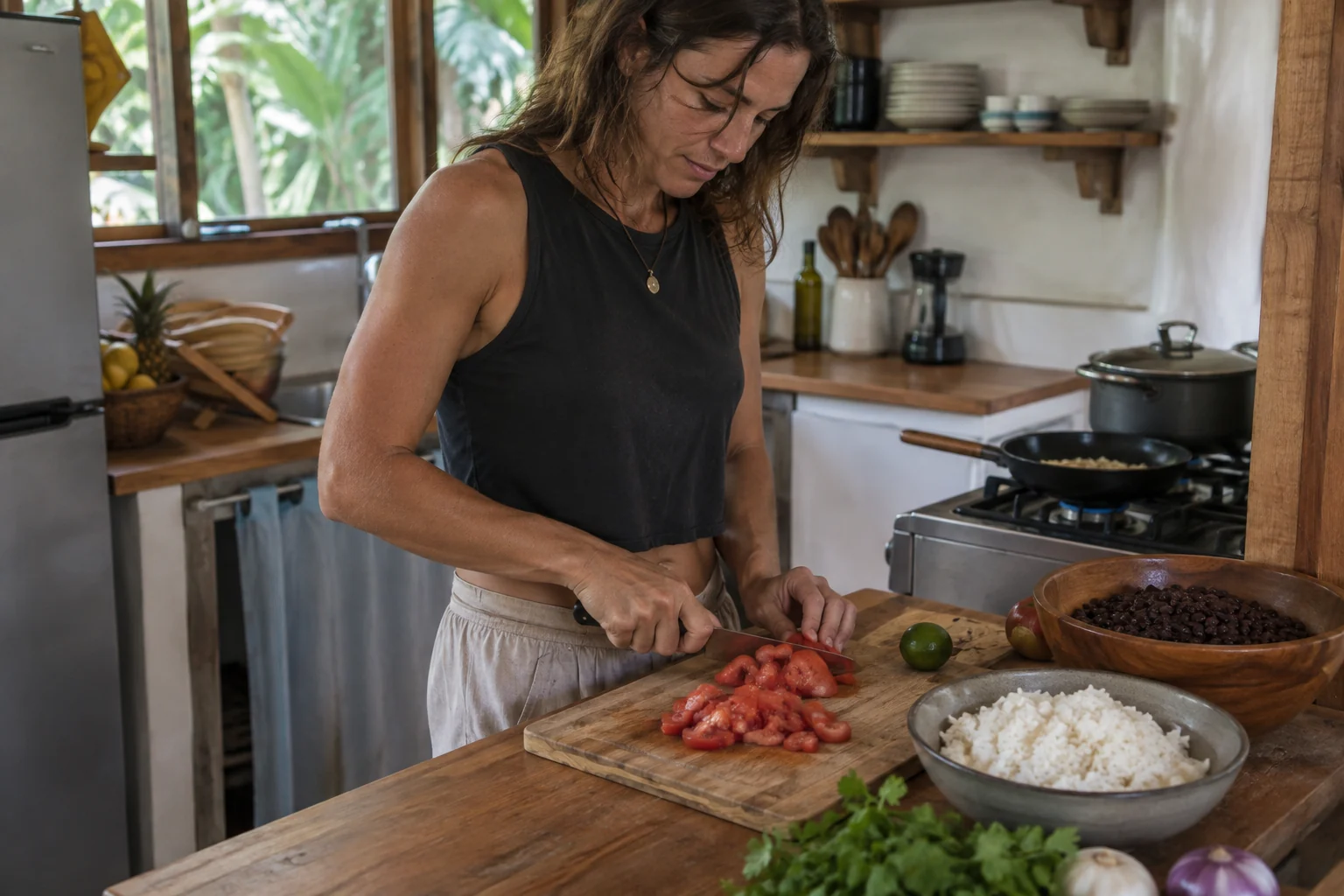
Choose two breakfasts and two simple main meals before shopping. Reuse ingredients across them where it suits your diet: the point is to reduce half-used packs, not to create a restrictive menu.
Buy small quantities at first. After a day or two, you will know how often you eat at home and which supplies are missing. A long shopping list made before arrival often reflects an imagined routine rather than the one you follow.
Separate kitchen basics from food
Check what the accommodation provides for cleaning and preparation. Buying a full bottle of every basic item can change the economics of a short stay. Ask about shared supplies instead of assuming either that everything is included or that nothing is.
Keep food stored according to the product's instructions and the accommodation's facilities. Do not plan meals that depend on storage you have not confirmed. Handle perishable shopping as a direct return task rather than adding a long café stop afterward.
Compare the meals you actually replace
If cooking breakfast at home replaces a purchased breakfast, count that saving. If you still go out for breakfast and buy groceries that remain unused, the grocery spend is additional rather than a saving.
Include the transport needed for shopping and the time you want to spend cooking. Some travelers enjoy preparing meals; others would rather pay for convenience. A useful budget reflects that preference honestly.
Plan the grocery journey
Write a list that fits the carrying arrangement. Small local purchases may be manageable on foot or with an appropriate shared ride. Larger loads need delivery or another transport option.
Use the Bimba location guide only for trips that fit the network and load limits. Do not hang bags from a scooter's controls or assume a large shopping basket can be carried safely because the store is nearby.
Keep an arrival meal simple
For a late arrival, arrange a small supply with the host if available or identify a nearby meal. Avoid making the first evening depend on a large shop, an unfamiliar kitchen and several missing ingredients.
Choose meals that share a shopping list
Pick two breakfasts and one easy dinner using overlapping ingredients. The aim is to use what you buy, not to recreate a fully stocked kitchen for a short stay. Check whether basics such as oil, salt and washing-up supplies are already provided.
If you only have a kettle and fridge, choose food that needs no cooking beyond that setup. With a hob, keep the first meal to one pan until you know the utensils available. A full kitchen gives more options, but you still need space to store ingredients.
Keep an arrival meal especially simple. Once you have seen the kitchen and settled in, you can decide how often cooking fits the rest of your holiday.
For the next part of your plan, see our building a first grocery basket and shopping versus delivery.
Frequently asked questions
Does self-catering always cost less?
No. Equipment, wasted food, basic supplies and transport affect the total. It often works best when the meals are simple and genuinely replace purchases.
Should I buy for the whole month at once?
Not before checking storage and your routine. Start smaller and adjust.
Can I combine cooking with restaurant visits?
Yes. A mixed plan can keep the stay convenient while still leaving room to explore local food.
Summary
Self-catering works best when your meals match the kitchen you actually have. Start with a small shop, choose ingredients you can use more than once and keep restaurant plans in mind. Comparing the meals you genuinely replace gives you a clearer picture of savings than treating every grocery purchase as money saved.
Cook around the equipment
Check the refrigerator, pans, heat source and storage first. Plan two repeatable breakfasts and one simple meal before buying ingredients for ambitious recipes.