
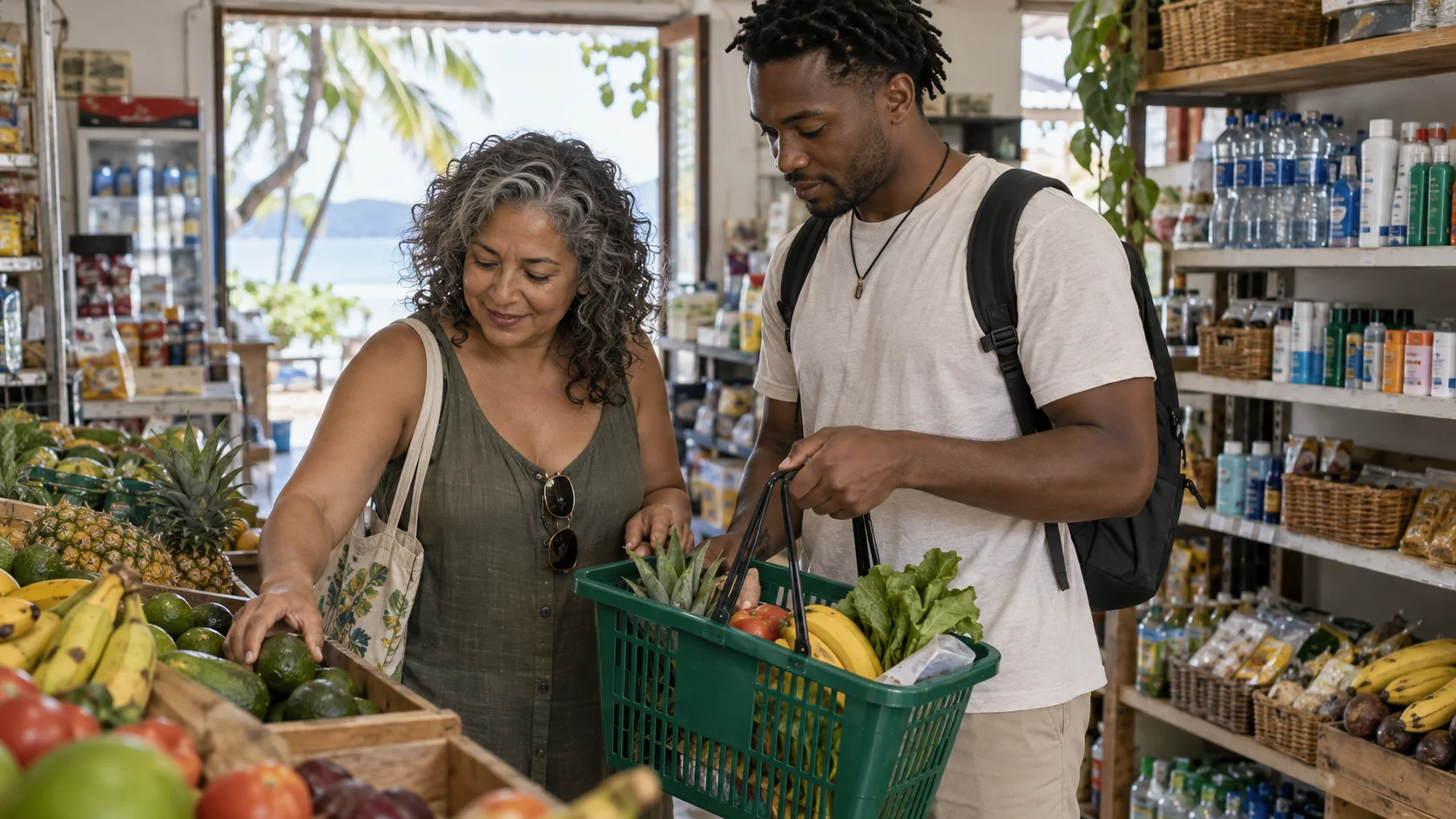
Shopping in Santa Teresa is easier when each stop has a purpose. Groceries, a forgotten beach essential and a gift call for different shops and different decisions. Start with what you will use during the stay, then leave room for browsing without carrying a day's purchases everywhere.
What is worth buying locally?
Local shopping is most useful for items you consume during the stay or need to replace: food, drinks, toiletries and basic beach supplies. For specialised equipment, confirm the exact product before making a dedicated trip.
A short holiday does not require a large first-day shopping expedition. Start with the next day or two, then adjust once you know what the accommodation supplies and where you will eat. This reduces duplicate purchases and bags to carry.
Match the shop to the purchase
| Purchase | Practical approach |
|---|---|
| Groceries | Compare a complete basket and the route back to your kitchen |
| Sunscreen or toiletries | Check size, packaging and the product you actually need |
| Surf equipment | Ask a specialist about the exact board or accessory |
| Clothing | Check fit and exchange terms before removing labels |
| Coffee or gifts | Consider luggage space and destination import rules |
| Electronics accessory | Confirm connector type and compatibility |
The Bimba directory lists local anchors including Super Costa Market and Supermarket Green World. These listings help with orientation; they do not establish present stock or the cheapest prices.
Grocery shopping: compare unit prices and storage
For groceries, compare the quantity as well as the shelf price. A larger package can have a lower unit cost but still be poor value if you leave half behind. Buy around the kitchen's actual fridge, cooking equipment and storage space.
Check whether the accommodation provides drinking water or a refill arrangement before buying a heavy quantity. Do not assume a kitchen listing includes oil, salt, coffee filters or every utensil needed for a planned meal.
Keep chilled purchases for the end of the outing and make the return trip direct. If the order is too bulky for a secure light load, arrange suitable transport or delivery instead of adding bags to handlebars.
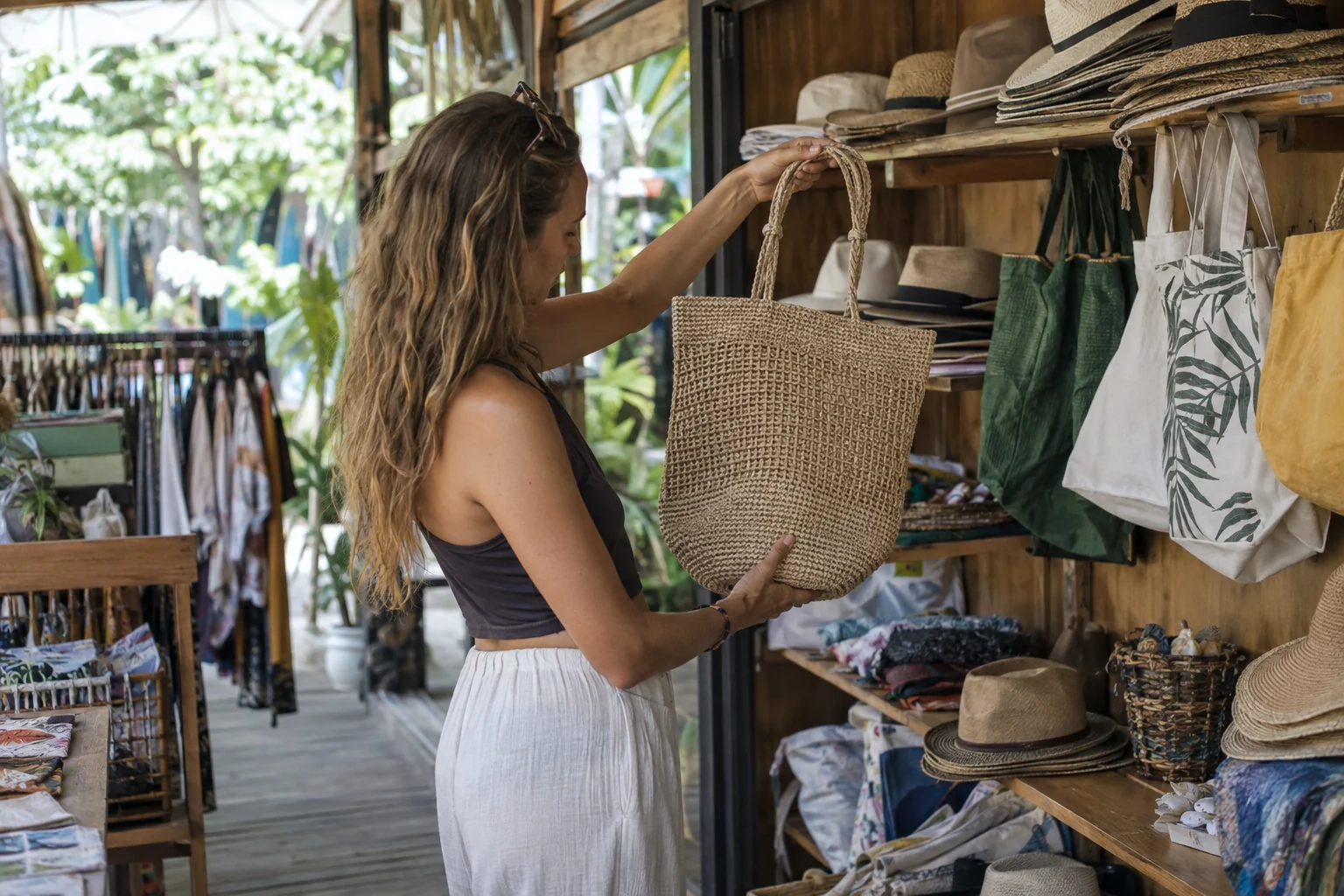
Surf and beach purchases
For a surf lesson, ask what equipment is supplied before buying or renting separately. The school may provide the board needed for the session. A purchase based on a generic packing list can duplicate something already included.
If you need a leash, fin or other replacement part, bring the relevant measurements or a photograph of the equipment. Similar-looking parts may not be compatible. Ask the seller to confirm the fit rather than assuming a universal standard.
A beach accessory should also fit your transport. A large item may be easy to buy and awkward to bring back on foot or by bicycle. Decide how it will travel before paying.
Café retail and gifts
Some cafés combine food service with retail. El Somos Cafe describes a retail offering alongside coffee and baked goods. Check current stock directly; the existence of retail space does not guarantee a specific product or size.
For coffee beans, check whether you need whole beans or a grind suited to your equipment. For a gift, consider how it will fit in luggage and whether it needs protection. Food products may also be subject to rules at your destination, so check those before purchasing for international travel.
Payments and returns
Confirm the final amount, currency and accepted payment method before completing a larger purchase. Keep the receipt and the shop's contact if the item may need to be exchanged.
Ask specifically whether the store offers refunds, exchanges or store credit, and within what period. A return policy for clothing may differ from one for opened food or equipment. Do not assume a policy from another retailer applies.
If a product is not in stock, ask whether an order or transfer is possible and when it would arrive. A promised delivery after your departure is not useful even if the product price is attractive.
Buy for the next part of the trip
For groceries, think about storage and meals before pack size. A large item offers little value if it does not fit the fridge or you leave before using it. For beach gear, check that the item fits and does what you need before removing labels.
Ask your activity provider about included equipment before shopping for a lesson. You may need only personal items rather than the main equipment itself. Keep receipts for purchases where returns or warranty terms matter.
Leave bulky shopping until you can take it back comfortably. A direct return to your accommodation is simpler than carrying bags through lunch, an activity and the rest of the afternoon.
For the next part of your plan, see our planning grocery shopping and checking surfboard equipment arrangements.
Build a first-day basket around your accommodation
Before a large grocery run, check what the room or rental actually provides. A kitchenette may have a refrigerator but little cooking equipment; another place may include breakfast but no space for perishable food. Ask about drinking water, cups, utensils, a kettle and food storage if those details will change your list. Then buy for the next one or two days rather than duplicating supplies or carrying a full week's food before you know your routine.
For a short stay, a small basket might cover water, fruit, a simple breakfast and one easy meal. Its value is convenience, not a claim that one particular market is always cheapest. Compare the total of what you will consume and the effort of getting it home. If a large package has a lower unit price but will be wasted or is difficult to carry, the smaller pack may be the practical purchase. Check the packaging date and condition of perishables, especially if the food will sit in a warm bag before reaching a refrigerator.
Draw the return route before you fill a basket
The Bimba directory names Super Costa Market and Supermarket Green World as location anchors. Use those names to orient yourself, then choose the shop that fits your accommodation and next stop. The closest store to the beach is not necessarily the easiest to return from with groceries. Consider whether the route includes a hill, an unpaved segment, traffic or a long walk from the approved parking point. A light shopping trip and a heavy one can justify different transport choices.
If you are walking, carry the basket in one or two bags that you can manage without dragging them through dust or sand. If you are riding a shared bicycle or scooter, keep hands free and respect the vehicle's safe load and current app rules. Do not hook multiple heavy bags to the handlebars or balance bottles on the deck. For bulk supplies, water cases or a surfboard, use delivery or a suitable car-based trip when available. The goal is to get goods home intact without sacrificing control of the vehicle.
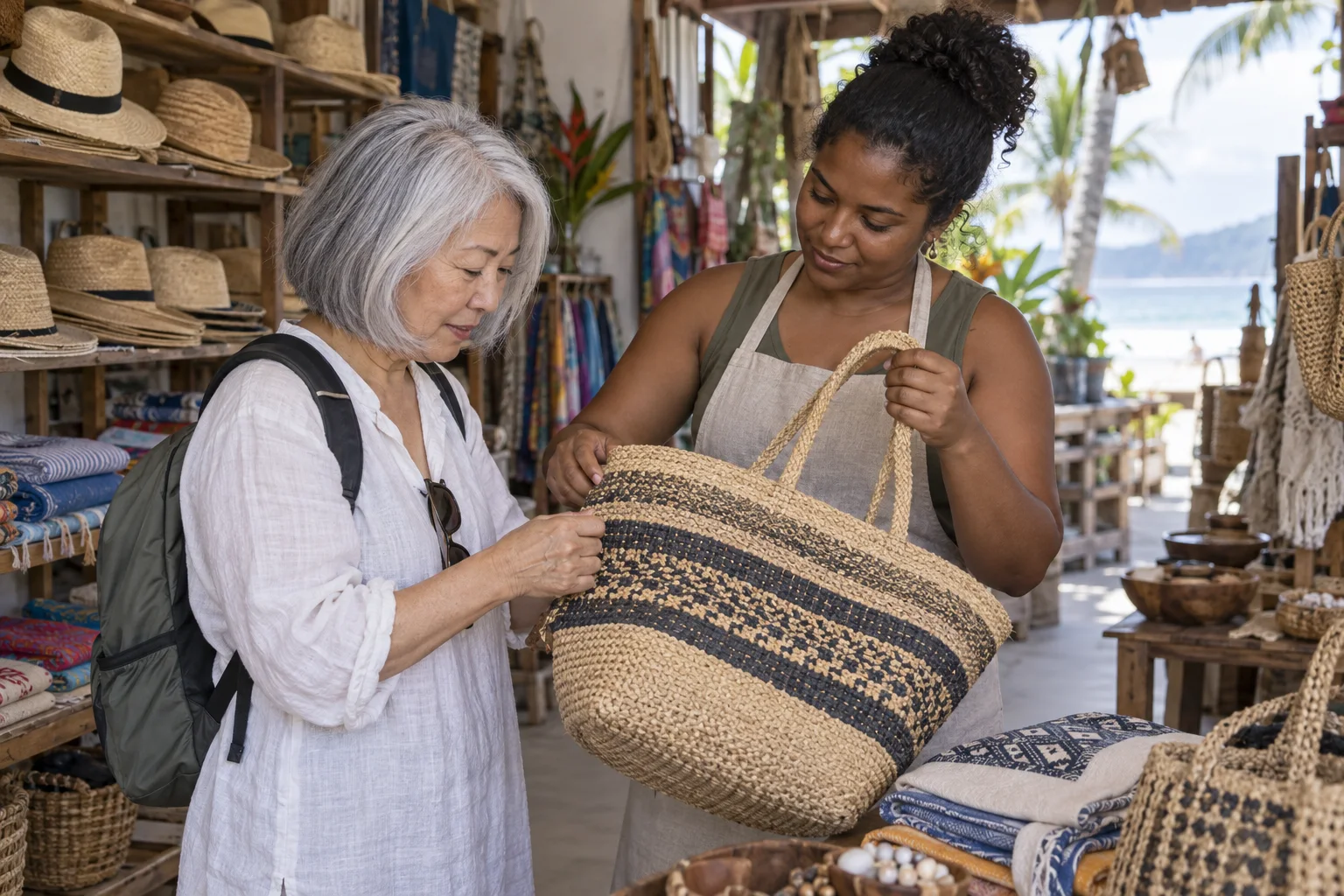
Buy beach necessities for the activity, not the photograph
For sunscreen, check the protection label, expiration date and size you can use during your stay. A product that looks appealing on a shelf may not fit your skin needs or luggage rules for the journey home. For a hat or sunglasses, assess fit and how securely they stay on in wind. For footwear, think about both the beach and the final path from the road. The right item solves a concrete problem on your itinerary rather than serving as a generic holiday souvenir.
Specialist surf gear deserves a separate decision. Ask a qualified shop about the board, leash or accessory compatible with your level and activity. A bargain on the wrong size can cost more than a suitable rental or lesson equipment. If the item is large, decide how it will reach your accommodation before paying. Do not assume that a shared Bimba vehicle is a cargo service. Check any shop's exchange policy on the exact product, because hygiene or use can limit returns.
Choose gifts with the return journey in mind
A useful gift fits the recipient, the luggage and the transport home. Check its dimensions, weight, fragility and any liquid content before buying. For food gifts, read the ingredient and expiry information and check the import rules of the country you are traveling to. Avoid telling yourself that an item is “local” solely because it sits in a beach shop; ask the seller where it was made if provenance matters. A small well-chosen object can be more meaningful than a bulky purchase you struggle to protect.
If you want a handmade piece, inspect seams, finish and care instructions. Confirm the price and whether a receipt is available before leaving. A tourist stall may have different exchange terms from a larger retailer, so ask when the choice depends on fit or color. Keep the receipt and packaging for anything that might need correction. Do not remove tags from clothing until you have checked the policy and tried the item properly.
Compare prices without losing sight of quantity
Check the currency displayed and whether the shelf price corresponds to one item, a pack or a unit of weight. For groceries, compare quantity and quality of the whole basket rather than one headline product. A cheaper item can be a poor choice if it expires before you can use it; a more expensive shop may save a second journey. If you need to pay by card, ask whether the specific store accepts your card and confirm the final amount on the payment terminal.
Keep a small record of higher-value purchases, especially electronics or gear, with the product name, price and return terms. For a low-value everyday purchase, do not spend an hour crossing town to save an uncertain amount. Your time, transport and storage matter too. This guide does not publish a price ranking because stock and prices change. It gives a method for deciding at the shelf.
Shopping with several people
Split responsibilities by need: one person can check breakfast supplies, another can confirm beach essentials and a third can verify transport for a bulky item. Agree what is shared before checkout. A group refrigerator can become crowded when everyone buys independently. Use a short common list, note dietary restrictions and decide who carries each bag. This reduces duplicate purchases and prevents someone from being left with the weight of all the supplies.
Set a meeting point outside the shop that does not block entrances. If you separate to browse, share exact pins rather than a vague “main street” reference. Plan a fallback for heavy rain or a changed schedule. It is easier to decide on delivery or a taxi before the group accumulates bags than while standing at the roadside with fragile purchases.
Two ways to organize an errand
For a first evening in town, go to the accommodation, inspect the kitchen and write only the immediate list. Choose a nearby store, buy manageable supplies and return before adding a beach outing. If the trip is by Bimba, check approved parking and complete the return in the app; use another mode if bags exceed what you can safely carry. Save specialist shopping for when you know the exact product needed.
For a departure-day gift stop, check luggage space and time to the airport transfer first. Shop near the rest of your route, verify fragile or liquid items can travel and keep receipts accessible. Do not buy a large board or glass piece without an agreed transport and packing plan. The original shop photo in this guide and the new illustrative scenes help show the types of choices; they are not live inventory for a named Santa Teresa store.
Frequently asked questions
Are supermarket prices the same throughout Santa Teresa?
Compare current prices for the same product and pack size. Include your whole shopping list and the cost of getting it home when choosing a shop.
Can I buy everything for a surf lesson locally?
Ask the lesson provider what is included first. Specialised equipment availability should be confirmed directly.
Should I carry a large grocery order on a shared bicycle?
Choose a load and transport method that fit the service rules and your ability to control the vehicle. Use delivery or another vehicle for bulky purchases.
Summary
Make shopping in Santa Teresa fit the things you need and the journey home. Check what is already provided, compare the relevant sizes or specifications and confirm payment and return terms before buying. Plan bulky purchases separately so bags do not dictate the rest of your day's activities.
Split the shopping by purpose
Buy essentials near the accommodation, replace technical or beach items where selection can be checked and leave discretionary browsing for a walk you already planned.