
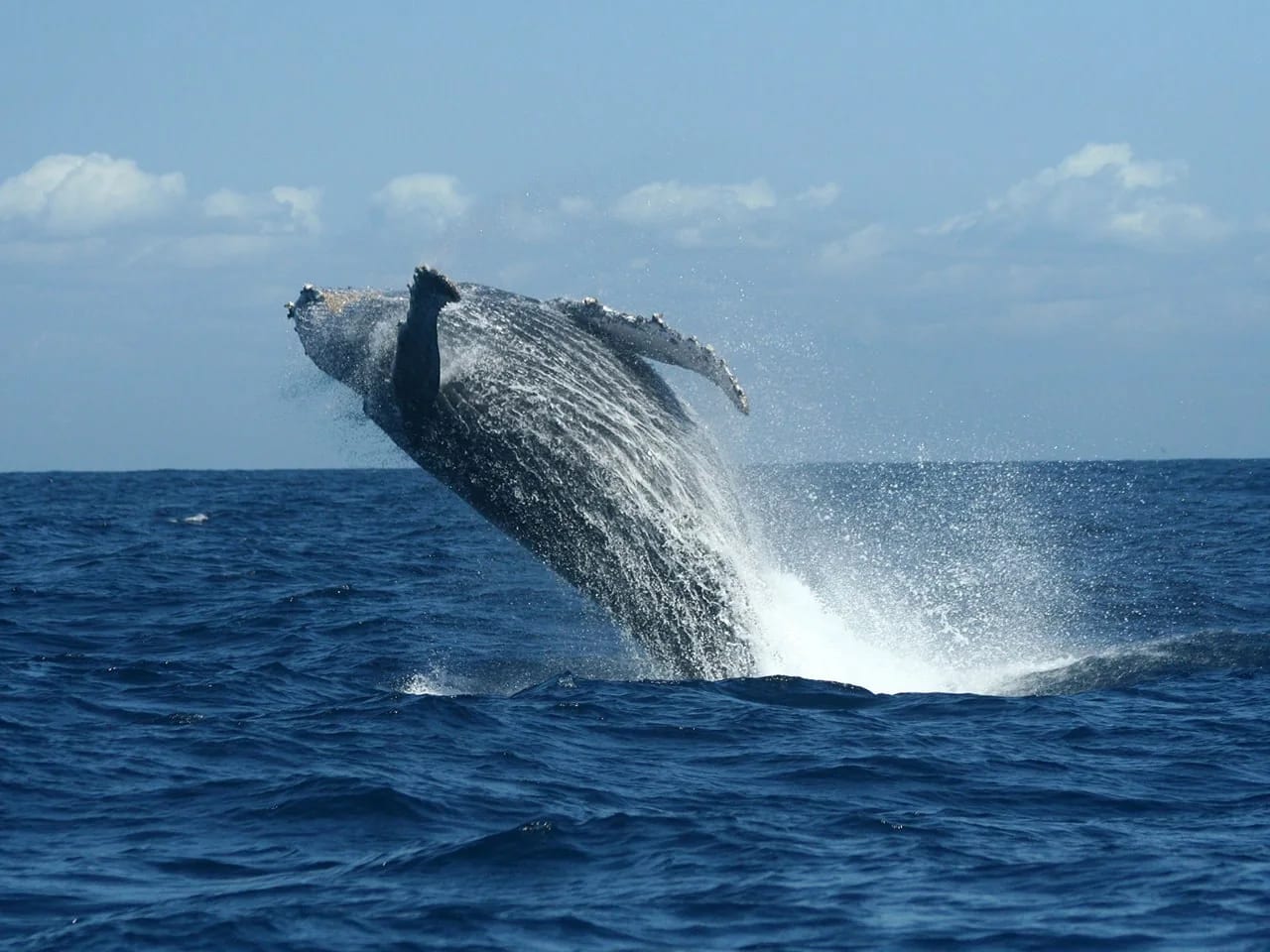
Whale-watching photograph published in Jason Tours’ gallery. Image source: View original photo.
A wildlife boat trip from Mal País gives you time to look for animals with a captain who chooses the search area. It cannot guarantee a whale, a dolphin beside the bow or a photograph like the operator's home page. Before reserving, decide whether you would enjoy the coastal trip if the animals remain distant or do not appear. That answer matters more than a list of possible species. Choose a provider who describes the search and viewing approach with the same care it gives the boat and price.
Marlins Tours advertises an animal-watching outing from the Mal País fishing village. Jason Tours also lists whale watching and a separate combination with fishing. These are different uses of your time on the water. If observation is your priority, ask for a dedicated wildlife proposal and confirm that the captain will not divide the trip around another group's fishing goals. Our Mal País fishing-charter guide explains that alternative. You can choose either activity without treating a possible animal encounter on a fishing trip as a booked wildlife tour.
Ask about your dates without demanding a sighting percentage
Give the operator your possible dates and ask what it has been observing in the intended area. A useful reply identifies recent conditions and explains what remains uncertain. A whale seen on yesterday's outing does not promise one on yours. Ask whether the office is describing its own trips or a broad regional season. A recent photograph should have a date and context if the seller uses it to support a claim about current sightings. Do not convert the number of attractive images in a gallery into a likelihood of success.
The two local product pages reviewed for this guide describe different whale-season windows. We have not combined them into a precise Mal País calendar. A nationwide migration description cannot resolve that local difference either. Ask whether the operator expects to search for whales on your dates or recommends a more general marine-wildlife outing. If seeing one particular species would determine whether the cost feels worthwhile, explain that before you pay. You may prefer to wait for another part of your trip rather than buying a service whose natural uncertainty you would dislike.
Separate a wildlife search from an island excursion
A dedicated observation trip can give the captain discretion over the search route within the agreed duration and operating conditions. An island excursion has other commitments, such as a beach stop or a return transfer. Either can include animal sightings, but the crew cannot give both activities unlimited time. Ask how the company handles a wildlife encounter during a combined product. Does it pause the journey, keep the original island schedule or offer a separate tour for visitors who want more observation time?
The Tortuga Island day-trip guide covers the full island outing. Use that article if you want a meal and time ashore as central parts of the day. For animals, compare how the guide communicates observations and how much of the trip involves searching. A snorkeling stop also adds a change of equipment and a water-entry decision. Read the local snorkeling comparison if that matters to your group. An activity-rich description can sound attractive while leaving little time for the specific experience you wanted to buy.
Choose the boat for patient observation
Ask to see the actual boat proposed for the booking, along with its seating, shade and boarding arrangement. A passenger who cannot see past other guests may spend much of the outing frustrated, even on a boat with enough licensed capacity. Ask where passengers sit during travel and how the crew manages viewing once it stops. Explain any difficulty standing, climbing aboard or moving between seats. The operator needs those details before accepting the group, particularly if someone expects to stay seated throughout the trip.
A private outing may allow your own group to set priorities within the captain's rules, while a shared departure spreads the boat cost among travelers. Compare both using the confirmed group size and inclusions. Ask whether an advertised maximum includes crew or refers to paying guests. Discuss whether children can see from their assigned seats and whether suitable life jackets are available for their size. The family guide to Santa Teresa can help you think through the rest of the day, including the time children can spend on a boat without a shore break.
Listen for a clear approach to wildlife
Ask the operator how the captain behaves when animals appear, how it avoids crowding them and when it decides to leave an encounter. A useful answer explains behavior; a general claim to love nature does not. The Costa Rica Tourism Board describes its CST sustainability certification as a way to assess tourism businesses. If an operator advertises that certification, check the current listing rather than assuming a leaf symbol proves it. Certification can inform your research, but the guide should still explain the conduct you can expect on the water.
NOAA's wildlife guidance recommends observing wild dolphins without feeding, swimming with or harassing them. That provides a sensible conservation reference, not a statement of Costa Rican law. Ask your captain about the local rules it follows and leave navigation and viewing distance to the crew. Do not pressure anyone to chase an animal, block its movement or move closer for a phone photograph. A good outing may include watching from farther away than the dramatic pictures used to sell boat tours. Accept that before the boat leaves the launch.
Understand the paperwork in the quote
INCOPESCA lists a licensing category for vessels dedicated to cetacean observation and personal-card categories related to the activity. Ask the company which authorizations apply to its proposed trip and which documents or charges it handles for passengers. Do not assume that a fishing permit and an observation service are the same product. The office should explain its arrangement in writing, especially if the seller combines whale watching with fishing. Use INCOPESCA's current information when you need to clarify a requirement rather than relying on another traveler's old receipt.
Keep the payment summary tied to the particular service you selected. Record whether the amount covers the boat or a seat, the number of people, and any road transfer. Ask whether refreshments and required charges appear inside the total. A wildlife trip without sightings is different from an operator cancellation. Read the terms for both before booking. If the company offers a repeat trip or another remedy, ask exactly what qualifies and whether a place on another departure depends on availability. Do not infer a sighting guarantee from enthusiastic advertising.
Prepare for looking rather than collecting photographs
You can follow a guide's description of direction and distance more easily if you understand the boat's reference points. Ask how it will announce sightings during the briefing. Keep your camera ready only where the crew permits it and secure loose items before travel. If you bring binoculars, practice finding a distant object on land first. Avoid bringing more equipment than you can manage while keeping the space around your seat clear. Tell a companion where you will keep a bag so neither of you blocks the crew's route along the deck.
Choose a modest photography goal: a view of the animal in its surroundings, or a record of the outing. A phone may capture a small shape at a responsible viewing distance. That is an equipment limitation, not a reason for the captain to approach. Ask whether the operator shares any images it takes and what permission covers personal use. Leave questions about commercial photography for the booking conversation. If the animal appears while you are handling equipment, watch first. You do not need a photograph of each sighting to have observed it.
Make boarding and the return explicit
Get a meeting pin for the exact launch and ask how boarding works there. The label Mal País does not identify one universal dock. Request footwear instructions and explain any assistance a passenger needs. Save the operator's contact and the name of the booking holder on a phone you can access without a live connection. Arrive ready for the briefing, with the compact belongings the crew accepted. Ask where items will remain dry before placing a phone or camera in a bag near the boarding area.
Use appropriate road transport for the confirmed departure point and your group. Keep the return flexible enough to account for the captain's decisions without leaving the driver uninformed. Agree whether the company includes a transfer or whether your independent driver waits for a message. Bimba's local service does not cover boat travel or regional transfers, and passengers should not carry tour luggage on a shared vehicle. If the outing occupies most of your available day, compare other regional excursions before adding another timed reservation that will make the return feel rushed.
Describe the outing to children with room for uncertainty
Tell children they will help look across the water and listen to a guide. Avoid promising a jump, a close dolphin or a specific species. Ask the operator whether the duration fits the ages in your group and what the plan is if someone needs to return. Explain that passengers cannot call animals over or offer them snacks. Keep food wrappers and small belongings secured, and let the adult responsible for each child focus on them rather than on a camera. The crew should not have to guess who is supervising.
Afterward, talk about what you noticed, including the coast, birds or the guide's search process. Ask for help identifying a distant sighting instead of assigning a species from an unclear photograph. Feedback to the operator can describe its briefing, communication and respect for the animals, regardless of the sighting count. If the tour did not match the written service, raise that concrete issue with the company. If the animals stayed away, judge the outing against the uncertainty you accepted when you booked. That distinction supports a fair decision about another trip.
Pay for a thoughtful wildlife outing
Choose a crew that explains its viewing approach and accepts uncertain sightings. Confirm the actual boat and paperwork, then let the captain manage distance and duration around the animals.