
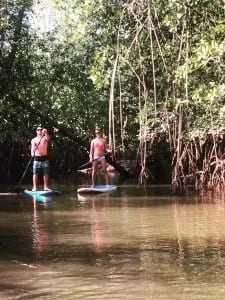
Pochote estuary outing pictured by Costa Rica Surf and SUP. Image source: View original photo.
Pochote offers a different kind of day from watching the surf in Santa Teresa: a guided stand-up paddleboard outing in an estuary. Costa Rica Surf and Sup currently lists a Pochote Estuary SUP Tour and an optional bioluminescence extension. Book the SUP product by name. A paddleboard, a kayak and a sightseeing boat are different arrangements, even when listings use the same destination. This guide focuses on the paddleboard service we could confirm directly with a current operator page.
Think of the outing as three connected parts: getting from your accommodation to the launch, the guided paddle itself and returning to Santa Teresa. Adding an evening activity creates another decision about energy and the journey home. The useful question is whether that complete plan suits your group. The appearance of still water in a photograph cannot establish the conditions on your date, and a tour description does not remove the need to discuss swimming ability, mobility or comfort on a board.
What the verified tour establishes
Costa Rica Surf and Sup lists boards and rash guards with the Pochote product, and describes a food and drink component. It also offers bioluminescence as an additional activity. Those details help you begin a specific conversation, but the page does not answer every practical question about your departure. Request the current itinerary and inclusions in one message. In particular, distinguish the duration of the advertised expedition from time spent paddling and from the time you will be away from your hotel.
Pochote is a destination on the Bahía Ballena side of the peninsula, separate from Santa Teresa's surf beach. Pochote Ocean Adventures identifies Pochote Beach in Bahía Ballena as its boat departure area for visitors coming from Santa Teresa. That is useful geographical context, not evidence that the boat company supplies this SUP tour. Confirm the precise meeting point with the paddleboard operator. Do not navigate to a similarly named vacation rental in Santa Teresa or assume every Pochote excursion uses the same launch.
A short written request can prevent that confusion: We want the Pochote estuary SUP outing, starting from our accommodation in Santa Teresa. Please confirm the paddling format, launch location, group size, instruction, flotation equipment, transport, meal and return arrangements for our date. Add the number of adults and children and your experience level. This is an example booking brief, not a promise that every listed element is included. The response should show which parts the operator supplies and which you must arrange separately.
Decide whether a board suits your group
Be precise about your experience. Someone who has balanced on a board in a hotel pool has different preparation from a person who paddles regularly outdoors. Explain whether you can swim, whether you have used a SUP before and whether standing for part of the outing is realistic for you. Ask what instruction happens before leaving the launch and how the guide assesses participants. If kneeling or sitting is important to your comfort, ask whether the proposed board, route and guide arrangement can accommodate it.
Do not assume a kayak is available as a substitute when someone decides they do not want to stand. That requires different equipment and possibly a different operating plan. If members of your group need different formats, ask whether they can join the same outing or should choose separate activities. A shared destination does not guarantee a shared pace or meeting point. When the main goal is spending a day together, an option everyone can comfortably join may be more useful than choosing an ambitious activity and dividing the group later.
For children, ask about the operator's actual participation requirements, board arrangement and adult supervision. A photograph of a child on a paddleboard does not establish a minimum age, flotation fit or suitability for your child. Explain their experience and attention span, and ask how the guide handles a participant who wants to finish early. The Santa Teresa family guide helps with the wider day, including meals and transport. The activity-specific decision belongs with the operator and the responsible adult, based on the proposed conditions.
Let the guide explain the water plan
An estuary itinerary should be chosen for the actual water, weather and participants. Ask how tides, current, wind and recent rain affect the route and departure. You are looking for an explanation of the decision process, not a fixed claim that one time of day is always suitable. Ask who makes the final call and when you will hear about changes. Avoid building a non-refundable appointment immediately after the expected return; a flexible schedule is easier to adjust than one that depends on the water following your calendar.
Ask what flotation equipment is supplied and how the guide organizes the group. Discuss what happens if someone loses balance, becomes tired or cannot keep the planned pace. Those are useful operational questions even for experienced paddlers, because the local route and equipment may be unfamiliar. Do not use this article as instructions for navigating an estuary independently. The operator should explain the route boundaries, the appropriate equipment and any location-specific precautions before you enter the water.
Keep the planned route with the guide rather than treating small side channels as invitations to explore alone. A narrow opening that looks attractive for a photograph may not belong to the approved outing or may be unsuitable at that moment. Follow instructions about where to stop, how to pass other water users and when to turn back. The success of the day does not depend on covering the greatest distance. A shorter route with time to observe your surroundings can serve a nature-focused group better than trying to complete an imagined circuit.
Use the estuary as a place to observe
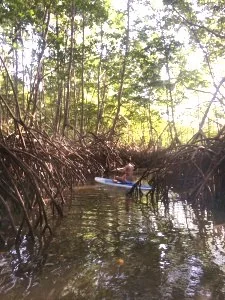
The appeal of a mangrove setting is often in details: the arrangement of roots, changes in the water's edge and the way the vegetation frames a channel. Ask whether your guide includes interpretation or mainly leads the paddle. Those are different priorities, and both can be valid if agreed in advance. If birds are a major reason for going, say so and ask about the guide's approach to identification and stopping. Our birdwatching guide helps distinguish a general nature outing from a trip organized around that specific interest.
Do not turn a species mentioned in a tour conversation into a promised sighting. Animals move, visibility changes and a guide may choose a different section of water. Take binoculars only if you can carry and protect them without compromising your ability to paddle. A phone in a waterproof pouch may be simpler than a large camera, but the pouch is not a substitute for the operator's equipment advice. Ask when it is appropriate to take photos and keep both hands available when the guide needs you to maneuver.
Costa Rica's official tourism guidance asks visitors to respect wildlife, leave natural features untouched and dispose of waste responsibly. Apply that here by observing without feeding or trying to attract animals, keeping belongings out of roots and taking your litter back. Do not ask a guide to move closer solely for a more dramatic image. If another participant wants a quiet nature experience, constant playback or loud commentary can also change the day. Agree on the group's priorities early so the paddle has room for observation.
Pack for a paddle and a road journey
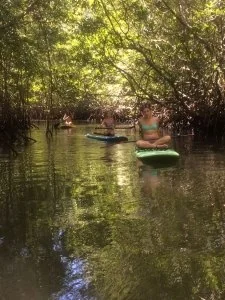
Bring only what you need on the water and establish where the rest will stay. Ask whether secure dry storage is available and whether any dry bag is supplied. Pack a change of clothes and a towel for the return, keeping them separate from the items you take on the board. Use the Santa Teresa packing guide to simplify the rest of the day bag. Leave valuables at the accommodation when practical; a shared vehicle or beach meeting point should not be assumed to provide supervised storage.
Clarify footwear with the guide because launch surfaces vary, and avoid arriving with equipment chosen only for a promotional photo. Bring drinking water and sun protection suitable for the outing, and ask about refill access. If a meal is included, describe allergies and dietary requirements before booking and ask what alternatives can be arranged. A menu mentioning fish does not establish a vegetarian substitute or an allergy-safe kitchen. The useful answer is a specific plan for your group rather than a general promise that food will be available.
Keep the evening extension optional
A daytime paddle and bioluminescence have different purposes. The operator advertises an extension, but you should ask where it happens, what equipment is used, how the group travels between activities and when you return. Do not assume the same launch, the same board or continuous paddling. The bioluminescence trip guide covers the separate expectations around observing the phenomenon. Book the extension because you want that additional experience and can accommodate the longer day, not because a bundle makes declining it feel like missing part of the estuary.
Consider the least energetic person in your group when deciding. Someone may enjoy the paddle yet be ready for a shower and dinner afterward. Ask whether people can return separately and what that would cost before splitting the booking. If a private return is not practical, choose a shared finish time that everyone accepts. Keep the next morning light if a late arrival would otherwise conflict with an early transfer. This is a scheduling choice, not a prediction of how tired every participant will feel.
Confirm the whole return to Santa Teresa
Request a pickup point and a return destination that identify the actual accommodation, not just Santa Teresa. If transport is included, ask whether hillside access or a property outside the regular pickup area changes the arrangement. If you drive, ask where to meet and leave the car without assuming parking at an unrelated business. Pochote is a regional excursion; Bimba is not transport to the estuary, and a paddleboard should not be carried on a Bimba. Plan the road journey with the operator or an appropriate driver.
Finally, read the cancellation terms for weather, insufficient participation and your own change of plans. Keep the confirmed itinerary accessible offline and tell the accommodation when you expect to return if that helps with access. Compare the complete commitment with other day trips from Santa Teresa before paying. Pochote SUP makes sense when you want a guided paddle, can participate comfortably and have a workable journey both ways. The optional night outing should strengthen that plan rather than make the basic day harder to manage.
Choose the complete day, including the return
Book Pochote SUP when the board format suits your group and the operator has explained the water plan. Confirm the regional transfer both ways, then add the night activity only if everyone wants the longer outing.