
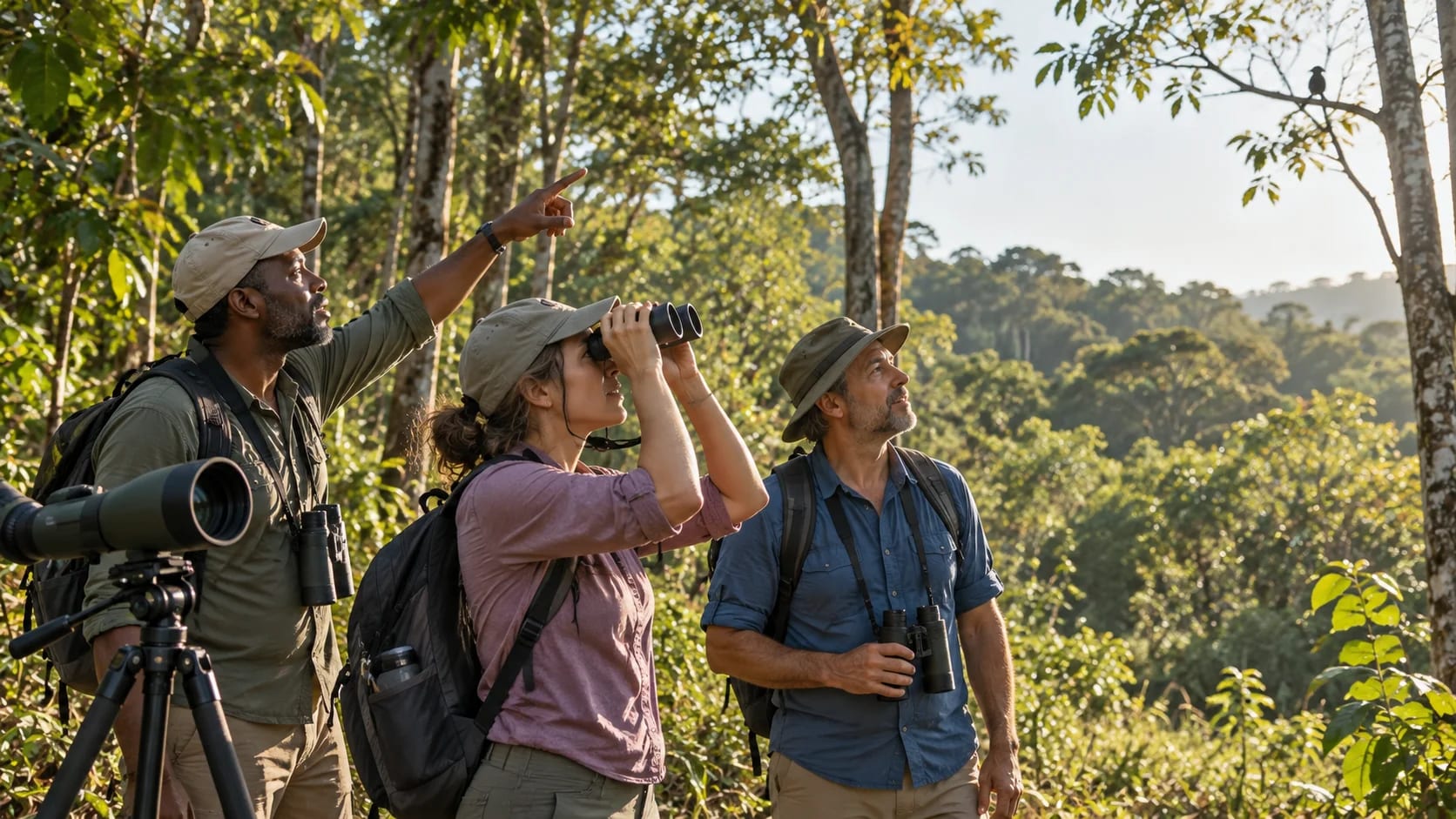
Birdwatching near Santa Teresa can mean noticing birds from your accommodation or devoting a morning to a guided outing elsewhere on the peninsula. Decide how much time you want to spend listening and watching before choosing a destination. A long walk with occasional stops and a slow identification session can cover the same habitat while providing different experiences.
Start with the kind of place you want to study: forest, an authorized wetland viewpoint or the coast. Then find a guide and access arrangement that fit. A regional bird list can help you describe your interests, but it does not establish that a particular species will appear beside your path during a short visit.
Compare forest, wetland edges and coast
In forest, you may spend time looking through foliage or listening before anyone locates a bird. A guide who can explain where to focus your attention helps a beginner avoid searching the whole canopy at once. Choose this setting if you enjoy interpretation and can remain interested during stretches without a clear view.
At an authorized wetland or lagoon viewpoint, you may have a wider view across water and vegetation. Ask whether the guide brings a spotting scope, which can let several people study the same distant bird. That format can suit a group that prefers to stay at a few observation points rather than cover a long route.
A coastal session can focus on flight, feeding behavior and the relationship between birds and the shore. It still requires attention to access and conditions. Keep your observation position away from vehicle movement and avoid following birds into sensitive areas. The Santa Teresa beach-access guide addresses local approaches, but a beach entrance does not authorize movement onto adjacent private land.
Curú offers a named forest starting point
Curú identifies Finca de Los Monos as a trail for observing birds and small mammals. Its published recommendations favor early morning and late afternoon, within the access rules that apply to day visitors and overnight guests. Arrange your visit around the actual permitted entry, rather than assuming you can arrive at dawn because birds are active then.
Ask for a bird-focused guide if identification is your main purpose. A general natural-history tour may divide its time among mammals, plants and other subjects. Both can be good choices, but a traveler hoping to work through unfamiliar calls needs a different pace from someone seeking a broad introduction.
The Curú visit guide covers route choice and the regional journey. Use it to plan the day around the birding session instead of adding the session after an exhausting hike. An accessible observation period with enough time to learn may be more rewarding than another trail completed in a hurry.
Tambor requires attention to property access
Tambor Tropical describes bird habitat around freshwater rivers, mangroves and forest, including the Panica River area. Its nature-project page also identifies a private trail reserved for hotel guests. That distinction matters: an attractive trail description on a hotel's website does not make the route public.
The hotel lists examples such as turquoise-browed motmot, black-headed trogon and long-tailed manakin. Use those names to start a conversation about habitat and season, not to build a guaranteed checklist. Its regional species totals combine observations beyond a single short outing and should not set your expectation for one morning.
A non-guest should ask what guided access, if any, the property offers. Confirm where the session occurs and whether it uses the guest trail or another permitted area. A guide should explain the access arrangement before you travel from Santa Teresa. Do not arrive at a hotel gate expecting entry because a third-party article calls the trail a birding hotspot.
Choose inland forest if the wider reserve interests you
Karen Mogensen's official tourism listing includes birdwatching among its forest activities. This option makes sense if you also want to learn about the reserve and can give time to its approach. Read the Karen Mogensen guided-visit plan before choosing it on the strength of a bird photograph alone.
Ask the organizer how much of the visit will involve walking to the observation area and how much will involve watching. A route can be suitable for experienced hikers while offering fewer stationary pauses than a beginner birder wants. State your priority so the guide can propose a format that meets it.
If you are deciding between this outing and another reserve, compare the habitat and the whole journey. The Cabo Blanco visitor guide offers another forest planning reference. Avoid ranking reserves by an advertised species total: records depend on area, observation effort and the period covered.
Give the guide a useful brief
Tell the guide whether this is your first birding outing, whether you use binoculars and how you feel about identifying birds by sound. Explain whether you want photographs, a personal species list or a general introduction. These interests can overlap, but they do not require the same stops or equipment.
Describe your preferred walking distance and ability to stand for extended periods. Ask about shade and places to rest if those affect participation. A session with less walking can still involve substantial standing, so “short route” does not answer the whole comfort question.
Agree on the language for common names and explanations. In a bilingual group, ask the guide to record the scientific name for a bird you want to research later. Common names can differ across countries; a precise shared reference helps you compare a field guide with your notes without inventing a second species.
Ask how the guide handles a target bird that does not appear. A thoughtful plan should include other things to observe and a limit on time spent waiting. Repeated pursuit can frustrate a mixed group and draw attention away from birds already visible nearby.
Practice with binoculars before the outing
Use a fixed object outside your accommodation to learn how to raise the binoculars without losing your target. Look at the object first, keep your head oriented toward it and bring the binoculars to your eyes. Adjust focus and fit before a fast-moving bird requires you to do both at once.
Ask about loan equipment if you do not own binoculars. Confirm whether each participant gets a pair or the group shares. Sharing can work for stationary observations, but a brief sighting may end before everyone takes a turn. A spotting scope can add another shared view if the guide supplies one.
Carry a notebook or use a simple phone note. Record shape, size relative to a familiar bird, location and behavior before trying to force a name onto the observation. A description such as “small bird low in shaded brush, repeated short call” gives you something to discuss with the guide even if you missed its colors.
The day-bag checklist helps keep equipment manageable. Keep optics protected from rain and within reach. A large camera that requires repeated unpacking may take attention from the bird and from other people waiting to see it.
Set an observation standard before you begin
The American Birding Association's ethics code prioritizes bird welfare, limited disturbance and respect for property rights. Apply those principles by staying on permitted paths, giving nests and roosts space, and accepting a distant view. A close image is optional; avoiding unnecessary disturbance is part of the activity.
Discuss the guide's approach to sound playback before booking. Do not play bird calls from your phone to bring an animal closer. Let the guide explain the site's rules and choose a conservative approach around sensitive birds. Silence also helps your group hear the actual sounds that first attracted you.
Keep nest locations and sensitive observations out of public posts when disclosure could attract disturbance. Ask the guide how to report a useful record without inviting a crowd. The same care applies to a bird using a private garden: an interesting sighting does not grant strangers permission to enter.
Build a list you can trust
Record only identifications you can support. Separate birds you saw from those the guide heard if that distinction matters to your personal list. Ask about uncertain records before leaving the site, while the circumstances remain fresh. Leaving a bird unnamed is more useful than adding a confident but unsupported identification.
Write the location and date beside the record, with enough detail to distinguish a forest trail from a coastal stop. If you make a public checklist, follow the platform's instructions about effort and completeness. Do not copy the guide's whole list as your own observations if you missed some of the birds.
Use photographs as evidence where they help, even if the image is not suitable for sharing. A blurred frame can preserve a feature you failed to note. The guide may still need behavior or sound to resolve the identification, so avoid expecting a phone application to settle every uncertain bird.
Choose one productive morning over a rushed circuit
For an illustrative beginner outing, choose one permitted habitat, a guide willing to teach binocular use and a pace with frequent pauses. Aim to recognize a few birds and understand why they use that habitat. You can keep watching familiar birds near your accommodation afterward with more confidence.
A more experienced visitor might request a different habitat from the one already explored and share a short target list before the tour. Keep that list flexible. Explain whether photography or observation has priority so the guide does not spend the morning trying to satisfy an unstated goal.
Regional birding destinations require appropriate transport from Santa Teresa. Bimba's local rides within live app boundaries do not provide access to Tambor, Curú or inland reserve trails. Choose the site and guide first, confirm authorized entry, then book the journey around the session you want.
Choose a session, not a species total
Book one habitat with a guide who understands your experience level. Confirm entry permission and equipment, and leave room for observation instead of trying to cover several sites.