
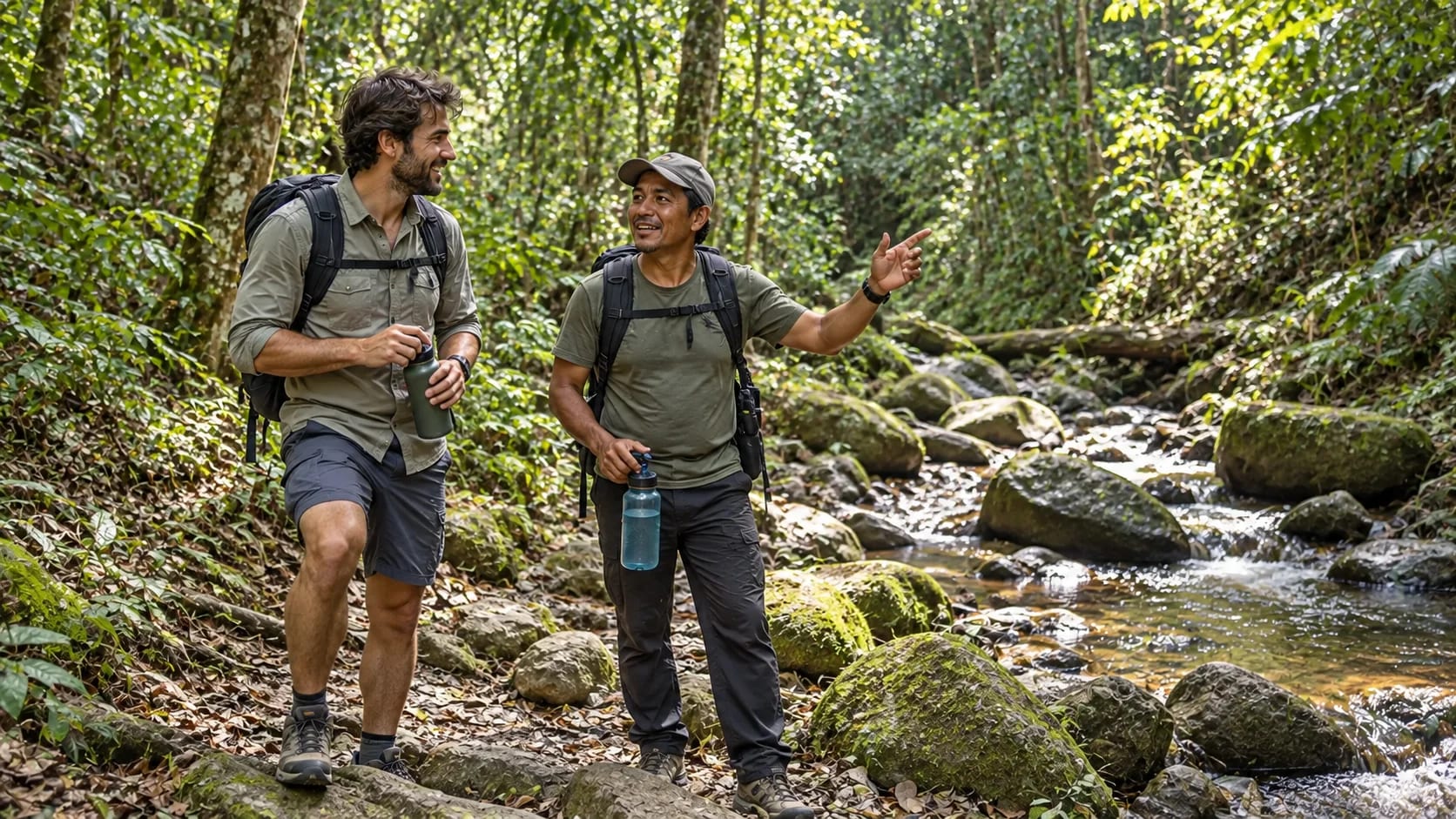
Karen Mogensen Reserve offers a way to spend time in the inland forest of the Nicoya Peninsula. A visit revolves around guided walking and the reserve's conservation work. If you stay at Posada Cerro Escondido, the approach to the lodge forms part of the trip, which makes it different from a roadside hotel with optional trails behind the rooms.
Choose between a day outing and an overnight visit before arranging transport from Santa Teresa. The regional excursion guide helps compare that commitment with other trips. For Karen Mogensen, give the reserve the date, your group's walking abilities and the kind of experience you want, then let its staff propose a workable visit.
Know who manages the forest
The reserve identifies ASEPALECO, the ecological association of Paquera, Lepanto and Cóbano, as its owner and manager. The Costa Rican nonprofit began in 1991. Its work includes forest protection, environmental education and scientific research. Those activities give context to a guided visit: you are entering a managed conservation project with responsibilities beyond tourism.
Foreste per Sempre, a conservation partner, describes its collaboration with ASEPALECO beginning with a land purchase in 1996. It also documents support for environmental education and a biological and climatic research station. You can ask a guide how protection and regeneration affect the area you walk through without expecting access to research facilities or ongoing fieldwork.
Look for differences within the forest rather than assuming a reserve consists of identical trees. Ask about areas that have regenerated, places where the canopy changes and the role of watercourses in the landscape. A guide can connect what you see to the reserve's history. You do not need to collect leaves or leave the path to learn from those contrasts.
Choose a day visit or a forest stay
A day visit suits a traveler who wants a focused guided walk and has enough time for the regional return. It requires a route that fits the full day, including the approach and any meal break. Ask the organizer to describe the complete walking sequence. A waterfall or viewpoint name alone does not tell you how much walking surrounds it.
An overnight stay can give you more time in the forest and remove the need to finish the experience with an immediate long drive. It also requires carrying overnight belongings and accepting a different lodging routine from the coast. Decide whether you want that part of the experience before reserving a room.
The reserve's Spanish lodge page describes advance reservations and a guided walk to Cerro Escondido, including an uphill approach of about an hour. Treat that as an orientation, not a promised pace for your group. Wet ground, pauses and individual needs can change the effort. Discuss the current route with staff and avoid planning a tight connection after the walk out.
Do not infer a room's accessibility from a general amenity label in a tourism directory. A property may list accessible features while the approach requires movements you cannot manage. Describe the entire journey you need to complete, from vehicle drop-off through the path to the room and bathroom.
Choose one main interest inside the reserve
The official tourism listing identifies hiking, birdwatching, Velo de Novia waterfall and viewpoints toward the Gulf of Nicoya. Use these as conversation starters when arranging your visit. Ask the guide which option suits your date and the group's abilities. A list of attractions does not imply that you will reach all of them in one outing.
For a waterfall-focused visit, discuss the route and the viewing area. Enjoying a waterfall does not require entering the water. Ask how weather changes the approach and what alternative the guide uses if the planned route is unsuitable. Accept the guide's decision about access; a photograph taken during another season cannot establish today's conditions.
For a birding visit, arrange a pace that allows listening and stationary observation. Tell the guide whether you want a general introduction or help with particular species. The birdwatching guide near Santa Teresa explains how habitat and guiding style affect the experience. A substantial walk to a lodge and a concentrated birding session make different demands on attention.
For an introduction to conservation, ask for interpretation of regeneration and water protection along an appropriate route. That goal can remain worthwhile even if cloud obscures a distant view or wildlife stays out of sight. Choose the question you hope to answer, then let the guide select suitable places to explore it.
Treat the approach as part of the booked activity
The lodge's published preparation notes mention wet footwear, river crossings and uneven ground. These details matter before you pack or book transport. Ask staff to explain the approach currently in use and whether conditions could require postponing the visit. Do not arrive intending to find your own way around a problem on the path.
Tell staff if you cannot balance on uneven ground, bend comfortably to enter a vehicle or carry a pack uphill. Provide practical information instead of an age alone. Two people of the same age may need different arrangements. If the offered route does not match your abilities, choose another forest outing rather than expecting the guide to improvise access.
Discuss what happens if weather changes before departure. The reservation should state who contacts you, when they assess the route and how a cancellation affects payments. If your driver and lodge are separate providers, each needs the updated plan. A canceled walk can leave a booked transfer active unless someone coordinates them.
Stay with the guide and follow the route they approve. Do not attempt a river crossing because a packing list mentions one. The description tells you what to discuss in advance; the guide's current assessment determines the activity on the day.
Pack for carrying, changing and sleeping
Use a manageable backpack for the belongings you will take to the lodge. Separate dry sleeping clothes from walking clothes that may get wet. Keep a light source within reach and protect it from moisture. You should be able to find essential items after dark without emptying the pack across a shared space.
Ask the lodge what it supplies before adding towels or bedding. Confirm how you will charge any necessary device and whether you should bring a power bank. Avoid planning work calls around an unverified connection. A forest stay can be a good time to put a phone away, but a person who needs connectivity for a specific responsibility should resolve that requirement before booking.
The Santa Teresa packing guide covers the general day bag. For Cerro Escondido, the key addition is a small overnight kit you can carry along the approved approach. Leave a large suitcase at a separately arranged storage location. Do not assume that the lodge offers luggage transport because a past traveler mentioned it.
Carry prescribed medication and any personal essentials in a protected, accessible section of the pack. Discuss storage needs with the lodge in advance. Your guide can explain the day's route and procedures, while an appropriate health professional should answer individual medical questions about participating.
Arrange meals around arrival and departure
Cerro Escondido's published lodge information includes meals with accommodation and asks guests to communicate dietary restrictions beforehand. Arrival-day and departure-day lunch arrangements need attention because they depend on timing. Ask which meals your specific reservation includes and when the first and last meals will occur.
Describe a dietary requirement in plain terms, including ingredients you cannot eat and any preparation issue that matters. Avoid using only a label the kitchen may interpret differently. For a serious allergy, discuss whether the kitchen can meet your requirements before making a commitment; a willingness to help does not establish a capability.
Plan snacks according to lodge rules and keep them closed. Do not leave food on a balcony or carry open packets during wildlife observation. Ask where to refill drinking water and what the guide recommends carrying for the chosen walk. This is a specific meal and water arrangement for a remote stay, not an assumption that you can stop at a shop whenever needed.
Book the transfer to the meeting point
Get the meeting point directly from the reserve before requesting a transport quote. An office address, a road access point and a lodge location are different destinations. Ask who meets you where the vehicle stops and how the driver should contact that person if arrival changes.
For a day visit, agree on a collection point and a realistic return window. For an overnight stay, state the date of the outward and return transfers in writing. If you continue to another destination after the reserve, make sure the quote covers that route rather than a return to Santa Teresa by default.
Bimba's short local trips within the live app boundaries do not provide regional access to Karen Mogensen Reserve or transport on its trails. Arrange a suitable vehicle and guided approach as part of the visit. Compare the Curú forest plan or Cabo Blanco visitor plan if you need a different combination of walking and regional travel.
Use the visit to learn about the work
Ask the guide how the reserve decides which land to protect and how staff monitor changes in the forest. Another useful question concerns the connection between water sources and surrounding communities. These questions invite an explanation of management choices without requiring a visitor to interpret a scientific measurement on the spot.
Keep donations separate from access expectations. Supporting the organization does not grant entry to closed areas, permission to handle wildlife or a private research demonstration. If you want to contribute, use the reserve's current official channel and ask whether it identifies a particular project or general operations.
Do not offer a few spare holiday hours as equivalent to a professional or long-term conservation role. Ask about an appropriate form of support if you have a relevant skill. A well-organized paid visit and a considered donation can support staff without adding an unplanned supervision task.
Choose the visit you can give time to
Reserve a day walk if you want a focused forest experience and the complete return fits your trip. Choose Cerro Escondido if time in the forest and the overnight routine appeal to you, and you can manage the approach with your belongings. Neither format requires covering every named trail.
Finish the booking with a clear route discussion, meal plan and meeting point. Then leave space for the guide's interpretation and the conditions you encounter. Karen Mogensen makes the most sense as a deliberate forest visit, with the effort of getting there included in the choice.
Book the forest experience as a whole
Choose a guided day visit for a focused walk or an overnight stay for more time in the reserve. Confirm the current approach and carry only what the lodge arrangement requires.