
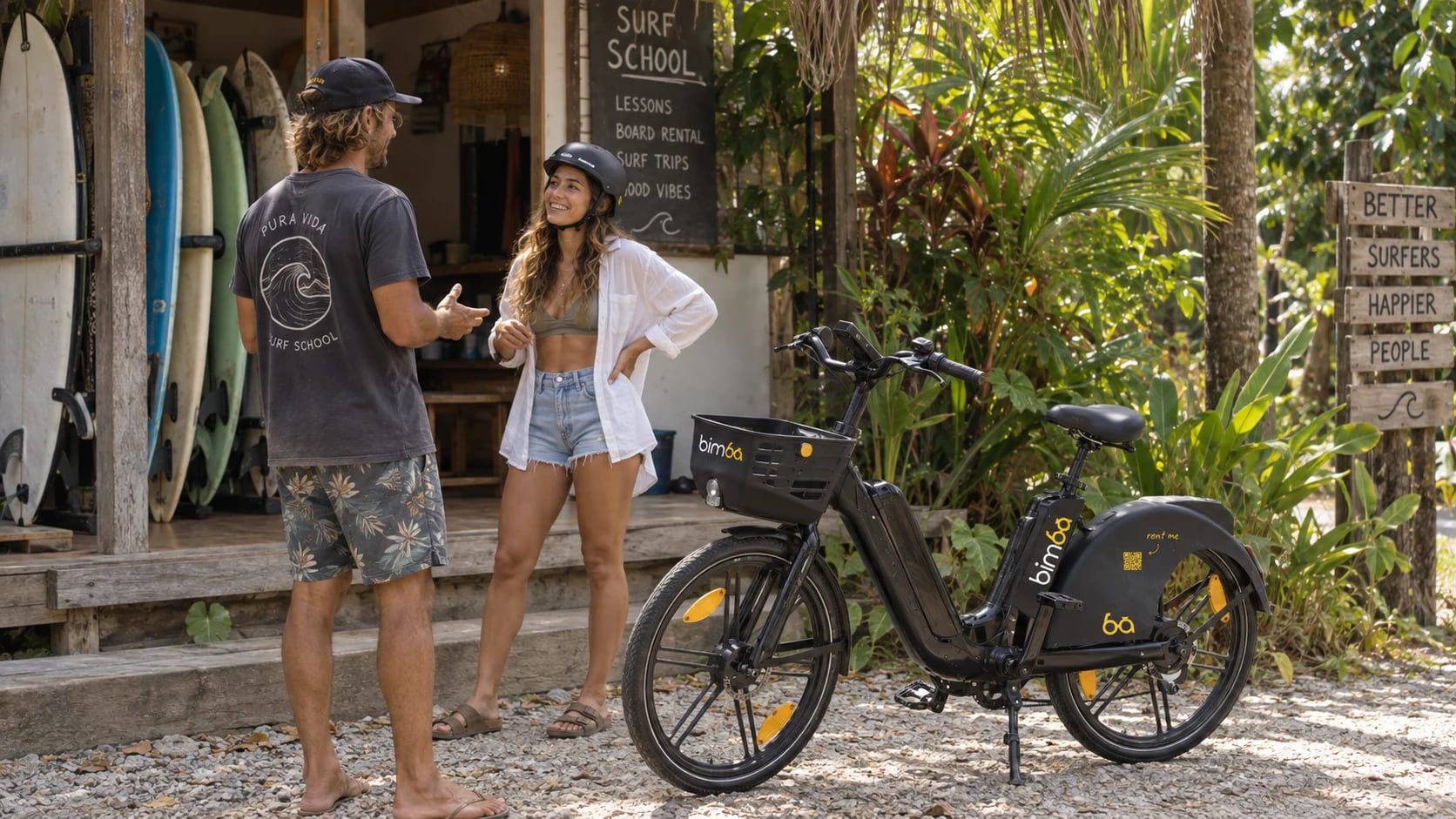
A surf lesson and a surf camp can both help you spend more time learning, but they organize your holiday differently. Lessons let you build coaching around your own stay. A camp can bundle a schedule, accommodation and other services. Compare the teaching first, then decide how much of the trip you want arranged.
Compare coaching first
Count the coached sessions, their length and how groups are organized. Ask what happens when conditions change and how the instructor selects the session location.
For a beginner, the clarity of instruction and the suitability of the session matter more than a promise to progress quickly. Avoid choosing a package on a guaranteed outcome that no provider can reasonably ensure for every participant.
Put both offers on one page
| Component | Individual lessons | Camp package |
|---|---|---|
| Accommodation | Chosen separately | May be included; inspect the exact room |
| Coaching | Book the sessions you want | Check how many sessions the package contains |
| Equipment | Ask what the lesson supplies | Confirm use during and outside sessions |
| Transport | Meeting point or pickup must be agreed | Check which transfers are included |
| Meals | Usually a separate choice unless stated | Identify exactly which meals are included |
| Flexibility | Individual booking terms | Package changes may affect several components |
| Social format | Depends on the session | Depends on the actual group and program |
Ask about the session you will join
Tell the school your experience and relevant needs. Ask about instructor-to-student ratio, lesson language and how participants are grouped. A beginner group can still contain different abilities, so understand how instruction is adapted.
The Bimba beginner surf guide provides local planning context. Use the school's current offer for session details rather than a general destination article.
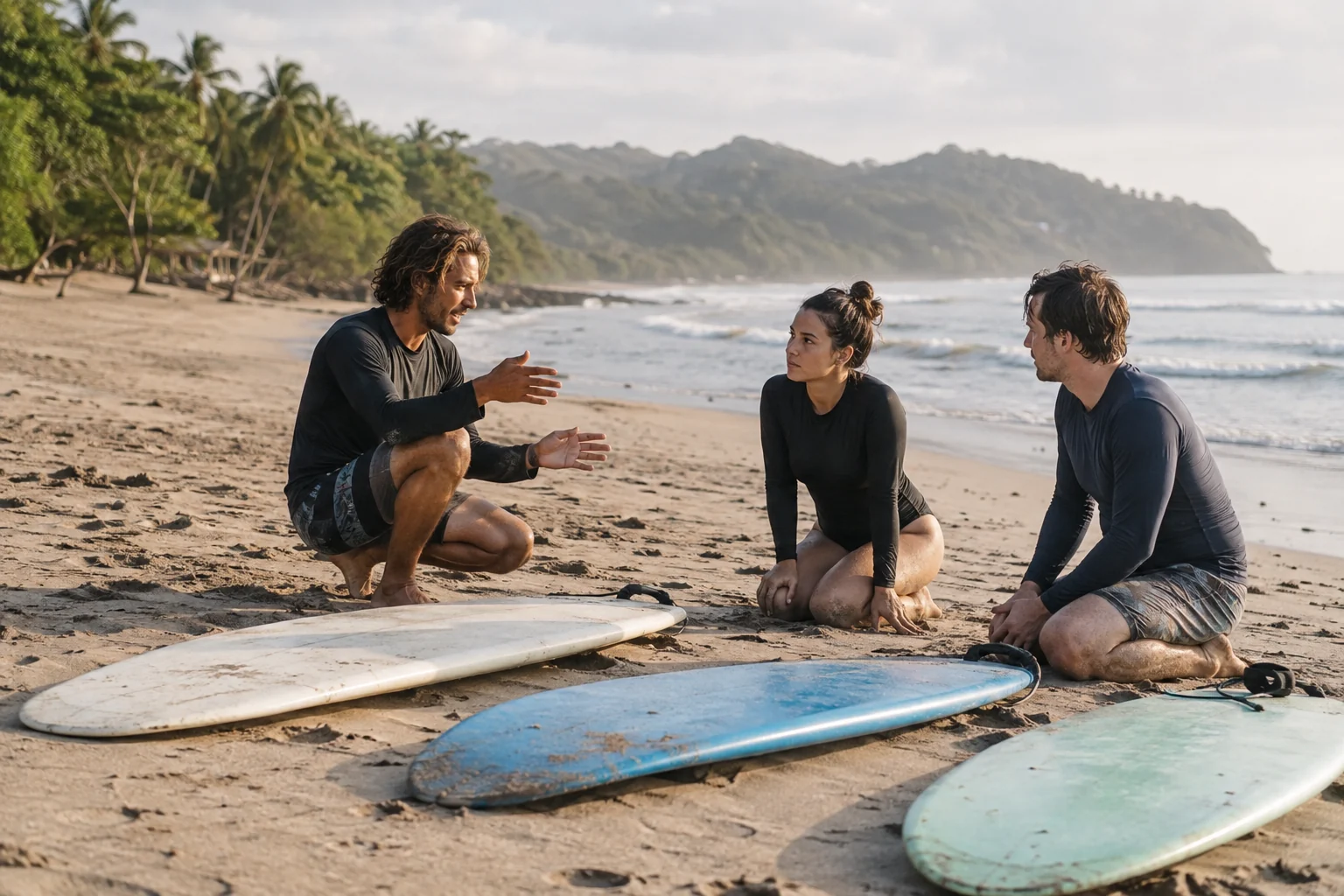
Understand what the board arrangement includes
Ask whether the board is provided only during lessons, whether storage is available and whether you are expected to collect or carry anything. Do not assume a camp package includes unrestricted board use outside coaching.
If the board stays at the school, you can plan your own journey without carrying it. A shared Bimba should not be used as an improvised surfboard carrier. Agree on board logistics with the operator and choose suitable transport for yourself.
Compare the complete holiday cost
For separate lessons, add accommodation, meals and required transfers. For a camp, add anything excluded from the package. Compare the same dates, room type and number of sessions so the difference is meaningful.
Check deposits and cancellation conditions. If a package includes lodging and instruction, ask how a weather-related lesson change affects the rest of the booking. Do not assume cancellation of one activity automatically cancels every component.
Keep recovery and ordinary life in the schedule
Leave enough time between sessions for meals, rest and the practical journey. A schedule with more activity is not automatically better value if it does not suit your energy or interests.
If you are unsure, a shorter initial commitment can help you understand what you enjoy. That is a planning choice, not a judgement that one format is universally superior.
Compare one learning day in each option
Ask what happens from meeting the instructor to finishing the session. How much time is briefing, travel and time in the water? How are groups organized, and how does the instructor decide where the session takes place?
For a camp, look at the full daily schedule as well as the lesson. You may value having meals and accommodation organized, or prefer more free time to choose your own plans. Neither preference makes the coaching better by itself.
Put the two complete costs side by side. Add the room, meals and transport you would buy separately with individual lessons, then remove any camp extras you would not use. This gives you a comparison that reflects your trip.
For the next part of your plan, see our surfboard rental arrangements and reaching a lesson without carrying equipment.
Frequently asked questions
Is a camp better for complete beginners?
It can be convenient if the program fits, but good individual lessons can also work. Compare the actual coaching and support.
Will a lesson happen at the beach nearest my hotel?
Not necessarily. Ask the instructor about the meeting point and how conditions influence location.
How should I reach the school?
Confirm the entrance, equipment arrangement and timing. Use local transport options that suit the trip, with a fallback for a changed meeting point.
Summary
Choose individual surf lessons for a schedule you control, or compare camps when you want a more organised stay. Look closely at coaching, group size, equipment and the other inclusions before comparing totals. The useful choice is the package that matches your level and the time you want to spend learning.
Start with the smallest useful commitment
Choose one lesson if you are unsure about surfing, schedule or instruction style. Choose a camp when surfing is the trip’s main purpose and you have verified coaching, lodging and cancellation terms.