
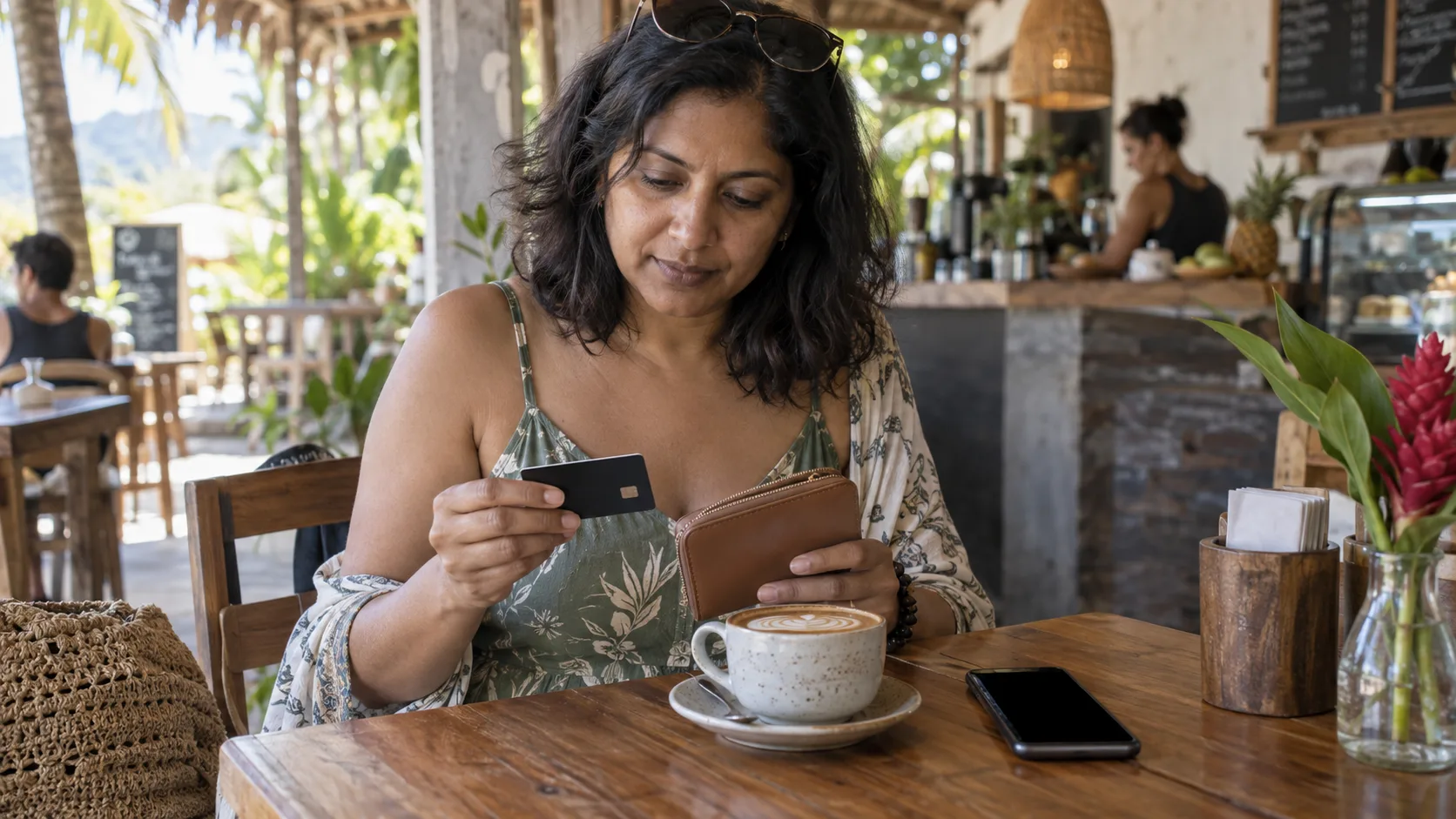
Paying for things in Santa Teresa is easier when you arrive with a working card, a backup and a plan for any cash-only bookings. You do not need to guess a universal cash allowance. Start with the businesses you will use and check how they accept payment.
Prepare more than one payment method
Before the trip, check that your cards work internationally and that you know the relevant PINs and support contacts. Keep a backup separate from the card you use daily. That gives you another option if your usual method is unavailable.
Ask your accommodation and booked operators how they accept payment. A card logo on a website may describe online booking rather than every payment at the property. Likewise, an advertised cash price may have conditions that do not apply to card payment.
Find an ATM using the bank’s locator
Banco de Costa Rica's locator distinguishes offices and ATMs. Use the bank's locator and the exact town in Costa Rica, then verify the location before making a special journey. Santa Teresa is a name used in several countries and places.
Do not treat a banking correspondent inside a shop as necessarily equivalent to a full ATM. The available transactions can differ. Ask about the specific service you need rather than assuming every bank-branded point supports your foreign card.
Where to find payment answers
| Question | Best place to check |
|---|---|
| Is my card enabled abroad? | Your card issuer |
| What fee does my issuer charge? | Your account's current terms |
| What does this machine charge? | The machine's transaction screen |
| Which currency and conversion are offered? | The displayed choices before confirmation |
| Is the location accessible now? | Current branch information and the actual entrance |
| Why did a transaction fail? | The bank or card issuer, using the transaction details |
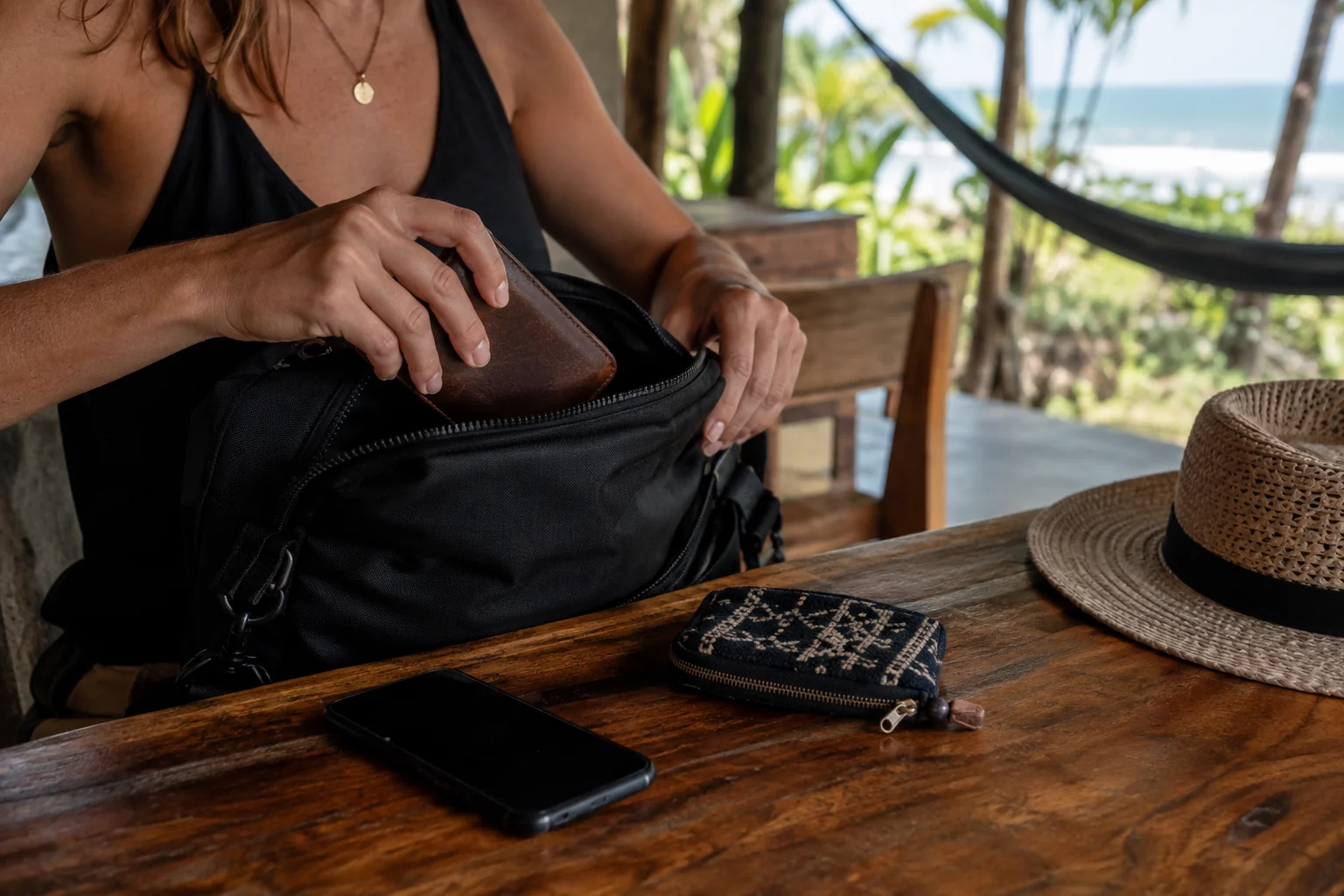
Read the transaction before confirming
Look at the withdrawal amount, currency and any displayed fee. If a conversion is offered, distinguish it from the underlying withdrawal and compare it with the arrangement on your own card. Do not assume every option labelled convenient is the least expensive.
Cancel if the terms are unclear or the machine behaves unexpectedly. Cover the keypad and keep cards and receipts secure. Avoid repeated attempts without checking what the bank has recorded, especially if the machine reports an error.
Withdrawal limits and fees depend on the machine and your card. Use the displayed terms and your issuer’s information for your own transaction.
Separate a hold from a completed charge
Travel services may use a deposit or temporary card authorization. Record the supplier, amount and reference, then check how it appears in your banking app. A pending authorization is not necessarily a duplicate completed purchase.
For Bimba-specific payment questions, consult the pricing information and help center. Keep the ride or payment reference if you need support, without sharing full card details in an ordinary message.
Make cash collection an ordinary errand
Use a suitable daytime opportunity rather than waiting until the final minutes before a booked transfer. Carry only what you reasonably need, and keep a backup arrangement for a machine being unavailable.
If you combine the errand with a local ride, finish at an approved Bimba location and walk to the bank or shop. Do not leave a vehicle blocking an entrance while using the machine.
Know which number you are comparing
A withdrawal involves more than the cash you receive. The ATM may show an operator fee, while your own card issuer may have separate charges. If the machine also offers to convert the amount into your home currency, that is another choice to review.
Keep the withdrawal currency and amount clear in your notes so you can match the receipt to your bank statement. A pending authorization from a travel service should be checked separately from a completed cash withdrawal or purchase.
For an ordinary day, ask about payment before placing an order if you have only one option available. Knowing that a particular meal or booking needs cash is more useful than assuming all businesses follow the same policy.
For the next part of your plan, see our budgeting deposits and daily spending and setting up mobile data.
Build a payment plan around your bookings
Before travelling, list the next few payments that cannot wait: accommodation balance, transfer, booked activity, meals on arrival and any deposit. Ask each supplier which currency and methods it accepts, when payment is due and whether a card authorization is used. This produces a personal cash need rather than an arbitrary allowance copied from another traveler. A restaurant, tour operator and accommodation may each have different arrangements. Confirm them directly, especially if you will arrive after banking hours.
Keep one working card and a separate backup where you can access it if the main wallet is lost. Check international-use settings, card expiry, available balance and the support number with your issuer. Know how to use the issuer's app or call line if the card is blocked. If a PIN is needed for withdrawals, verify it before leaving home. Avoid relying on a single phone for every payment and every contact number; have a safe way to retrieve critical booking and support information if the battery or connection fails.
Treat an ATM locator as a starting point
Banco de Costa Rica's official locator distinguishes offices from ATMs and kiosks. Select the right category, then confirm the precise location you intend to visit. A map pin does not guarantee that the machine accepts your card, has cash, is accessible at that moment or offers the currency you want. If the journey is important, allow time for another official bank location. Ask your accommodation about the safest practical route and use a well-lit, suitable place rather than choosing a machine from an old blog photo.
Different bank-branded points serve different purposes. A banking correspondent inside a shop may support a limited set of local transactions and should not be assumed to work like an ATM for a foreign card. The BCR locator's filters help identify the service category; the machine and your card issuer determine the specific withdrawal. If you are unsure, check with the bank rather than trying a series of unfamiliar points. Plan the errand in daylight when convenient, and do not wait until the minutes before a transfer.
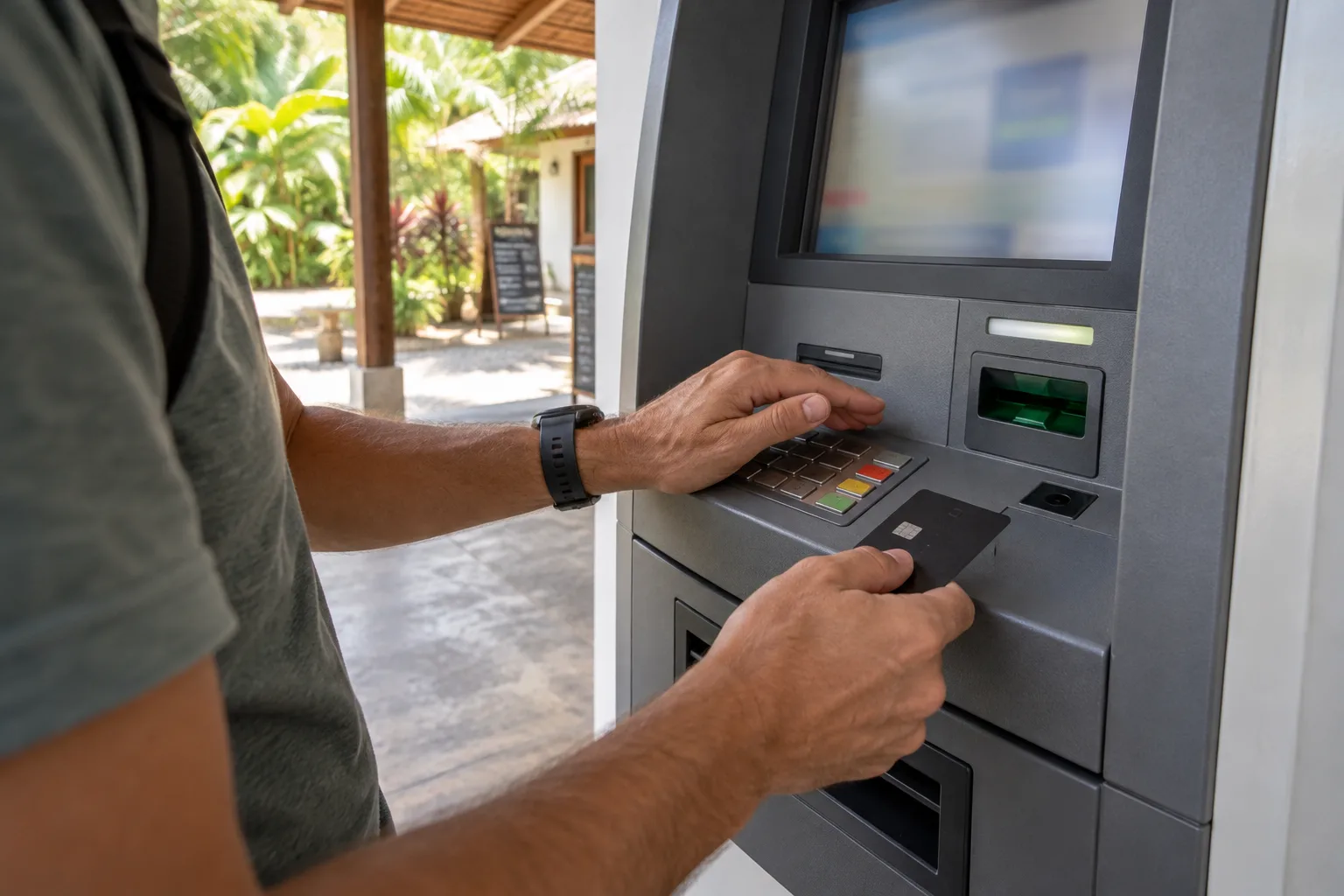
Separate four possible costs on one withdrawal
First is the cash amount in the local currency. Second may be a charge imposed by the ATM operator and displayed before confirmation. Third, your card issuer may charge a foreign withdrawal or cash-advance fee under your account terms. Fourth is currency conversion, which can be performed under different arrangements. These items may appear at different times and in different currencies. Record the amount you requested and read each fee screen before approving; then compare the final posted transaction in your account.
Do not invent a universal local ATM fee or assume a card described as “no foreign transaction fee” makes every cash withdrawal free. The card's rules may distinguish purchases from cash access, and the machine can have its own charge. A credit card withdrawal may be treated differently from a debit-card withdrawal by the issuer. Check the exact product terms before using a card for cash. If the machine's displayed costs make a withdrawal unsuitable, cancel before completion and choose another verified method.
Understand the currency-conversion screen
Some ATMs or merchants offer to convert a colón amount into the billing currency of your card. Visa calls this dynamic currency conversion. Its official guidance says the screen should show the local and home-currency amounts, exchange rate and any extra fee or markup, and give you a clear choice. Accepting that offer means using the offered conversion terms; declining leaves conversion to the card-network and issuer arrangement applicable to your card. The right comparison depends on the displayed offer and your own card terms, not a blanket promise about one button.
Read the labels slowly. If the screen does not clearly show the rate or fees, or it appears to pressure you toward one option, Visa advises declining that conversion offer and reporting the issue to your card issuer. Declining conversion is not the same as cancelling the underlying purchase or withdrawal; follow the machine's prompts carefully and confirm what the final screen says. If you cannot understand the options, cancel the whole transaction and seek a bank or issuer explanation before retrying. Do not let a queue behind you force a rushed choice.
Distinguish pending authorizations from posted charges
A travel service can place a temporary card hold before settling a final amount. Bimba's current rider agreement allows a temporary hold at ride start. A pending entry can reduce available balance without being a second completed purchase. Keep the ride reference and compare the app's receipt with your bank statement after the transaction posts. Your bank controls how and when a released hold appears in your account, so avoid treating a pending line as proof of an incorrect final charge by itself.
If the posted amount differs from the receipt or a hold remains longer than expected, collect the date, merchant name, partial card identifier and transaction reference. Contact the business through its official help channel and your issuer as appropriate. Never send the full card number, PIN, password or one-time code in a normal chat or email; Bimba's help center also tells customers not to share full card details. Keep screenshots limited to the information support needs. A clear record is more useful than repeated payment attempts that create additional pending entries.
Use cash for identified needs, not fear of card failure
Ask restaurants, taxis, guides and small providers about payment before you commit, especially if you have only one method that day. Where card payment is accepted, check the currency and total on the terminal before tapping. Where cash is needed, withdraw an amount suited to known plans and keep it secure. There is no reliable single cash amount for every visitor because accommodation, tours, meals and travel style differ. Avoid carrying a large reserve solely because an outdated guide says a town is “cash only.”
Keep some smaller notes if a known purchase requires cash, and separate your backup from daily spending money. Check any change before leaving a counter. If an ATM is unavailable, a planned backup card and a confirmed alternative payment method are more useful than a string of unverified machine locations. If you lose a card, use your issuer's official lock or reporting route promptly, then contact suppliers with imminent bookings to agree on another authorized way to pay.
Two examples of payment planning
Arrival evening: Confirm with the accommodation and transfer provider whether balances are already paid, what remains and which method they accept. Keep the relevant confirmation accessible offline. Have enough of an agreed payment method for the first meal, and postpone an optional ATM search until a convenient daytime opportunity. If the accommodation places a hold, note the amount and how it should appear. This reduces the number of financial decisions after a long journey.
Activity day: Ask the operator about any balance, deposit, equipment charge or cash-only item before leaving. Check whether you need a separate payment for transport or food. If a card is used, read the terminal currency and amount. If cash is required, withdraw with enough margin before the meeting time and review the machine's fees. Keep receipts so you can separate the tour payment, ATM withdrawal and any pending authorization later.
Sources and limits of this checklist
On October 8, 2026, we reviewed BCR's official locator, Visa's currency-conversion guidance, and Bimba's pricing, rider agreement and help material. Those sources explain categories and procedures, not the live fee at a particular machine or the terms of your card. Your bank, the ATM screen and each supplier's current payment instructions control your actual transaction. The photographs illustrate payment planning and a generic ATM; they do not identify a bank machine or Bimba vehicle in Santa Teresa.
Frequently asked questions
Can I rely on every restaurant taking cards?
Payment policies vary. If you need to pay by card, ask before ordering and keep another option available.
Should I use an old blog's ATM fee?
Use the fee shown by the machine and your card issuer’s current terms. An older figure may apply to a different bank, card or transaction.
Does an ATM listing guarantee cash availability?
A locator helps you find the machine, but cannot promise it will be working or stocked when you arrive. Leave time to use another verified option if needed.
Summary
Make payment planning part of your arrival preparation: confirm what your booked businesses accept and keep a backup available. If you use an ATM, read the charges shown and check your own card terms. Plan withdrawals around what you need rather than relying on an old fee or a machine listing alone.
Use a two-method payment plan
Bring two independent payment methods, verify the machine and terms before confirming, and withdraw for known needs rather than carrying an arbitrary large amount.