
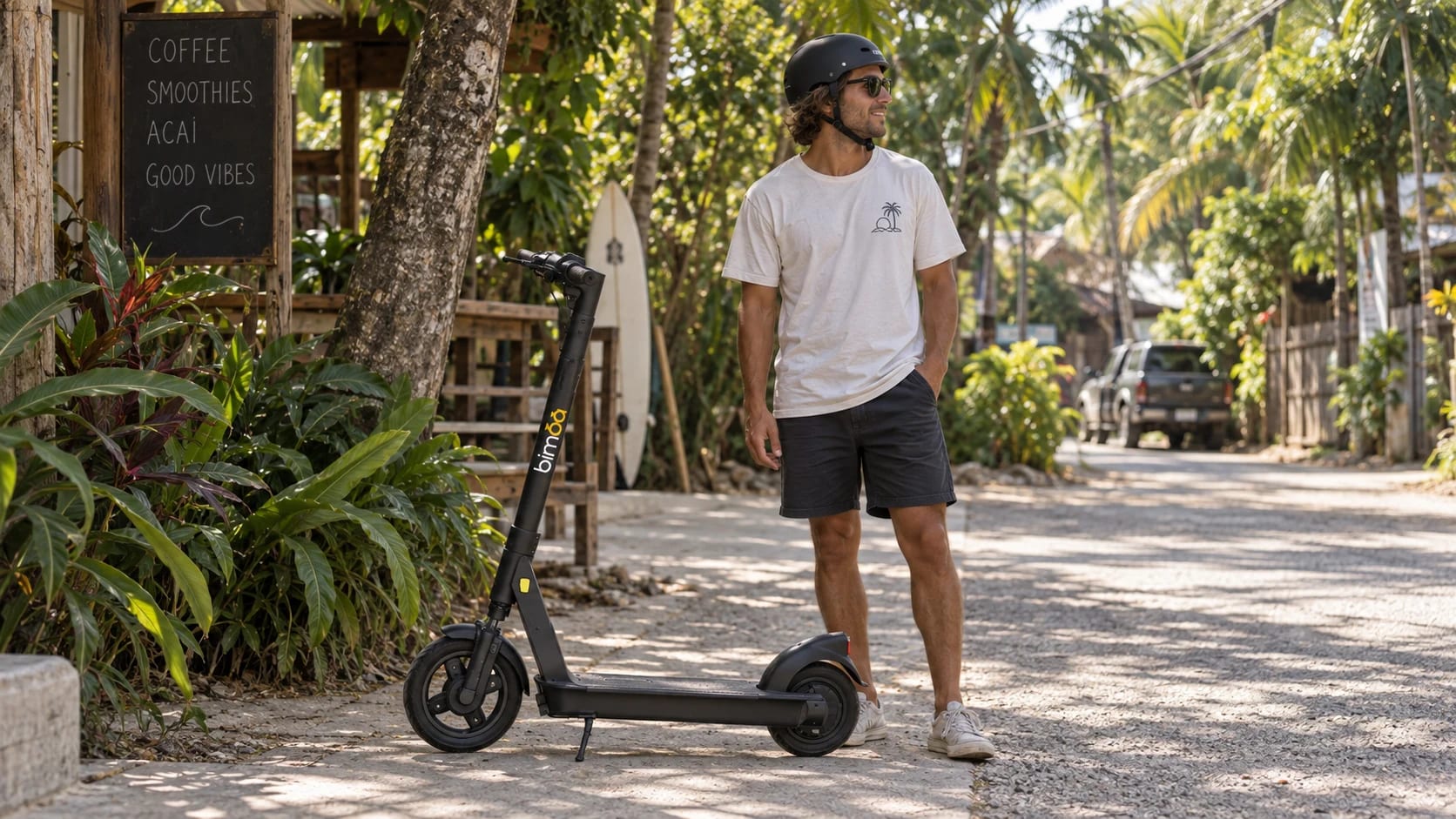
In Santa Teresa, the word “scooter” can describe two very different vehicles: a standing electric scooter and a seated motor vehicle such as a Honda Navi. Before comparing prices, make sure you are comparing the kind of ride you actually want—and are equipped to use.
Standing scooter or seated motor vehicle?
Start by asking for the vehicle name, a recent photo and the rental terms. That clears up the main ambiguity before you spend time comparing rates.
A standing scooter has a deck rather than a bicycle saddle. The Honda Navi is a seated motor vehicle. Even if one feels familiar, take time to learn the other’s controls and requirements before deciding to use it.
Compare the practical differences
| Question | Shared standing e-scooter | Honda Navi rental |
|---|---|---|
| Posture | Standing | Seated |
| Rental structure | App-based rides or eligible passes | Supplier's rental period and contract |
| Before starting | Account eligibility, controls and return point | Required documents, experience, deposit and vehicle handover |
| Ongoing responsibility | Follow the service's ride and parking rules | Follow the contract, fuel and return requirements |
| Availability | Live shared fleet | Confirmed supplier booking |
| Route decision | Suitable local surface within service rules | Only routes allowed by the operator and suited to the rider |
Verify requirements directly
Ask the operator which documents and permissions you need for the vehicle you want to rent. Explain your licence and circumstances, and get the answer before arrival if the rental is central to your plans.
For Bimba, read the current riding instructions and rider agreement. For a motor vehicle, review the supplier's agreement, permitted use and insurance or protection exclusions. A refundable deposit and damage coverage serve different purposes.

Read the time period behind a price
Pacific Dirt Road publishes separate eight-hour and full-day Navi offers. That distinction illustrates why a headline rate alone is not a fair comparison. Ask when the clock starts, when the vehicle must return, and what happens if the return is delayed.
For a shared scooter, estimate actual riding time and the number of rides using Bimba's current prices. Do not compare a few minutes of use with exclusive possession of a motor vehicle for a day as though the services were identical.
Match the choice to the journey
A short trip to a nearby daytime appointment is different from a long outing with multiple stops. Consider your confidence, the surface, the weather and any belongings you need. Do not choose a more powerful vehicle as a way to compensate for missing experience.
If the journey involves heavy luggage, a passenger or an unfamiliar difficult access road, obtain a suitable transfer quote. The motorcycle rental guide covers the wider category; the transport overview compares alternatives.
Handover questions worth asking
- Which controls should I understand before moving?
- Where may I ride and park this specific vehicle?
- What equipment is supplied, and what must I bring?
- What do I do after a breakdown or visible defect?
- Which charges can arise beyond the advertised rental price?
- What proves that the rental or shared ride has ended?
What to ask when a listing just says scooter
Start with a photo and the vehicle name. Then explain who will ride, what experience they have and the journeys they are planning. That gives the provider enough information to discuss the relevant rental requirements.
For a seated motor vehicle, ask specifically about the licence accepted, insurance, deposit, helmet and permitted use. Get the answer from the provider for that vehicle; a standing-scooter listing cannot answer those questions for you.
Finally, compare the handover and return arrangement. A shared ride that ends in an app and a motor-vehicle rental kept for a fixed period solve different needs. A clear agreement is more useful than choosing the lowest headline price and discovering the differences at pickup.
What the rental price leaves out
A vehicle rate may be only one part of a seated-motor-vehicle rental. Ask whether fuel, insurance, equipment or delivery add to the amount due. Read the damage and deposit terms as well as the hire price. With a shared standing scooter, check the unlock, riding-time and return rules instead. Keeping these costs separate makes two very different offers easier to understand.
For the next part of your plan, see our e-bike and standing-scooter comparison and planning a stay without driving.
A published Honda Navi price example
Buggy Blue advertises Honda Navi rental from US$50 per day for cash payment or US$60 by card, plus taxes, checked September 16, 2026. Its rental notes exclude refueling costs. Use this as one provider’s starting offer, then ask for the full quote and rental period for your dates. Compare it with your expected shared-riding cost only after deciding which vehicle suits the journey.
Frequently asked questions
Which is cheaper?
There is no useful universal answer. Compare complete quotes for the same day and the journeys you actually intend to make.
Can a beginner learn during the rental?
Do not plan to learn in traffic. If you cannot operate the vehicle confidently after the appropriate introduction, use another form of transport.
Summary
Before choosing an electric scooter or a Honda Navi, establish which vehicle fits your experience and the journeys you want to make. Compare eligibility, equipment and complete rental terms only after that decision. A clear description of the vehicle matters more than the word scooter in a listing.