
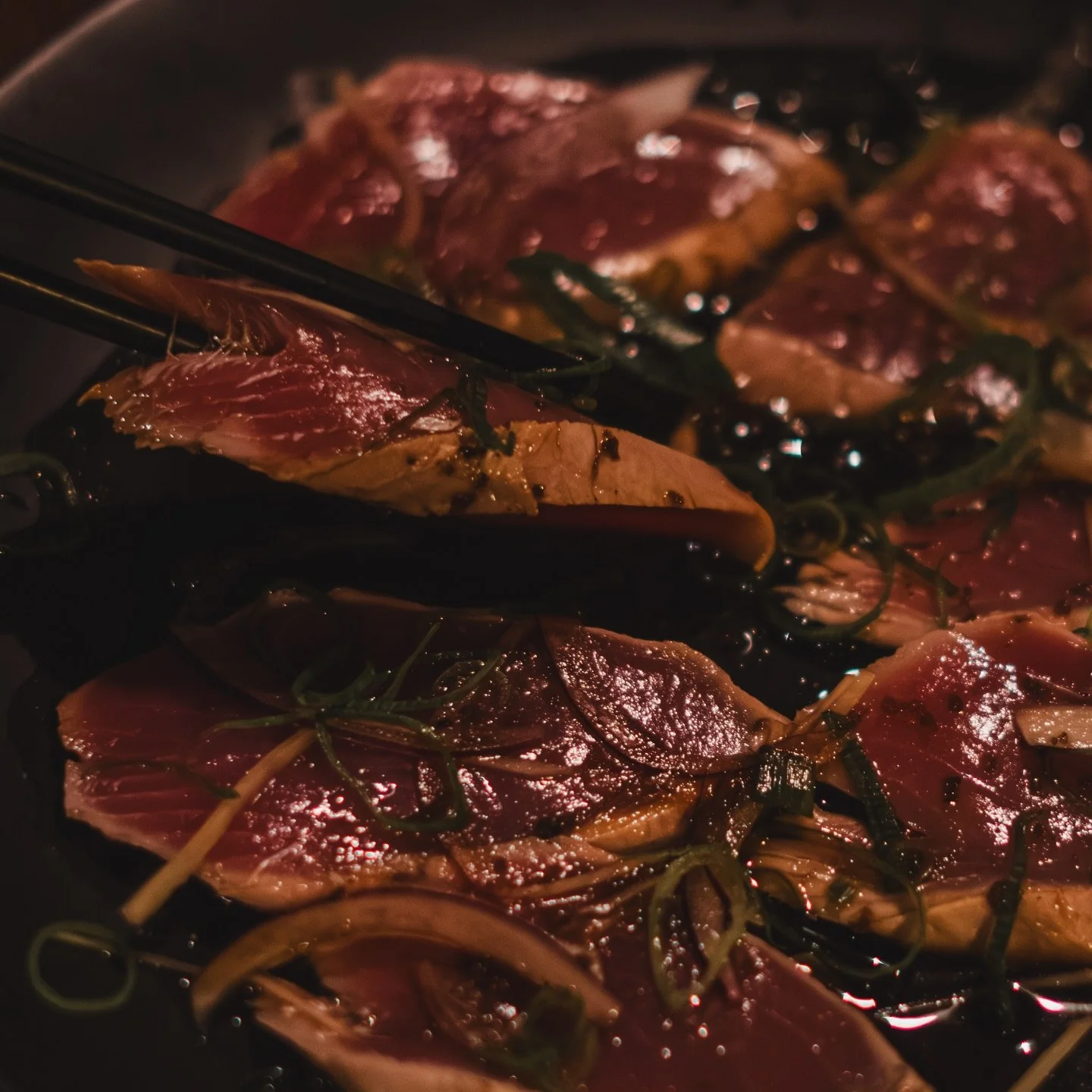
Tuna tataki pictured by Koji’s. Image source: View original photo.
Opening-status check, 4 November 2026: Koji’s official Instagram profile still says it is closed for a low-season break and expects to return in November; it gives no exact reopening date. Check a fresh operator post or obtain a booking confirmation before treating the published menu as an available dinner.
Koji's official link hub identifies the Santa Teresa business as a Japanese restaurant and bar and provides routes to reservations, takeaway, menus and location. Use that hub, linktr.ee/kojisrestaurant, to begin planning. It connects to a public menu folder rather than requiring you to rely on a visitor's photograph or a restaurant with the same name in another country.
The folder viewed during research contained English and Spanish menus labeled 2026, plus separate vegetarian-oriented and gluten-free documents. The main menu offered several meal formats, including small dishes, sashimi, nigiri and a bento set. Those choices support different kinds of dinner. This guide helps you choose a format and coordinate the visit; it does not claim that our team ate there or that every listed item will be available on your date.
Decide how much choosing you want to do
A set meal reduces the number of separate decisions. Individual dishes let you build a sequence around particular preferences, but they require more attention to portion size and the total order. Before studying every item, decide whether you want one complete meal each, several shared plates or a meal centered on fish. Tell your companions which approach you have in mind.
A diner arriving hungry after an activity may prefer a clear main-meal format, while someone planning a leisurely dinner may enjoy ordering several items. Neither approach is inherently more authentic or better. The useful distinction is how the order fits your appetite, budget and available time. The restaurant guide helps compare the kind of evening you want with other dining formats in Santa Teresa.
If some guests want a set meal and others want small plates, ask how the kitchen can coordinate the order. A shared table does not require identical choices, but it helps to agree whether people will begin as dishes arrive. Tell the server if you need everyone eating together or if one guest has an earlier departure. Clear timing matters more than making every order look similar.
Read the bento as a complete order
The bento section of the menu describes a choice of main accompanied by several smaller components. Read the current list of inclusions before ordering additional soup, rice or sides. A set is useful when you want the kitchen's planned combination, but its value depends on whether you actually want those components. Do not compare only its headline price with a single small dish.
Ask which mains are available and what substitutions, if any, are possible. A photographed box or an old menu does not guarantee the same side dishes on the evening you visit. If an ingredient is essential to avoid, check the whole set rather than focusing only on the main. A garnish, broth or dressing can matter as much as the item that gives the meal its name.
For two diners, separate sets may be easier than constructing a large shared order. Each person can choose a main while retaining an individual meal. This is an editorial planning option, not a package recommendation from Koji. Use the complete-meal comparison guide to compare what you will actually eat and any extras you would add, without assuming that a more complicated order offers better value.

Distinguish fish selection from a fixed promise
The menu includes sashimi and nigiri choices, with mixed selections offered in different quantities. Ask what fish is available for the current service. A general menu or a document titled tonight's specials may remain online beyond the date on which you read it. Confirm the actual selection with the restaurant before making a particular species the reason for your booking.
Read the preparation as well as the fish name. Raw, seared, grilled and fried choices create different meals, and a seared exterior does not necessarily mean the center is fully cooked. If you need cooked food, say so explicitly and ask which current dishes meet that request. Do not let a broad sushi label stand in for the preparation information you need.
For a mixed selection, ask whether the kitchen chooses all the pieces or whether diners can request changes. If a particular fish is unavailable, let the server explain the alternative before agreeing. Avoid treating a chef-selected plate as a fixed inventory list. You can choose the format because you welcome variation, or choose individual items if control over the selection matters more to you.
Count pieces in the context of the meal
Piece counts make it possible to understand an order, but they do not measure how filling it will be for every diner. Different formats include different amounts of rice, filling and accompaniment. Ask the server whether the quantity you are considering works as a starter, a main component or a shared tasting for your party. Describe the rest of the order so the advice has context.
If sharing, choose quantities that let everyone take part without making division awkward. You may prefer to order another item rather than split one piece into several portions. Agree which dishes are for everyone and which are individual. Keep special dietary orders separate and clearly identified, especially when several plates arrive together and look similar at a glance.
Avoid ordering every appealing item at once simply because each appears small. Ask whether you can begin with a manageable selection and add more within the kitchen's timing. The restaurant can tell you whether that pacing works for the evening. If you have a fixed departure, make the full plan clear at the start instead of extending the order after the agreed schedule is already tight.
Before deciding on a larger mixed order, distinguish food you will eat immediately from items you are considering for takeaway. Ask the restaurant which preparations are suitable for the journey you intend to make. A table order should not be oversized on the assumption that every leftover will travel well. If you do request packaging, coordinate the trip back and consume the food according to the restaurant’s guidance rather than carrying it through an extended evening out.
Use the dietary menus as a conversation starter
Koji's public folder includes dedicated vegetarian-oriented and gluten-free menu files. Open the current version that relates to you and read the actual dishes. The existence of a document helps identify options; it does not establish that every preparation meets every personal restriction or that cross-contact is excluded. Explain your precise needs before reserving if they determine where you can eat.
For vegan dining, distinguish a vegetarian item from a preparation free of all animal ingredients. Ask about broths, dressings and toppings as well as the principal ingredient. The vegan food guide can help you phrase those questions. Do not infer that a vegetable roll or a salad automatically fits your needs without reading its description and obtaining clarification where needed.
For an allergy or coeliac-related requirement, ask how the kitchen prepares the relevant order. A separate menu can be helpful without answering questions about utensils, surfaces or frying oil. Let staff state their process and limits. If the answer is unclear, choose another option rather than treating a printed category as a personal safety guarantee.

Reserve through the operator's contact
The official hub links a contact for reservations and takeaway. Use it to send your date, local time, party size and any essential request in one clear message. Ask for confirmation of the table rather than assuming a delivered message is enough. Save the response with the location link so you can find both when you leave your accommodation.
For a group, agree on a final headcount and appoint one person to communicate changes. The restaurant reservations guide helps structure that request. Ask whether the group requires an advance order or a particular meal format, and whether any deposit or cancellation conditions apply. Do not assume the policy from another restaurant or from an old online review.
If you are booking for a celebration, describe what you need without assuming the standard reservation includes decorations, a cake or exclusive space. Ask what the restaurant can arrange and what it costs before promising details to your guests. A simple accepted table booking may be all the occasion needs, especially when the group wants to focus on food and conversation.
Compare the final bill with the actual order
The English menu reviewed during research states that tax and service are additional to the displayed prices. Read the current document's wording and ask for clarification if you do not understand the total. Add drinks and any additional dishes before comparing dinner costs. The smallest price on a menu does not describe the cost of the meal you are building.
The trip budget guide can help allocate a dinner amount within your stay. Decide whether you want to spend on a larger food selection, drinks or a simpler meal with easier transport. If friends have different limits, agree that before ordering shared items. Nobody should discover at the bill that an optional extra was treated as a group commitment.
Check the bill while the order is still fresh in your mind. Ask in advance if separate payments are important, since the restaurant's process may differ from what your group expects. Distinguish listed charges from any discretionary amount you choose to add. Keep the comparison focused on the confirmed total rather than an old price quoted in another currency.
Use the restaurant's location link
The official hub provides a map link for Koji. Open that current pin and share it with your driver or companions. Older travel descriptions can refer to different landmarks or a former location, so avoid constructing your route from a collection of snippets. Ask the restaurant which entrance to use and where a vehicle can drop you off for the actual visit.
If access matters, request the route from drop-off to table and restroom. A map pin does not show steps, gradients or the surface you will cross. Describe your needs in concrete terms and ask for photographs or measurements if useful. The hillside-property access guide explains the questions to ask when an approach includes a slope, without making a claim about Koji's specific accessibility.
Arrange the return when you arrange dinner. The transport guide for couples and groups helps decide whether guests should share a pickup or travel separately. If you will drink alcohol, organize a sober driver and do not ride a bike or scooter afterward. For takeaway, confirm pickup timing and a suitable way to carry the order. A clear menu choice, accepted reservation and current entrance pin are the practical foundations of the visit.
Choose the format and verify the current selection
Use the official menu folder and booking contact. Confirm fish availability and dietary needs directly, read the final charges and share the current restaurant pin with your driver.