
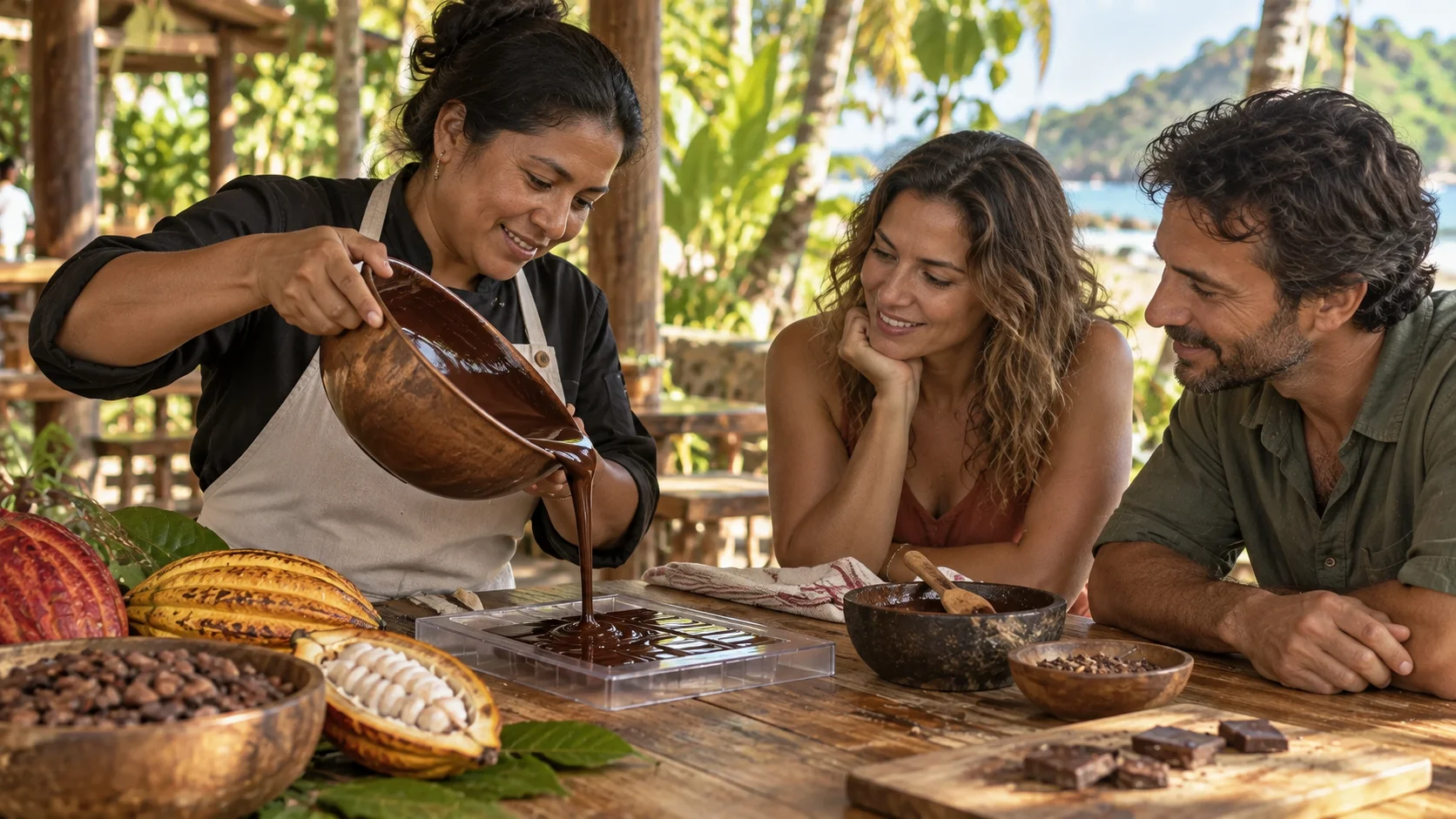
A chocolate workshop in Cabuya offers a specific reason to travel beyond Santa Teresa’s beach road. At Indigena Café & Chocolate, the published experience combines tasting, making a bar and learning about the work behind it. It suits a traveler who wants to spend time on one ingredient and ask questions about how it becomes a finished product. It is a different outing from simply stopping for dessert.
The location also needs to be understood correctly. Cabuya is the destination, not a neighborhood within Santa Teresa. The café places itself near the entrance to Cabo Blanco. That makes it possible to consider the two in the same day, but a workshop reservation does not include reserve admission or make the reserve’s timetable flexible. Start with the activity you most want to do, then build the day around its confirmed time.
What the direct workshop description supports
Indigena’s official tour page, checked on October 21, 2026, describes making your own chocolate bar, tasting several chocolates and discussing production. The bar needs time to set while the session continues. That sequence gives the visit a practical component without implying that participants personally perform every stage between a fresh seed and finished chocolate during one appointment.
Its explanation includes cacao varieties and production stages such as fermentation, drying, roasting and separating the bean material. Ask which parts are demonstrated, discussed or handled by participants in your session. A tour can explain an entire production chain while only carrying out selected steps at the table. The difference matters if you are booking primarily for hands-on work.
The official description says cacao pods may be available, particularly during the wet season. It does not guarantee a ripe pod for every group or establish a walk through a working plantation. If seeing the plant is your main interest, clarify that directly. The broader Santa Teresa day-trip guide can help compare this focused workshop with outings built around trails or landscapes.
Reserve ahead and wait for confirmation
The operator asks visitors to book in advance because the experience requires preparation. Its published WhatsApp contact is +506 6253 3280, and the page explains that a reservation is finalized by a confirmation message. Sending an inquiry or following a payment link alone is not the same as receiving that confirmation. Keep the agreed date, time and meeting location together in your travel notes.
Ask for the current total and deposit terms for the number of adults and children attending. Also establish the session language, duration and cancellation conditions. A reseller listing may display different terms from a direct booking. Decide which channel you are using and keep the agreement within that channel so there is no confusion about who holds the reservation or handles a change.
If you are arranging transport from Santa Teresa, give the driver the café’s confirmed location rather than asking for a chocolate tour somewhere in Cabuya. Share the expected finishing time and agree on the return plan. A workshop that runs a little longer should not leave you negotiating a ride after the rest of the group has departed.
How to make the tasting useful
You do not need tasting vocabulary to enjoy the session. Begin with an honest description: which sample do you prefer, what feels different and what would you like to understand? Ask the maker to compare two examples rather than assuming the highest cacao percentage is the best choice. Preference and product composition are related, but they are not the same question.
Indigena’s product page lists several dark chocolates alongside dark milk and white chocolate. That range provides an opportunity to discuss ingredients and how the products differ. Ask what the percentage refers to in the bar in front of you and read the ingredient list if you plan to buy it. A prominent number cannot tell you everything about flavor, recipe or suitability for a particular person.
Take small notes only if they help. You might record the product name, ingredients and the reason you liked it. That can make a later purchase more deliberate than choosing the prettiest wrapper. Our Costa Rican food guide places this experience alongside other food interests, but the workshop’s value is the chance to stay with one product long enough to notice differences.
What to ask while making the bar
During the practical part, ask the instructor to explain the purpose of each action before copying it. Why use this mold? What are you watching for as the chocolate is worked? How does the maker decide when the bar can be removed? Understanding one small decision is more useful than collecting technical terms without knowing how they relate to the work.
Follow the workshop’s hygiene and equipment instructions, particularly around warm material and tools. Do not start an additional process because you saw it in a video. A short class has an intended sequence and shared work surfaces. Ask before touching production equipment, opening ingredients or adding something you brought from outside.
If you want to repeat the activity at home, request guidance matched to your equipment and the ingredients you can obtain. A professional setup may not translate directly to a household kitchen. Write down the specific process the teacher recommends rather than assuming every stage discussed is part of your take-home recipe. The goal can be understanding a manageable technique, not replicating the whole business.
Allergies, preferences and children
Discuss dietary needs before reserving. The café’s own menu includes dairy and almond-based items, and its chocolate range includes products with milk. A dark bar’s ingredient list does not establish the handling conditions of the whole kitchen. Explain the exact restriction and ask whether the operator can accommodate it safely. If the answer is uncertain, choose another activity rather than relying on the word natural or artisanal.
Distinguish a preference from an allergy when communicating with the host. Someone avoiding milk by choice may make a different decision from someone requiring strict avoidance of cross-contact. The operator needs accurate information to respond. Do not wait until a tasting has been served to mention a requirement that affects preparation or shared equipment.
The tour page advertises a children’s version by request. Ask about the format for your children’s ages and whether they will each make a bar or share tasks. A family experience should match attention spans and supervision needs. Our family guide to Santa Teresa can help balance the day, especially if the workshop follows a longer walk or drive.
Understand the sourcing story without adding claims
Indigena describes buying cacao from Indigenous producers as part of the project’s purpose. Its own product page also says the cacao is not certified organic and that its trade arrangements are not certified. Those distinctions should remain visible when choosing or describing the product. A business can explain its purchasing approach without holding a certification, and a visitor should not add one on its behalf.
Useful questions concern the batch you are tasting: where the beans came from, which stages happened before they reached Cabuya and which work takes place at the café. Ask how the producer relationship operates if that matters to your purchase. The answer may deepen your understanding, but it remains the operator’s account unless independently documented.
Do not assume the workshop is an Indigenous-led ceremony or a visit to an Indigenous community because of the business name. The reviewed offering is a chocolate experience in Cabuya. Treat any discussion of history or cultural practice with attention to whose experience is being described. Avoid turning a commercial tasting into a generalized claim about the beliefs of many different communities.
Combining the workshop with Cabo Blanco
The café’s location near the reserve entrance makes a combined day worth considering, but choose the order according to the actual reserve opening arrangements and workshop appointment. A long trail can leave little margin for a fixed session afterward. Read our Cabo Blanco visiting guide before deciding how much walking to include.
Keep transport and food plans separate from assumptions about the tour. Chocolate tasting is not necessarily a full lunch. Ask what the selected experience includes and whether you want a meal before or after it. A family arriving hungry from a trail may find it difficult to concentrate on a detailed explanation, regardless of how appealing the samples are.
If you include the Cabuya cemetery island, remember that its access depends on coastal conditions and tide planning. Do not force that stop between two fixed bookings or treat a receding shoreline as permission to cross. The village can still provide a worthwhile setting for the day without fitting every nearby attraction into one itinerary.
Buying and carrying chocolate afterward
Ask the maker how to store the bar for your remaining journey. A wrapped product may still spend hours in a vehicle or day bag before reaching your accommodation. Plan the purchase around that reality. If your next activity involves leaving luggage in a hot parked car, discuss whether it is better to buy later or choose a smaller amount for immediate enjoyment.
Keep the label or a note of ingredients when buying gifts. The recipient needs more than a story about where the bar was made, especially if they have dietary restrictions. Check your destination’s entry rules for any food you intend to carry internationally. A retail bar, a fresh pod and loose agricultural material are different travel items, so do not assume the same rules apply.
Use the Santa Teresa shopping guide for wider souvenir planning, but leave room in the day to complete this purchase without rushing. A workshop is most useful when it changes the questions you ask of a product. You may leave preferring a different style than expected or simply understanding why two bars taste different.
Who this outing suits best
Choose the workshop if you enjoy listening, tasting and participating in a focused activity. It may suit a mixed group that wants a break from physically demanding outings, provided the venue and session format meet individual access needs. Ask about seating and the route from the arrival point if those details matter. A café setting should not be assumed step-free without confirmation.
For someone whose main priority is a plantation walk, a large meal or a guaranteed glimpse of a ripe pod, clarify the offering before making the transfer. Our recommendation is to reserve the Cabuya chocolate session as its own appointment, arrange a realistic return and leave room for questions. That gives the maker time to teach and gives you a better basis for deciding what chocolate you actually enjoy.
Make it a focused Cabuya appointment
Book directly, clarify the tasting and hands-on format, and arrange transport around the confirmed time. Combine with Cabo Blanco only when its separate access and trail plan leave a comfortable margin.