
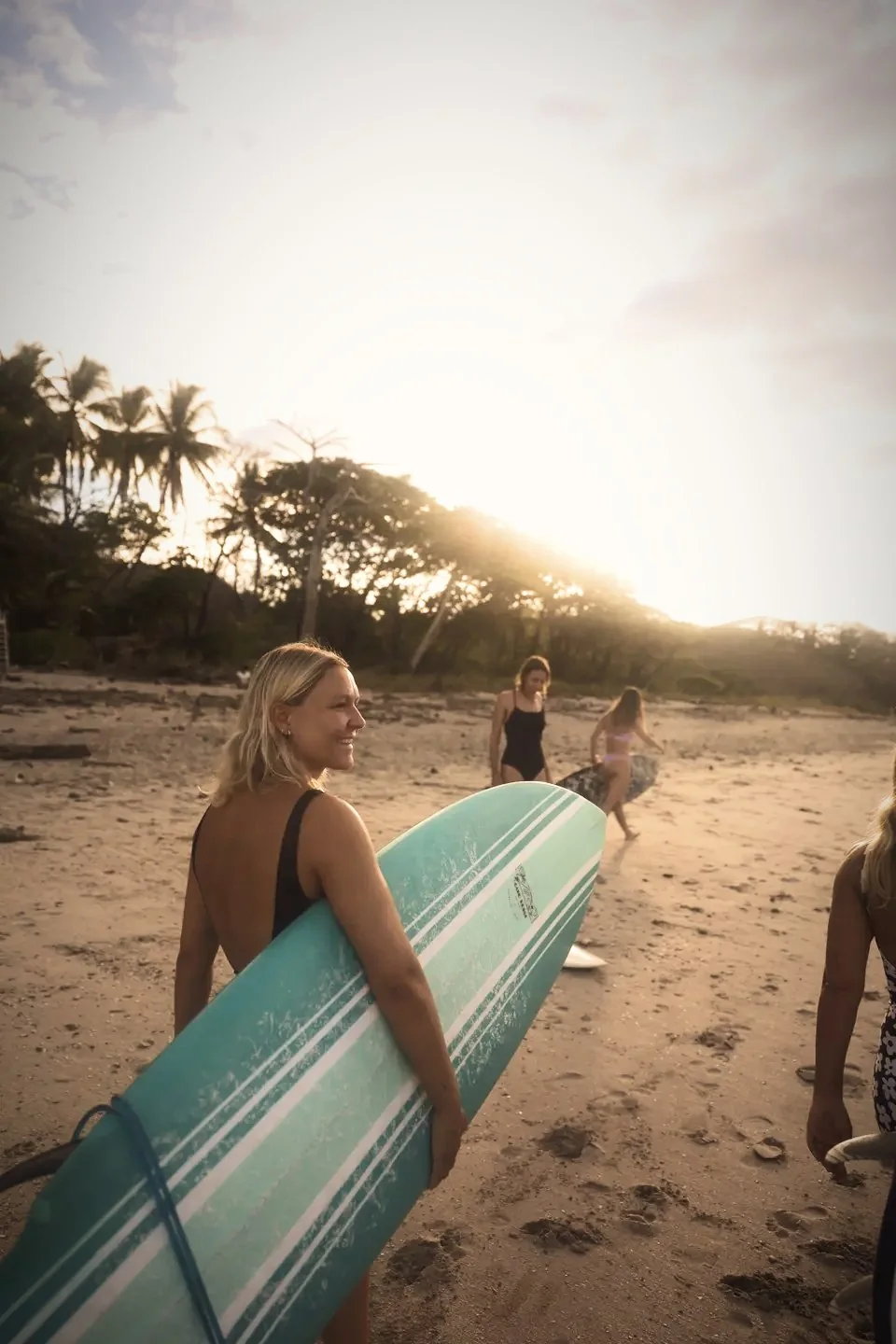
Surf session pictured by Cafecito Surf. Image source: View original photo.
Surf video analysis in Santa Teresa suits a surfer who wants to examine a repeatable problem: missing takeoffs, losing speed after standing up, or choosing waves that close before a turn. Start with that problem. A highlights video may look good on your phone while leaving you unsure what to change on the next wave. Ask the coach to describe the review and the follow-up practice before comparing prices.
Two local providers publish relevant services. Cafecito lists intermediate lessons with video analysis and advanced coaching with video. The Beach Boys distinguishes video analysis from surf photography and edited session videos. Those are useful starting points, not rankings. Availability, staffing and the content of your booking still require a direct answer for your dates.
Describe your surfing without a level label
The word intermediate covers a wide range of experience. Tell a prospective coach how you enter the lineup, which waves you catch without assistance, and what happens after you stand. Include how often you surf and the type of board you use. A person who catches unbroken waves on a large board but struggles to turn needs a different lesson from someone attempting a more advanced maneuver on a shortboard.
Describe one recent session in plain language. For example: “I catch lefts without a push, but I lose speed after my first turn. I want to understand where I look and where my feet land.” This gives the coach something observable. “I want to get better” leaves too many possible targets. If you are still learning the foundations, use the lesson versus surf camp comparison to decide how much instruction you need before paying for a filming add-on.
Existing footage can help the coach prepare, but explain its age and conditions. A clip from a long, gentle wave elsewhere may show your stance without representing how you handle the next Santa Teresa session. Send only material you have permission to share. A coach should assess your current ability and the day's conditions rather than promise a specific maneuver from one old video.
Separate filming, analysis and an edited video
Ask for a written description of each deliverable. Filming means someone records attempts. Analysis means a coach watches and explains selected moments with you. An edit may combine successful rides with music and scenic footage. One booking can include all three, but the product names alone do not establish that. The Beach Boys' separate service descriptions make this distinction useful when you compare proposals from other schools.
For analysis, find out whether you receive full rides, only selected clips, or a recording of the discussion. Full attempts can help you see positioning before the wave and decisions after a mistake. Selected clips save time if the coach explains why they matter. Neither format guarantees useful teaching. Ask how the coach connects the observations to something you can practise within your present ability.
File delivery affects the usefulness of the session after you leave town. Confirm the format, delivery channel and download period. Ask whether an emailed link expires and whether the quoted service includes original clips or only an edit. Download your files before deleting a message thread or changing phones. These are booking questions, not published promises about either provider.
Match the filming setup to the question
A shore camera may capture your whole ride and your relationship to the breaking wave. An in-water perspective may offer a different view, but do not assume it will show the exact foot movement you want to study. Ask the coach which angle suits your goal and whether the camera operator can follow you among other surfers. Technical equipment names matter less than recognisable, useful footage of your attempts.
Check whether the instructor also films or whether another person operates the camera. If the coach stays in the water, ask who observes the session from shore and how the two communicate. In a shared booking, establish the number of surfers the camera will follow and the time set aside for each person's review. A small group can offer useful peer learning when everyone has an appropriate level and individual feedback.
The camera should not drive you into conditions beyond your ability. You may feel pressure to catch a larger wave because someone is recording. Agree in advance that the coach can change the plan or stop. Good footage has no value if you choose waves you would otherwise decline. Local instruction and your own limits remain relevant throughout the session.
Leave space for the review itself
Ask whether the review happens on the beach, at the school or online later. Confirm a realistic place to see the screen and hear the explanation. Bright sunlight can make a tiny phone display difficult to read; a short discussion at a crowded meeting point may not suit a detailed analysis. You do not need a studio, but you need enough attention and visibility to follow the lesson.
Have the coach show the full clip once before stopping at individual frames. Describe what you remember doing, then compare that impression with the recording. You might remember looking toward the open face while the clip shows your gaze staying near the nose. Treat the mismatch as a question to explore with the instructor. Avoid diagnosing your technique from a single frozen image without the movement around it.
Choose one main practice cue and a secondary observation if needed. Write them in words you understand. “Look earlier toward the intended direction” is easier to remember than a list of anatomical terms. Ask the coach to explain when to apply the cue and how you will recognise an improvement. The next water session should give you a manageable task rather than ten competing instructions.
Build a short trip around two observations
A useful sequence is an initial filmed session, a review, practice appropriate to your ability, and another observation. This is an editorial planning model, not a promise of a particular school's package. It gives you a chance to apply the feedback while the coach can still help. If you film on your final morning and leave before the review, you may carry home footage without understanding it.
For an illustrative three-session plan, use the first session to identify a recurring habit. In the second, focus on the agreed cue with the coach's supervision as needed. In the third, compare attempts under the available conditions and discuss what to continue at home. Different swell or equipment can affect the comparison, so avoid treating wave count or one impressive ride as a controlled test.
Protect the review time from another tour or a transfer. The one-week itinerary can help you leave room between commitments, while the guide to choosing your length of stay explains why a short visit may fit fewer activities than expected. Your coach may choose session times around conditions, so ask which parts of the proposed schedule remain flexible.
Compare quotations by the teaching you receive
Request a total price with filming, coaching and review shown as separate inclusions if possible. Add board hire and transport only where they apply. Confirm whether a package contains video on every session or on selected days. Cafecito's website mentions video review in lesson packages, but a general package statement does not establish the exact schedule or deliverables of your booking.
Ask what happens if visibility, weather or conditions prevent useful filming. A school might reschedule, provide another type of lesson or offer a different remedy under its terms. Get those terms before payment. Also ask what happens if you attend but catch few suitable waves. A coach may still have useful positioning footage, yet the agreement should explain what the filming service promises.
Consider a private session if you need focused attention on a particular habit or have limited time. A shared session can make sense if the review includes individual feedback and you are comfortable discussing your clips with others. Compare the confirmed teaching time, not an assumed prestige attached to one format. Ask whether instruction and analysis are available in the language in which you learn most comfortably.
Keep board and travel arrangements simple
Tell the coach whether you will use your own board. If you change boards between sessions, record the change and discuss its effect before judging your technique. A rental can be practical, but agree on suitability with the instructor. The surfboard rental guide covers storage and handover questions that become relevant when you want the same board for more than one session.
Confirm the meeting point and whether the board will already be there. Use the surf lesson transport guide for coordinating equipment with pickup. A board needs a suitable carrying arrangement; do not plan to carry it on a shared e-bike or scooter. Bring only the personal items you need and agree where valuables will stay while you surf.
Take home a usable practice record
After the final review, save a short note with the date, board, conditions as described by the coach, and the main cue. Link each observation to a specific clip or timestamp. Add the coach's explanation of what to try next, including the conditions and supervision appropriate to your level. This record makes a later conversation with another instructor more precise.
Ask permission before posting footage that identifies other students or the coach, and tell the provider if you do not want promotional use of your image. Keep the booking confirmation with the delivered files. Finish by checking that you can open the clips on your own device and explain the next practice task in your own words. That is a practical test of whether you leave with something you can use.
Book the review and the next practice
Choose a session that identifies one observable habit, explains it in a scheduled review and leaves time to practise. Confirm footage delivery and weather terms before payment.