
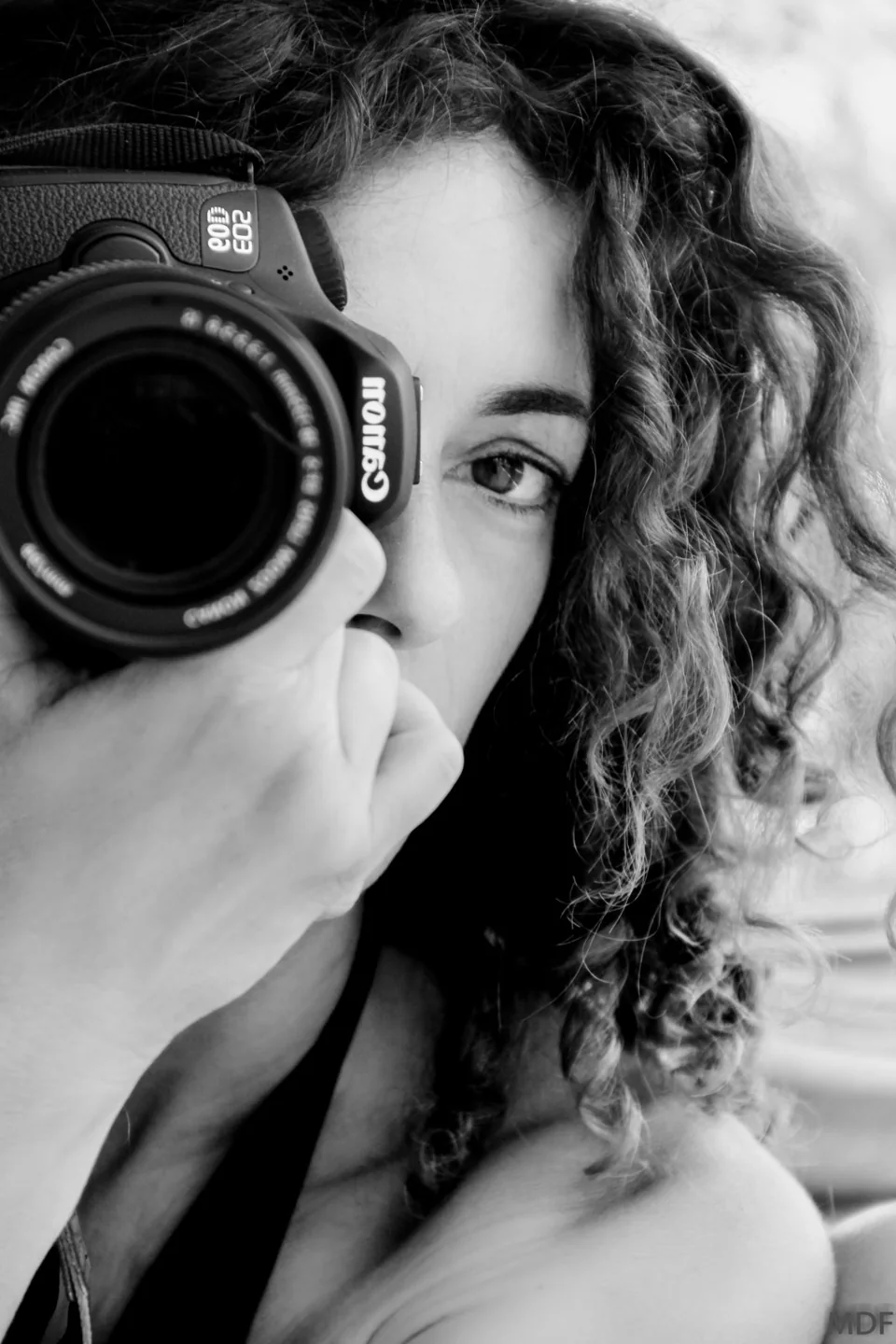
Photographer pictured by Punto Di Vista Photos. Image source: View original photo.
A beach portrait session in Santa Teresa should start with the photographs you want to keep. A family image for the wall, a small honeymoon album, and a set of individual portraits require different priorities. Tell the photographer what the finished pictures are for before choosing a package by duration or number of files. That gives the conversation a useful direction from the first message.
This guide covers commissioned portraits of families, couples, and individuals. Photos of someone riding waves require different positioning and equipment; use the surf photography guide for that job. A portrait session with a board on the sand does not automatically include action photographs in the water, even if both could happen at the same beach.
Find a photographer whose current work matches the request
Maria De Fazio's own website identifies her as a portrait, couple, and family photographer based in Santa Teresa, Costa Rica. Her site separates portrait work from other commercial subjects. That makes the portrait portfolio a relevant starting point for an inquiry about your group, rather than assuming that attractive property photographs show how someone photographs people.
Raisa Zwart's dedicated Santa Teresa page offers portrait and family sessions alongside brand work. She also works outside Costa Rica and publishes location availability. Confirm that she will be in Santa Teresa on your dates, then request the package applicable to your session. A general portrait page and a destination-specific offer may describe different arrangements; ask which one your quote uses.
Elisa Niittylä describes dividing her time between Santa Teresa and Tampere, Finland, and lists both couple and family sessions. Her couples work can be arranged outdoors or at home according to her site. This gives you a lead for asking about a beach session with an accommodation-based alternative, subject to her actual location and availability when you travel.
These service descriptions come from the photographers' own pages checked on 21 October 2026. They are leads to contact, not a ranked recommendation or a claim that dates remain open. Ask who will photograph your booking, whether travel charges apply, and what happens if the named photographer becomes unavailable. Keep those answers with the final agreement.
Look beyond a few favorite images
Ask to see a complete relevant session or a representative gallery, with the photographer's permission to share it. A few strong highlights show what is possible; a fuller sequence shows how the work handles different expressions, group combinations, and changing light. Look for pictures of a party similar to yours rather than comparing only the most dramatic sunset in each portfolio.
Pay attention to how much direction you want. Some people enjoy arranged poses, while others prefer prompts that involve walking, talking, or playing. Tell the photographer if anyone feels awkward in front of a camera. Ask how they usually help such clients rather than demanding that the session feel spontaneous without discussing what support would make that possible.
Discuss the editing style you like before booking. Warm colors, strong contrast, muted tones, and black-and-white images produce different results. If you want skin texture retained or particular retouching avoided, say so. Choosing a photographer whose normal work already suits your taste is more realistic than expecting a complete change of style after the pictures have been taken.
Send a small number of reference images to explain mood or composition, not a long list to reproduce exactly. State what you like about each: the group arrangement, a close crop, or relaxed interaction. The original photograph may depend on weather, location, or people that differ from your session. References work best as a shared vocabulary rather than a guarantee of identical results.
Give the booking a short, practical brief
Include your dates in Santa Teresa, accommodation area, number of people, children's ages where relevant, and preferred session type. Mention any walking, mobility, sensory, or other practical needs that affect the location or pace. The photographer can then suggest a workable meeting point and format instead of learning those details when the group arrives.
Choose a few essential groupings. For an illustrative family session, you might prioritize everyone together, the children with each parent, siblings, and a short portrait of the adults. This is not a required shot list or a promise of a particular number of usable images. It helps the photographer understand what matters before attention and daylight run short.
For a couple, decide whether you want mostly close portraits, environmental pictures that show the coast, or a mixture. If the session marks an engagement or another private occasion, explain what can be discussed openly. Do not ask the photographer to infer a surprise plan from a vague booking note. A separate agreed signal and meeting arrangement are easier to carry out.
Nominate one adult to coordinate the group, collect questions, and approve the final plan. The couples and groups guide can help with the wider itinerary. For the shoot itself, keeping the photographer out of several conflicting message threads leaves more attention for location, timing, and the pictures you want.
Let access and conditions shape the beach choice
Ask the photographer to recommend a location for the date, group, and type of picture, then confirm the exact meeting pin. A beach name can cover more ground than you expect. Clarify whether you meet at a road access, accommodation entrance, or on the sand, and how far everyone must walk with their belongings.
Use the beach access guide to think through the approach, while following current local directions for the chosen spot. If someone cannot comfortably manage sand or a long walk, discuss a shorter accessible approach or a permitted accommodation setting. The backdrop should fit the people. A remote-looking image does not justify asking a guest to attempt access they cannot manage.
Tell the photographer whether you are comfortable getting clothes wet. Staying on dry sand should remain a valid brief. Water entry is not necessary for a beach portrait, and a composition should never require ignoring conditions or climbing onto an unsuitable surface. Agree on a location the photographer can use without blocking access or inconveniencing other beach visitors.
Arrange transport to the meeting point with time to walk and settle in. If you are carrying outfits, children’s items, or camera equipment, use transport suitable for those belongings and the group. Do not plan to ride onto the beach. Keep the return arrangement clear as well, particularly if the session ends after the group has changed clothes or the light has faded.
Choose a time people can enjoy
Late afternoon is a common request, but ask the photographer to choose an actual meeting time for the date and location. A stated sunset time is not the same as the start of a useful portrait session. You may need time to meet, walk, help children become comfortable, and take important group pictures before any final light changes.
Morning can be worth discussing if it better suits the family or the available location. Do not assume that the only worthwhile photographs happen during a colorful sunset. Cloud, shade, and different times of day can support other looks. Let the photographer explain what they can create under the likely conditions instead of purchasing a specific sky that nobody can supply on demand.
For children, plan around ordinary food and rest needs where possible. The family travel guide can help avoid overloading the day. A short, well-timed session with a few priorities may suit your family better than a long booking after a tiring excursion. Tell the photographer when a child usually needs a break so the plan can allow for one.
Prepare clothes without making the session a costume exercise
Choose clothes that allow sitting, walking, and holding children comfortably. Try outfits together before travel if color coordination matters to you. Avoid discovering at the beach that a shirt feels restrictive or a dress cannot be worn in the way you expected. Ask the photographer whether patterns, logos, or strongly contrasting colors might distract from the style you want.
Bring only the changes you intend to use and ask where changing is possible. More outfits consume session time and add belongings to manage. Decide whether the difference between two looks matters more than extra relaxed pictures in one. Keep small personal items out of pockets if you do not want them visible in the photographs.
Pack water, a towel if needed, and a modest change for anyone likely to get sandy or wet. Our packing guide helps keep the day bag manageable. Tell the photographer if someone needs a shaded pause or another accommodation. Preparation should make the group more comfortable, not turn the session into a demanding production with a bag of unused props.
Agree on rain, rescheduling and privacy
Ask what weather conditions prompt a location change, postponement, or cancellation, and who makes that decision. Set a point at which you will exchange the final plan. If your trip is short, explain the last date you could reschedule. Booking the only possible session on your final evening leaves less room to adapt than choosing an earlier day.
An accommodation can be a useful alternative only if the photographer and host approve it and the space suits the work. Ask about permission, visitor rules, and any extra charge before calling it a backup. A covered terrace may produce a different set of pictures from a beach session; decide whether you would welcome that result rather than assuming the experience will be identical.
Discuss publication preferences before signing. Tell the photographer if you want the gallery kept private or do not want images used in a portfolio or social media, particularly when children are included. Ask how those preferences are recorded and whether they affect the offered agreement. Do not leave an important privacy request until after the photographs have been delivered.
Know what will arrive after the session
The quote should identify session length, number of people, location arrangements, edited-image allowance, delivery method, and expected delivery window. Ask whether you select favorites or the photographer makes the final selection, and how additional images are priced. A large file count is not automatically better if many files repeat the same expression or pose.
Clarify whether you receive files suitable for printing, versions for sharing, or both. If you want a wall print, tell the photographer the approximate size and orientation before the shoot. Ask about download deadlines, gallery access, and whether prints or albums are separate purchases. Save the finished files in more than one place after delivery rather than treating a gallery link as permanent storage.
Explain any planned business use, such as a professional website or paid promotion, before accepting a personal portrait package. Ask the provider to state the permitted uses and any additional license or fee in the agreement. Likewise, clarify whether raw files, extensive retouching, or video are included if you need them; none should be inferred from the word photography alone.
Choose the photographer whose work, communication, and proposed plan fit your group. Reserve the date with a clear scope, keep the essential pictures few enough to prioritize, and leave room for people to be themselves. A usable family portrait or a small set of couple images that feels like your time together is a better target than an elaborate schedule of poses nobody enjoys.
Book around the people
Choose work you already like and confirm the photographer’s actual presence on your dates. Agree on a manageable shot list, accessible meeting point, delivery details and weather alternative before the session.